This was first day of looking around Kyoto, our goal was to explore Higashiyama.
Bukkō-ji Temple
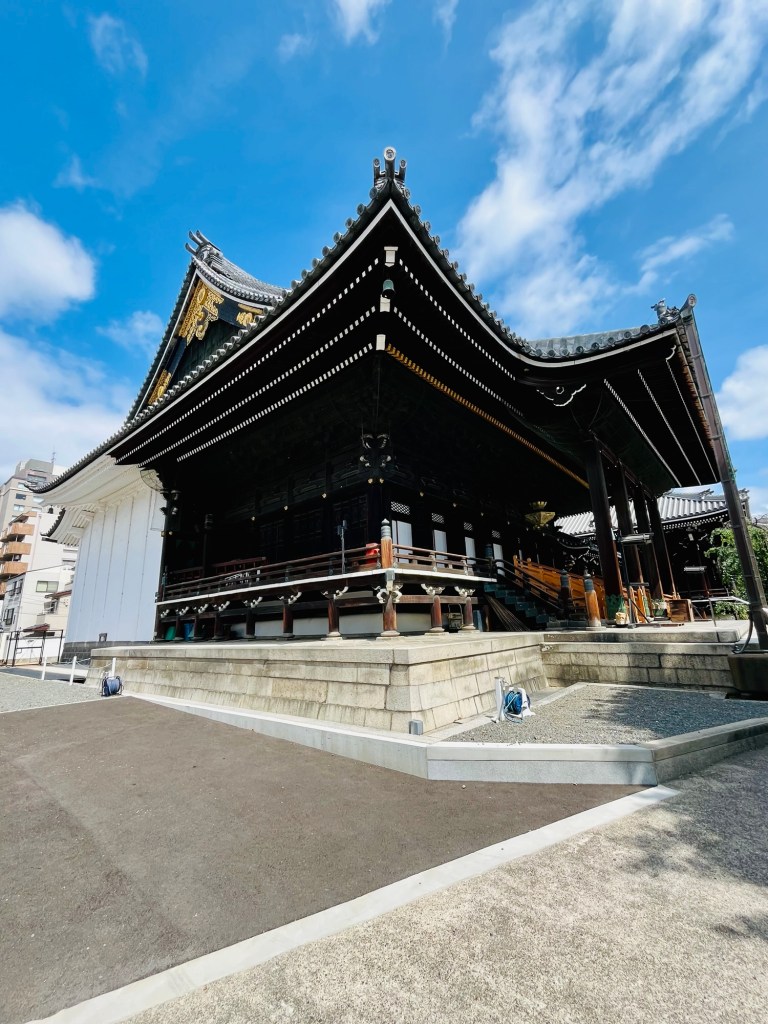
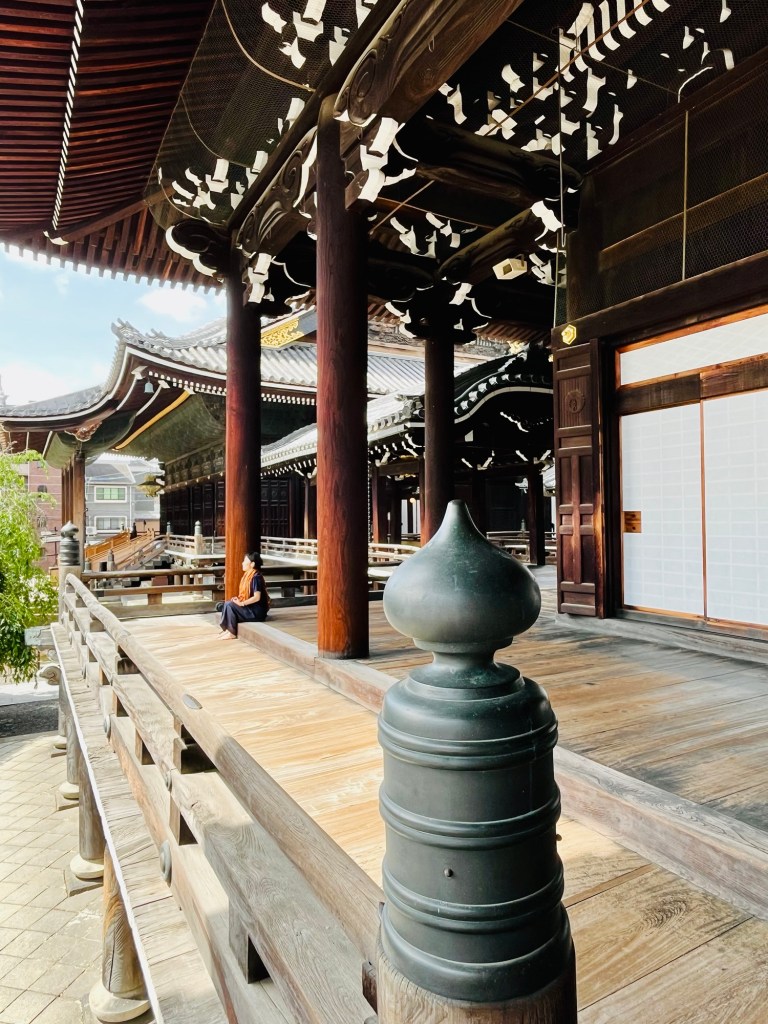
We had walked past this temple the previous night, we decided to pop in and check it out. The name of temple translates as The Buddha’s Light Temple and dates to 1324. It was at one time a major centre of Jōdo Shinushū school of Pure Land Buddhism, until another sub-school took exception over some minor doctrinal differences & decided to take it over. I’ll leave it there as this is getting perilously close to being way over my pay grade, but at some point was burnt down & in 1586 it was told by a major Japanese warlord to move to its current location in Kyoto. What we had thought of as just being the local temple turned out to have bit of a murky past, it was nonetheless, stunning & mercifully free of tourists.
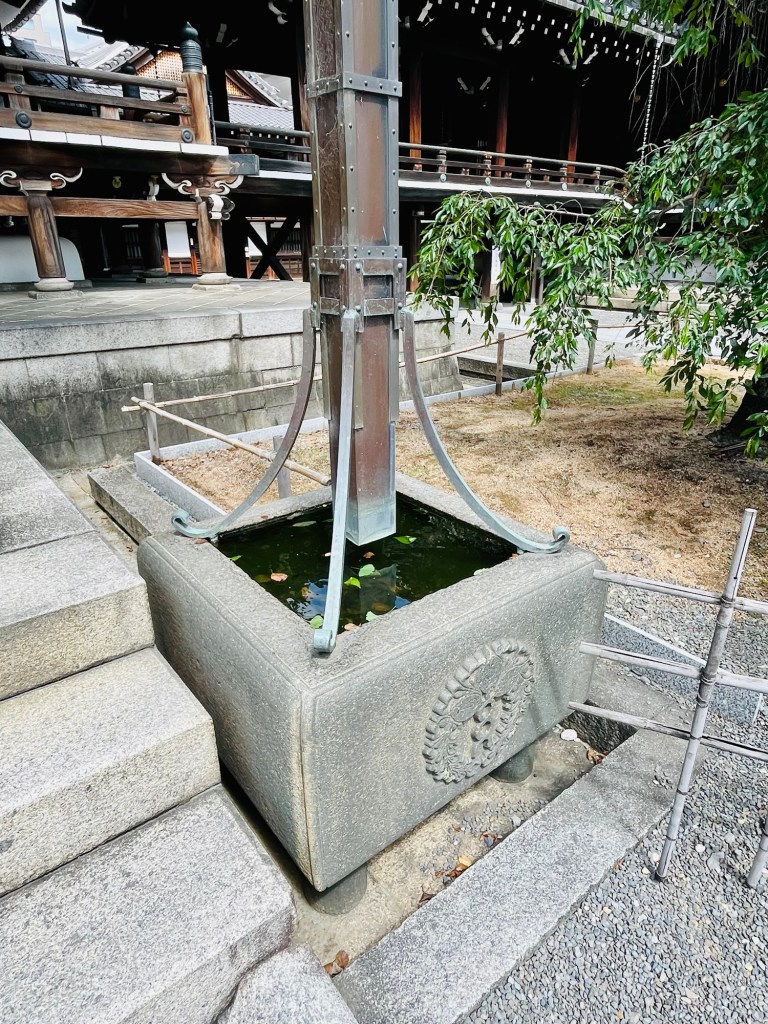
Just the neighbourhood templeIt was very peacefulA bit of architecture-geekery, the downpipes discharge into these stone basins & then into channels around the temple.
Walkingto Higashiyama
From the temple we headed to Higashiyama
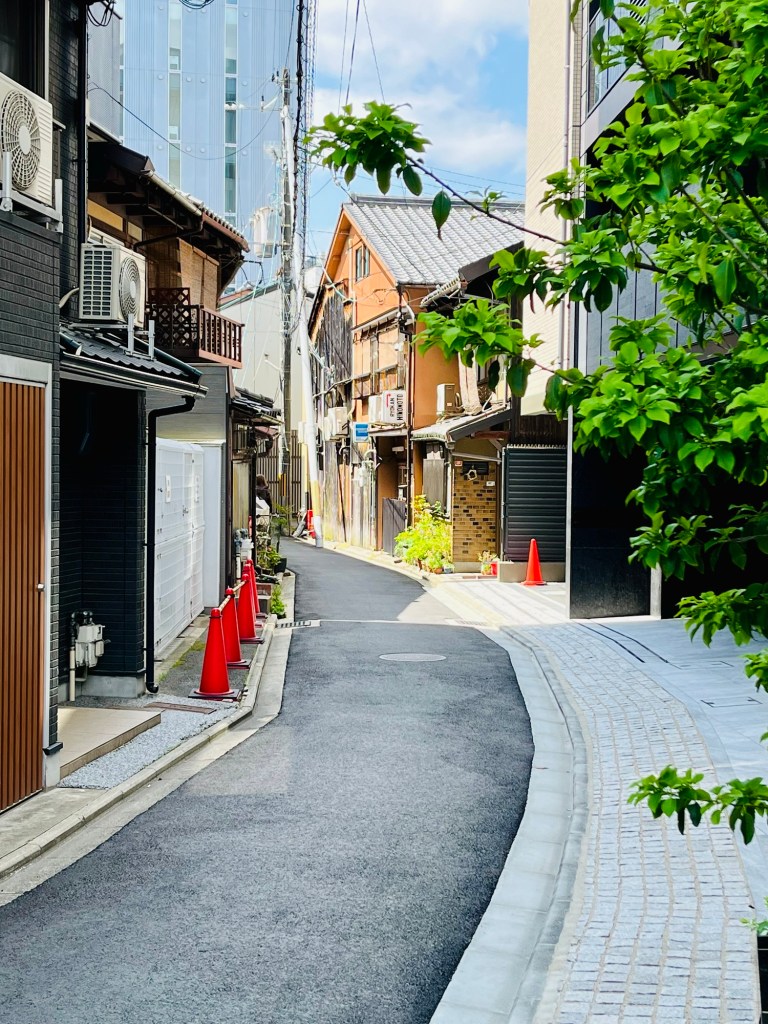
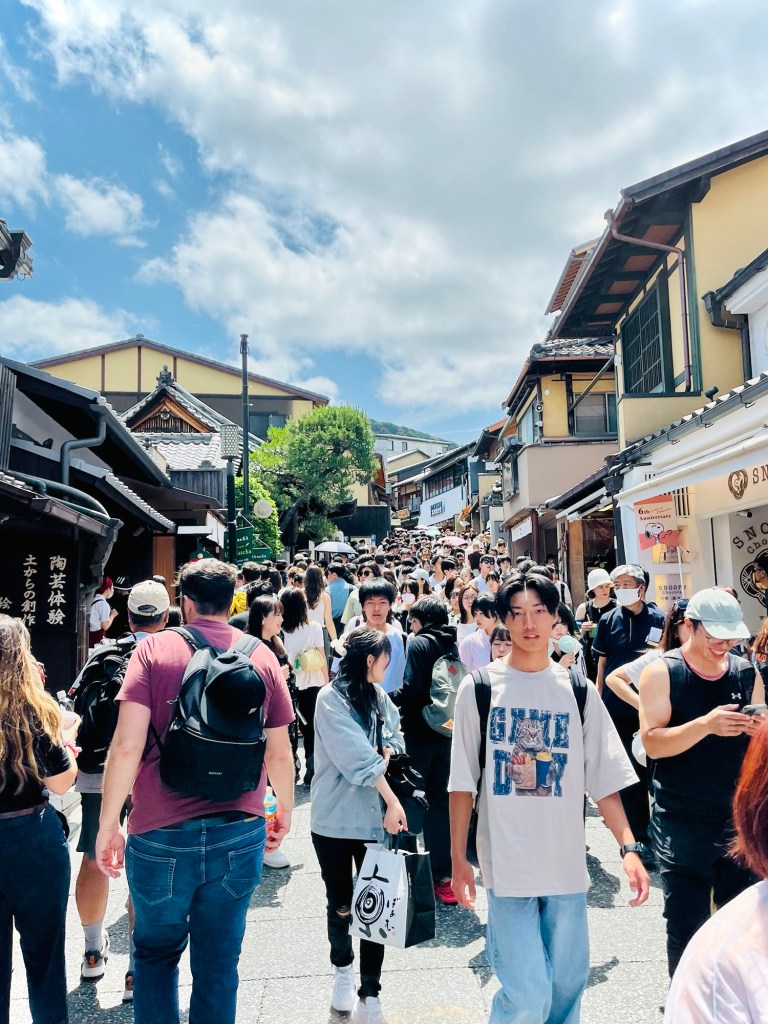
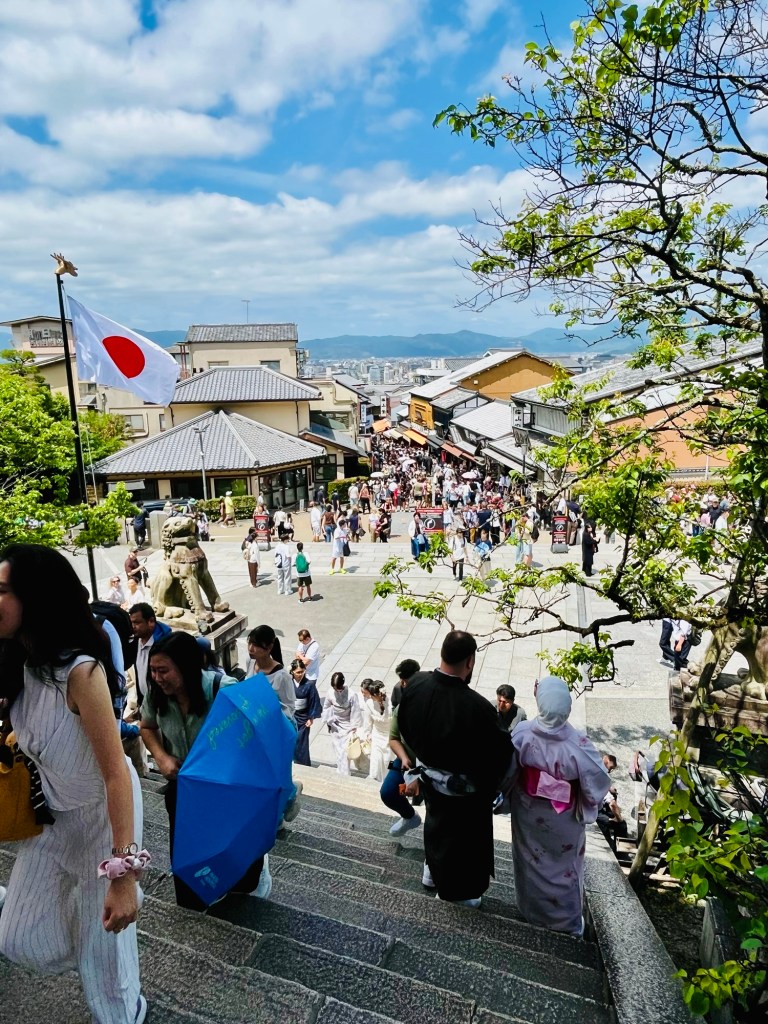
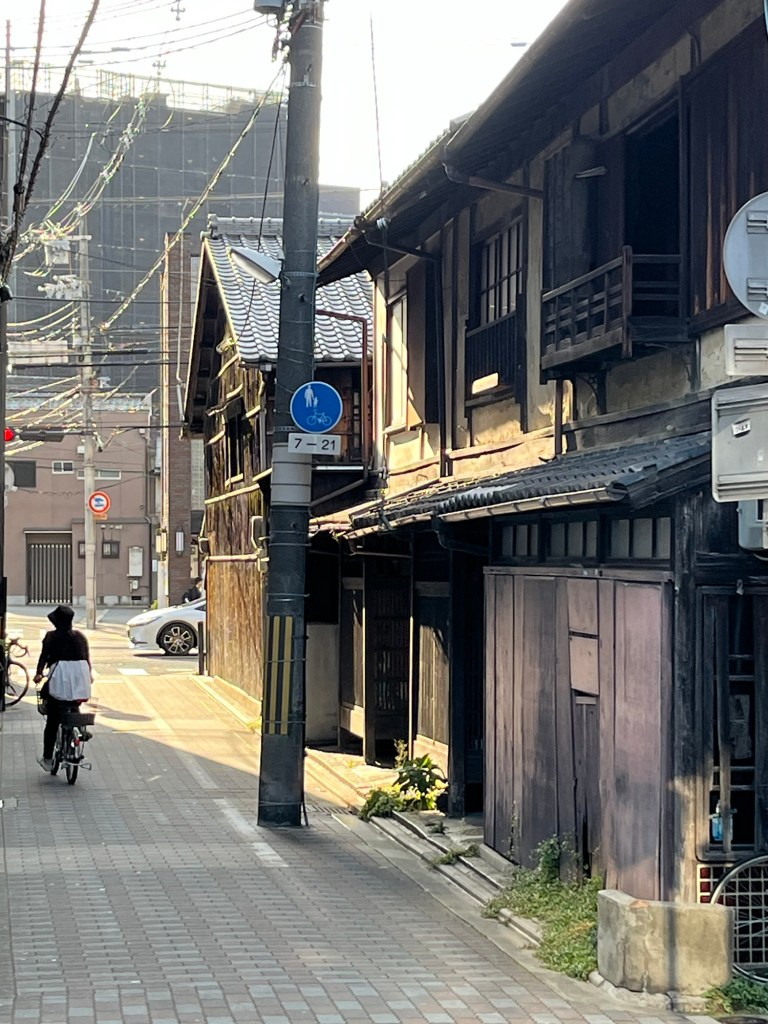
A nearby lane – where we were staying was a mix of charming older buildings & decidedly uncharming newer buildings. It’s a signWhat over-tourism – heading up Matsubara-Dori the main road leading to Kiyomizu-Dera.
Kiyomizu-Dera Temple
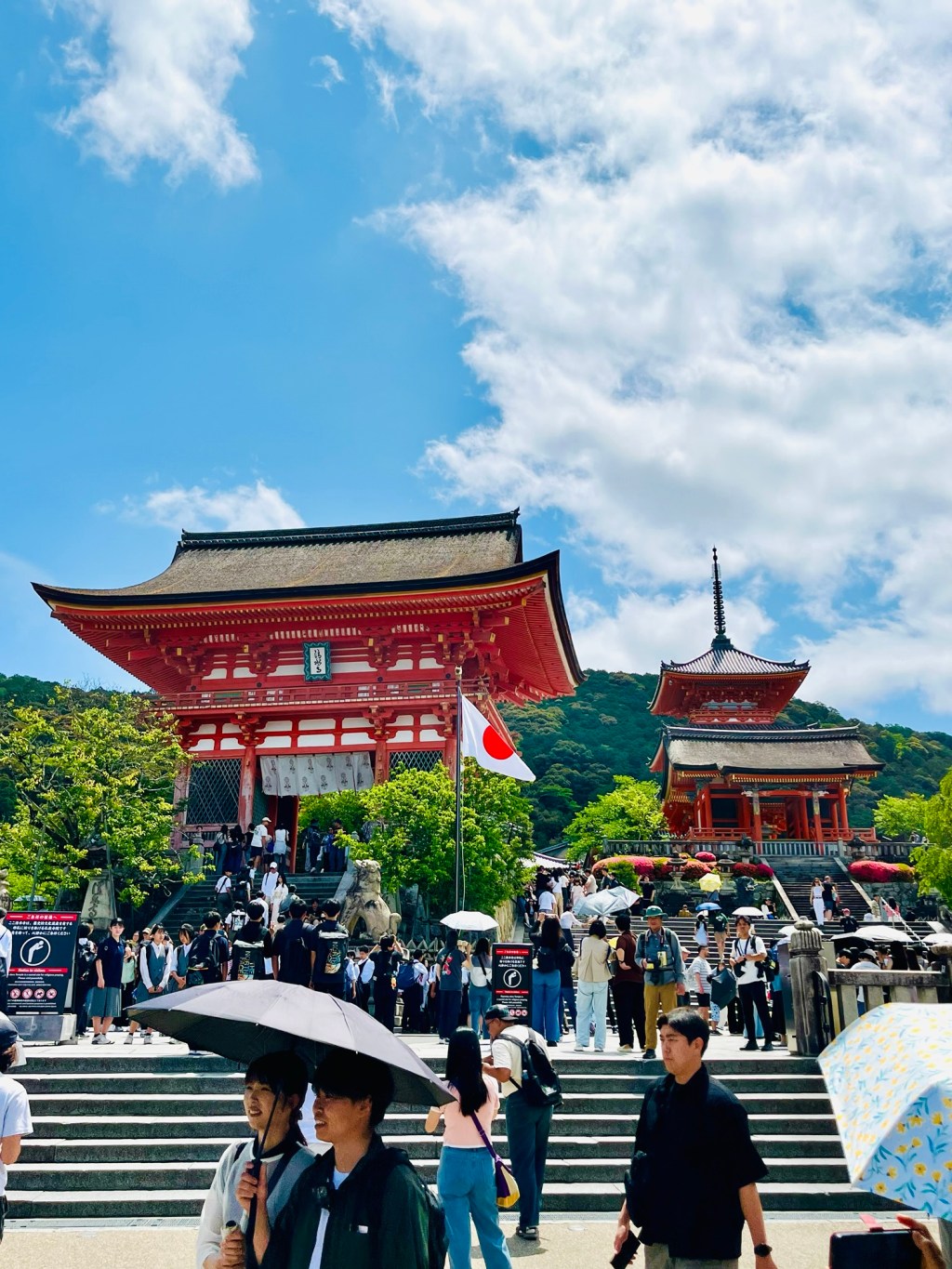
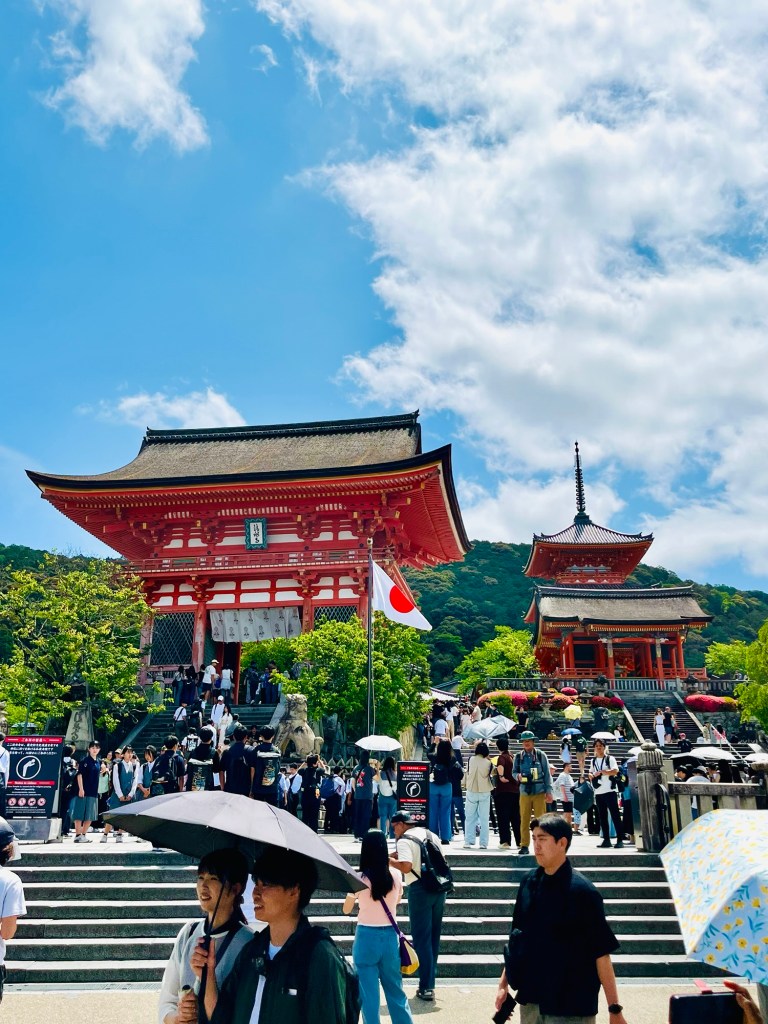
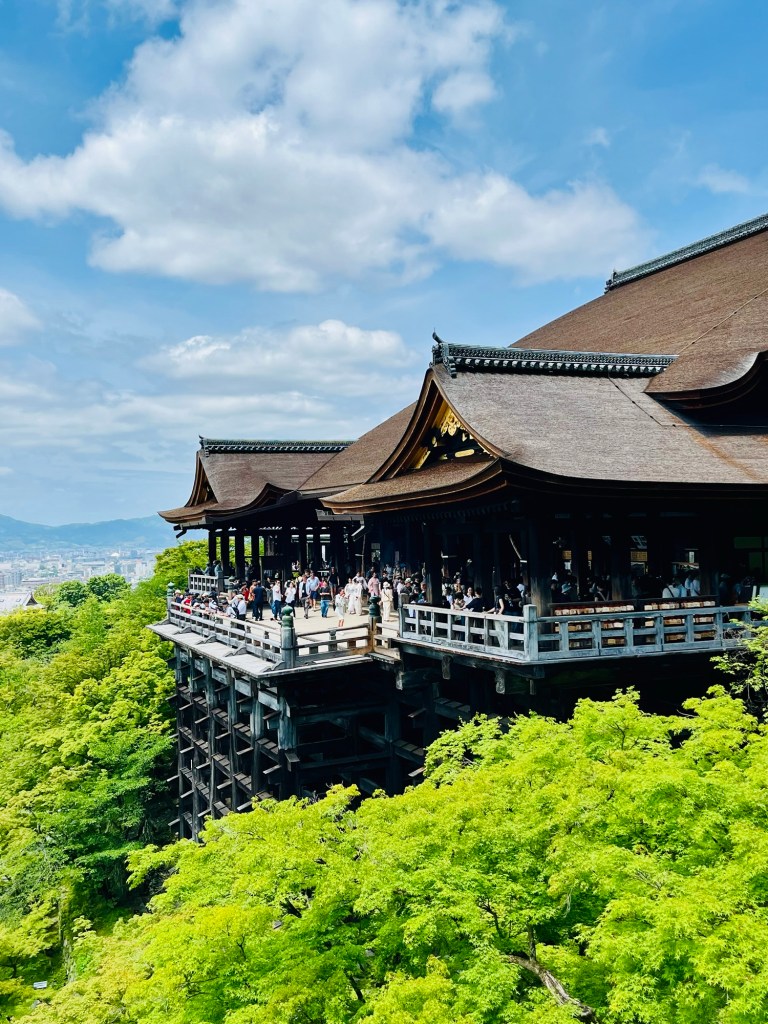
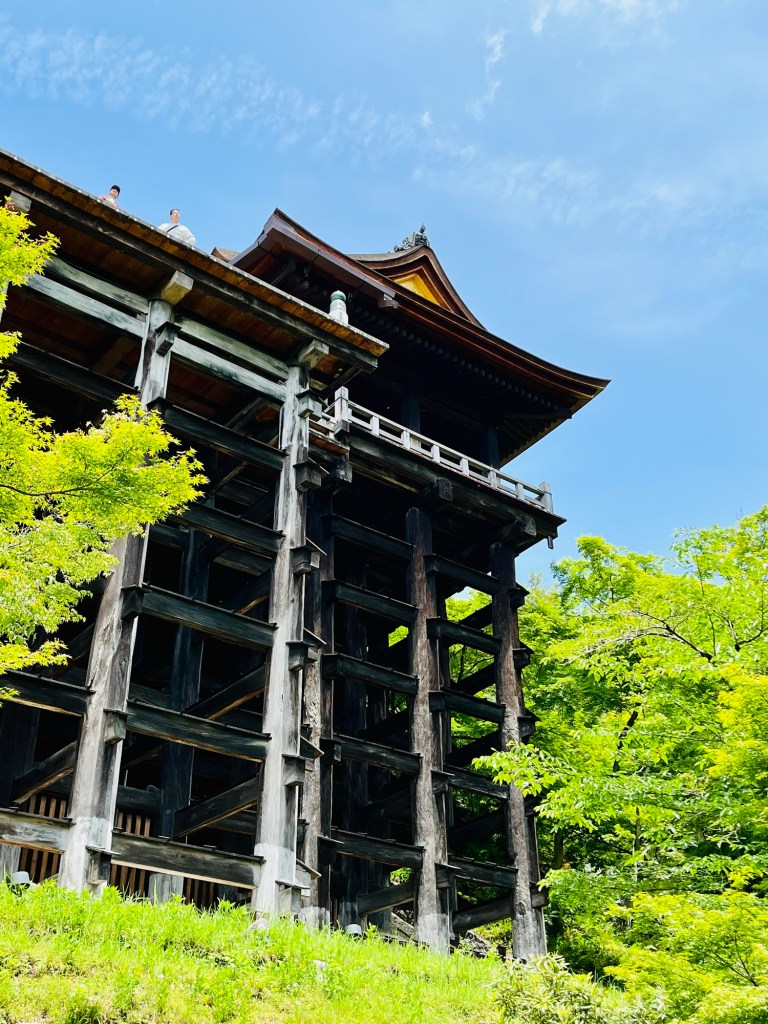
The temple besides being stunning, is one of the oldest in the country being founded in 778. The current temple building dates to 1633, and in what is a recurring theme in Japan has burned down multiple times, in this case nine times. This temple is associated with the Hossō school of Yogācāra Buddhism, which is one of the oldest schools in Japan. It became an Unesco World Heritage Site in 1994.
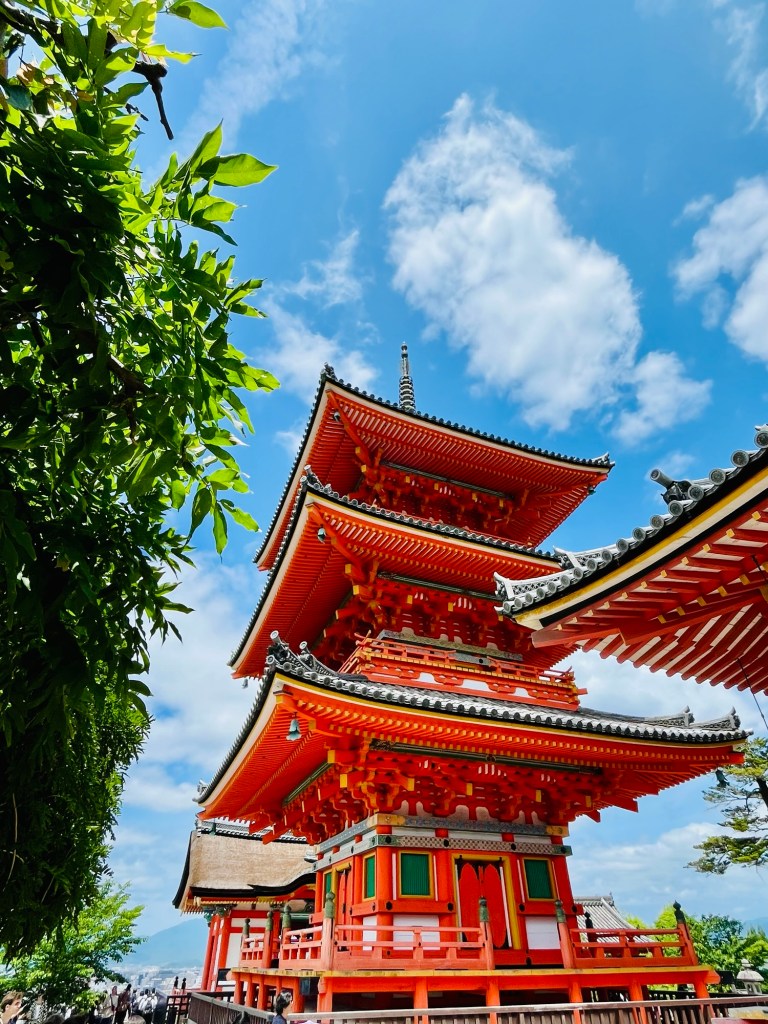
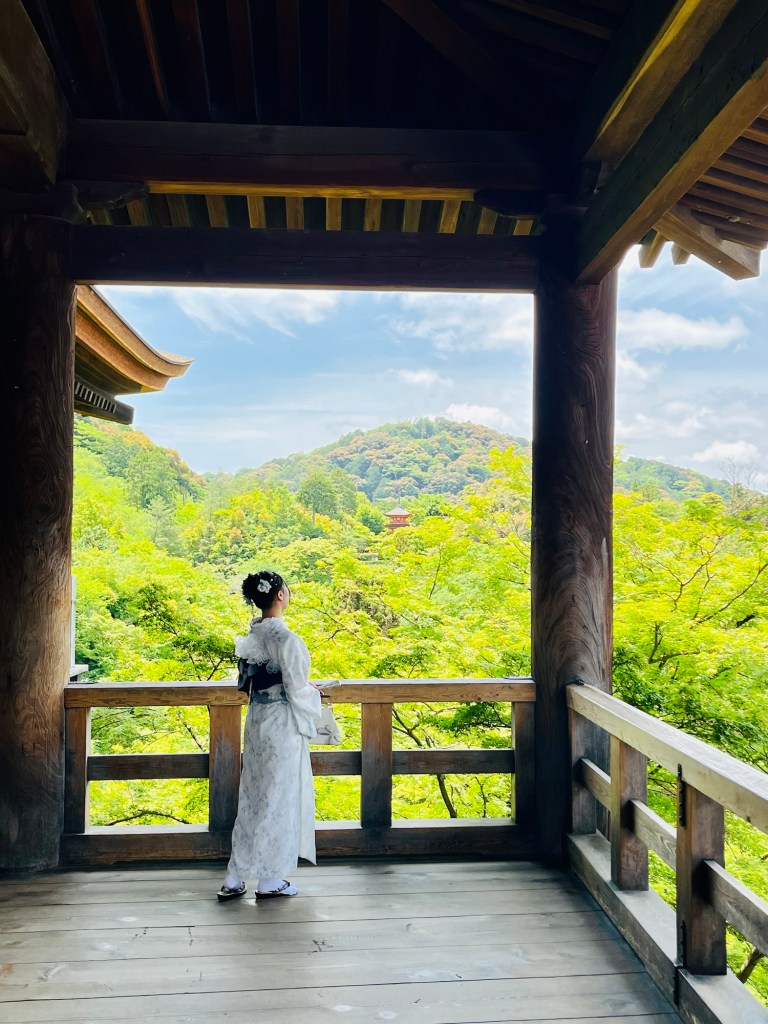
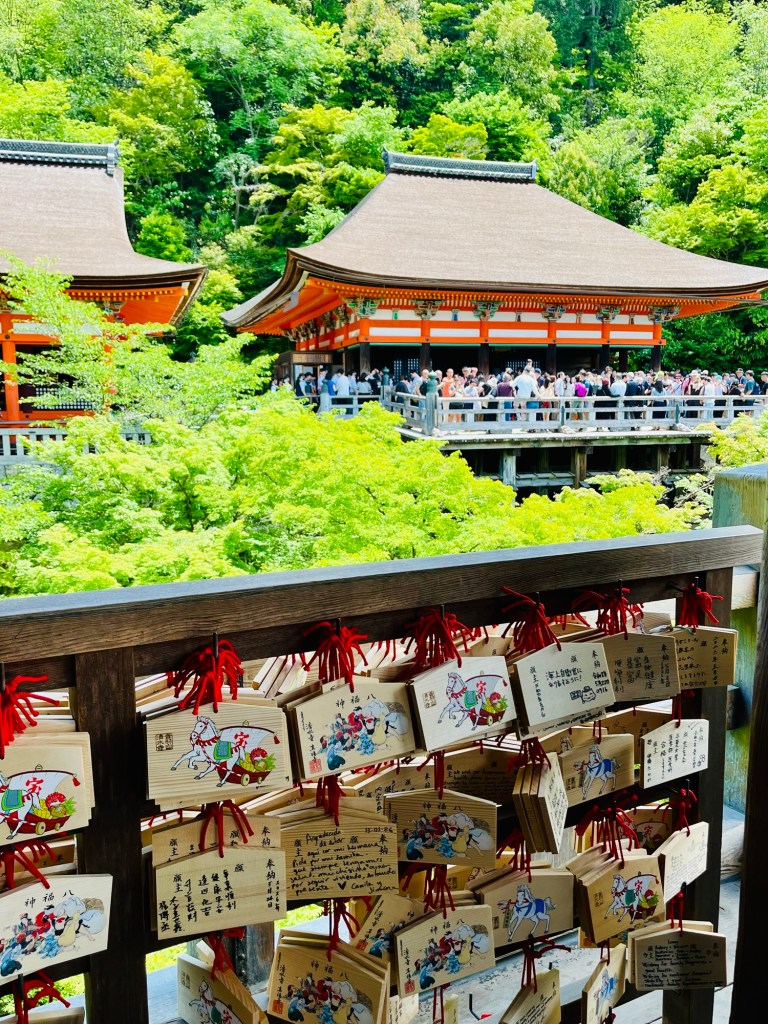
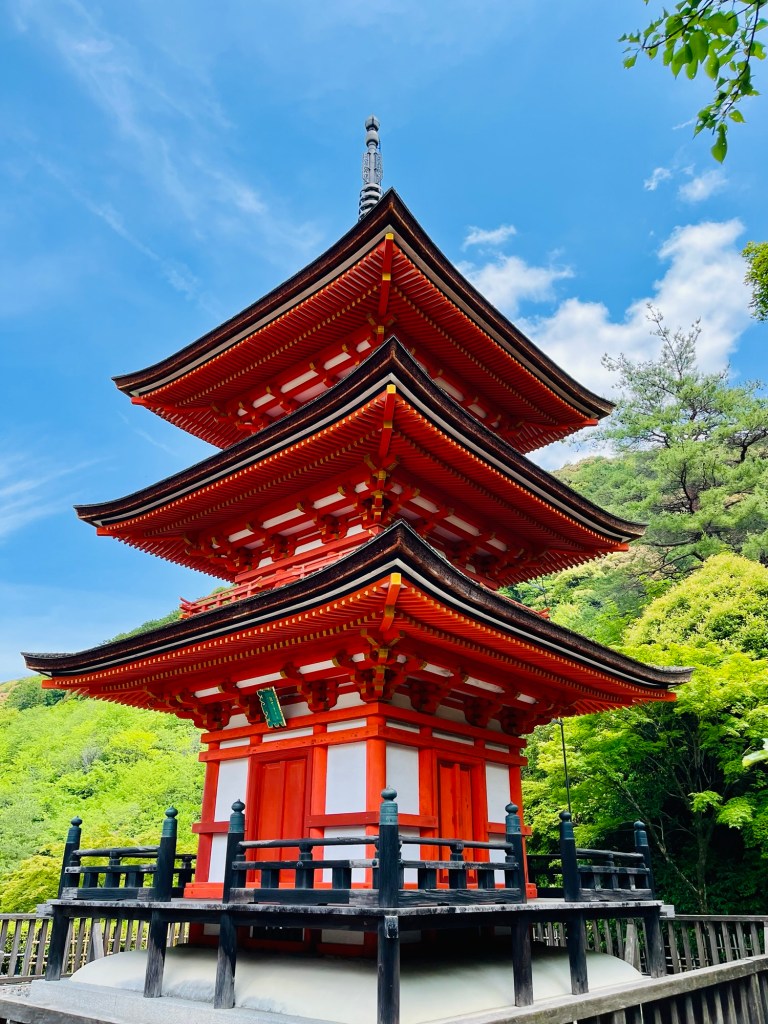
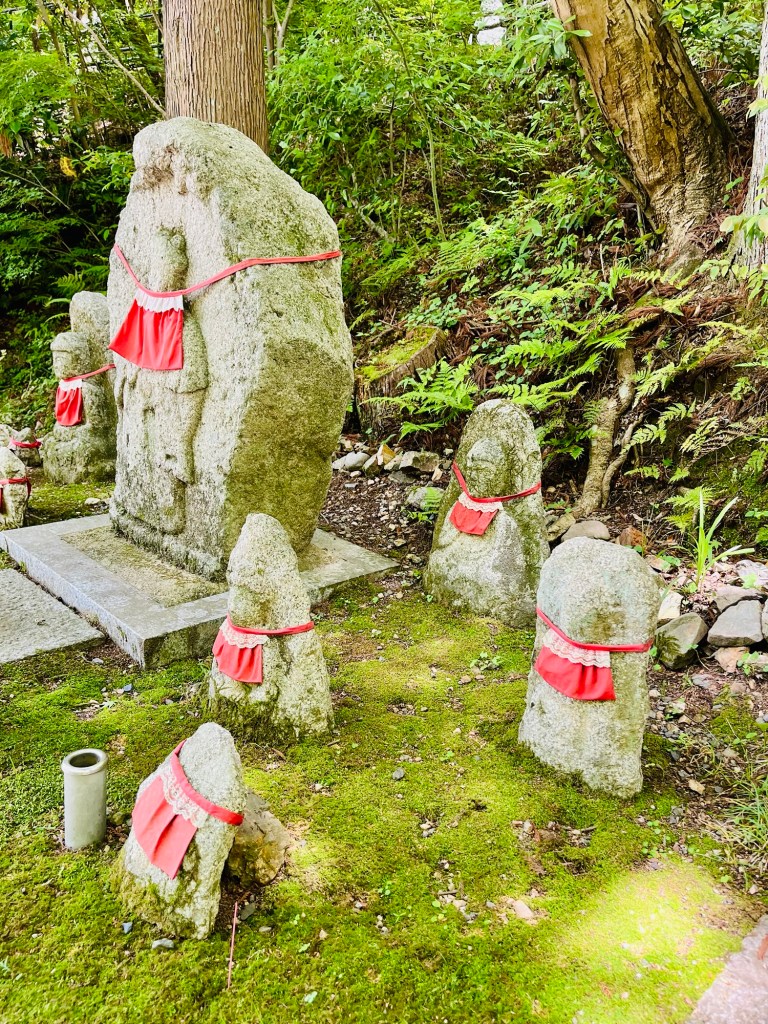
The Niōmon Gate and Sanne-no-to Pagoda on the right.It has a great view over Kyoto More pagoda – it was fiendishly hot when we were there, just out of frame were water misters to keep people cool.More Tik-Tok, than traditional – you can hire Kimonos, quite how you walk up that hill in 30 degree heat in jandals & metres of silk brocade we don’t know, but it definitely must be worth it.It is common for people to come Kiyomizu-dera to pray for romance, academic success & healthThe main temple is stunning, the hall overhangs the valley by 13m. The Koyasu-no-to Pagoda is a short walk awayThese little guys wearing the red bibs are quite heartbreaking, these are Jizō, and are protectors of the souls of babies who have died. The temple is quite high – it was thought that if you leapt off the edge & survived your wish would come true, this practice was rather sensibly banned in 1872.
Sannen-ZakaPath – Yasaka Pagoda
After finding something to eat we headed up the Sannen-Zaka path to see the Yasaka Pagoda.
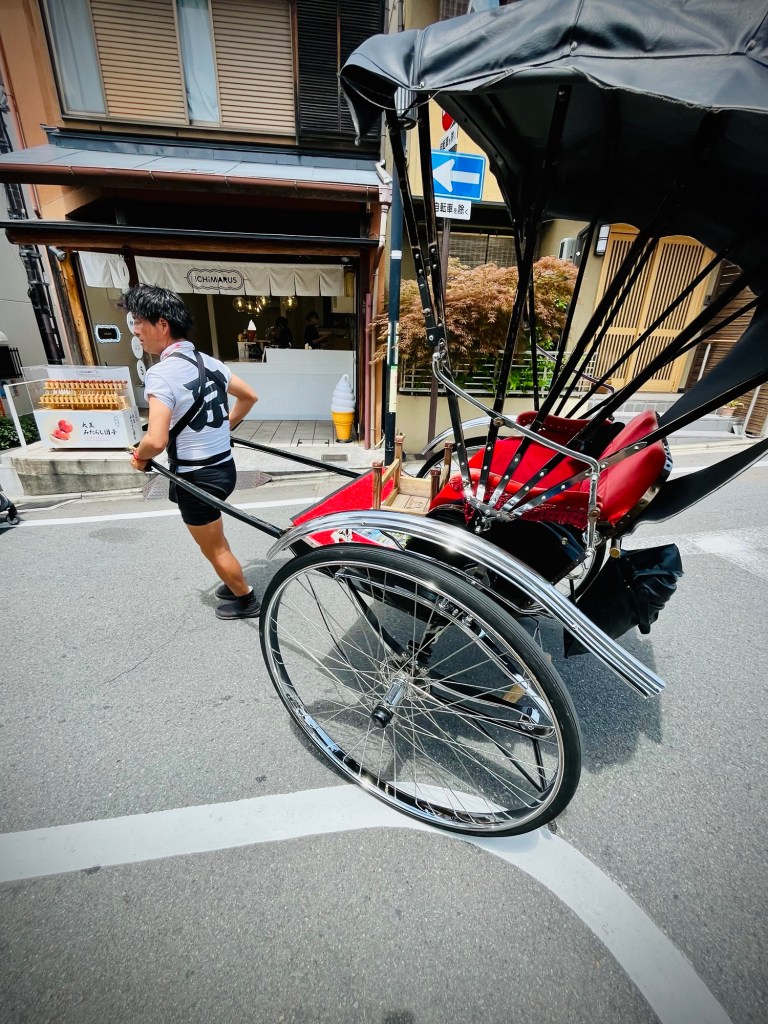
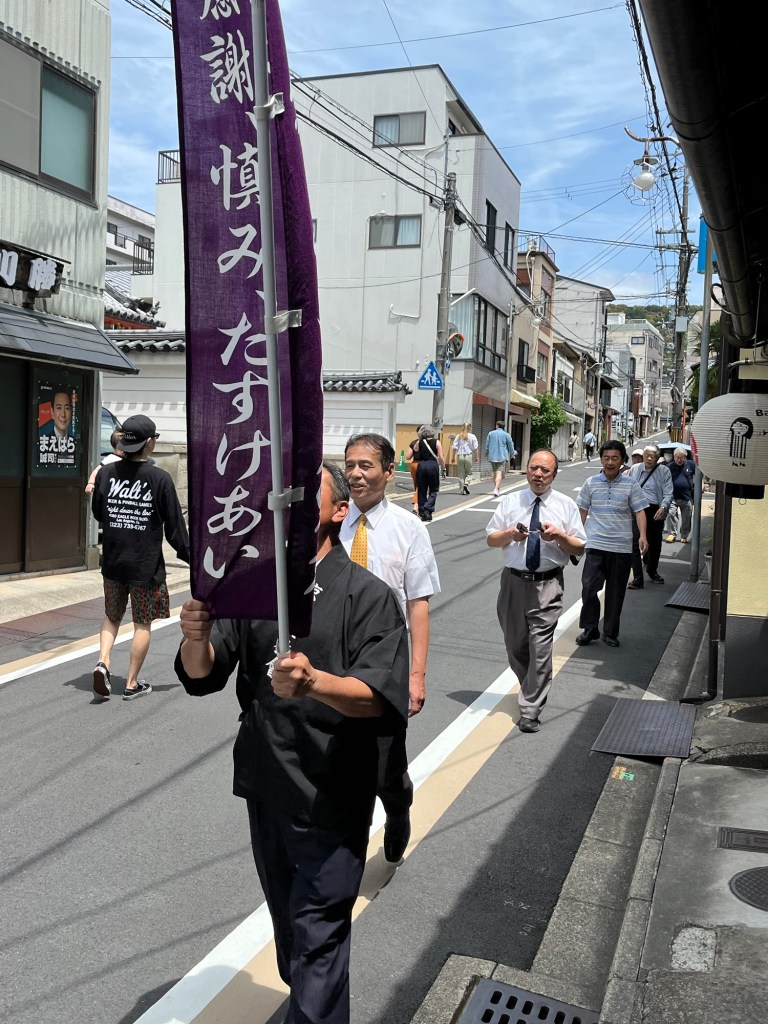
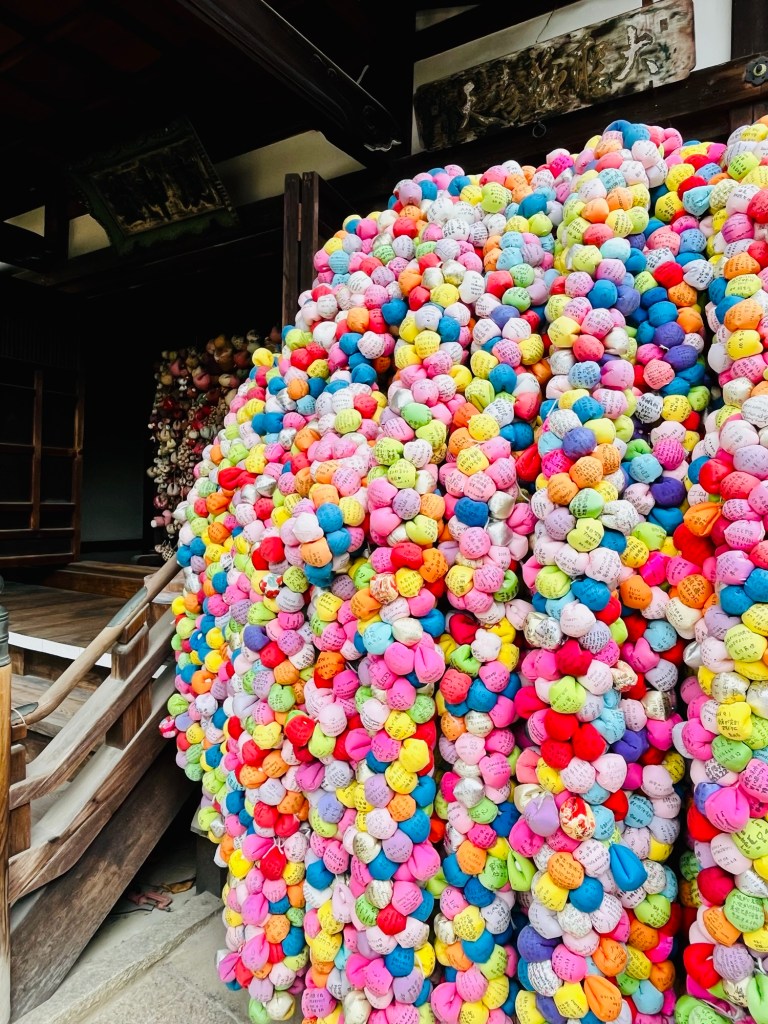
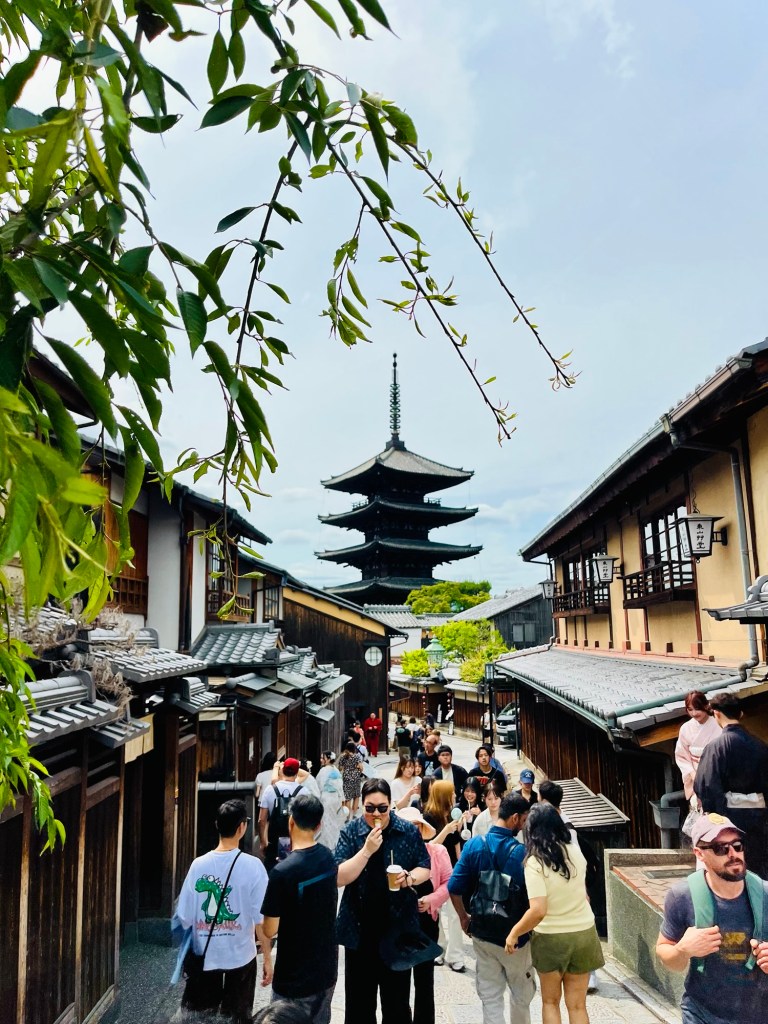
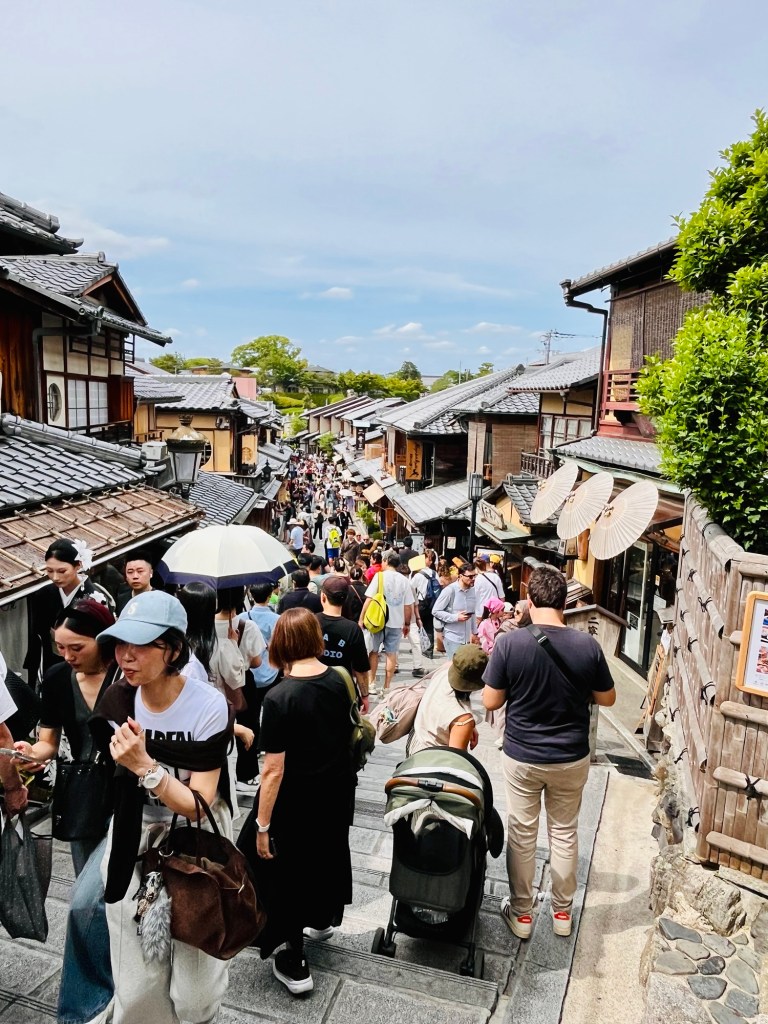
Turns on a dime – a Jinrikisha/Rickshaw runner, these guys are seriously athletic running up & down those steep streets. A local Buddhist congregation marching This is the Yasaka Koshin-do Temple which was just off the street. This is a Kōshin temple which is a syncretic blend of Shintoism & Taoism. You can buy a colourful ball for good luck.Looking down Sannen–Zaka Path to the Yasaka Pagoda, the pagoda is all that remains of a former Buddhist temple & this dates to 1440.
Ninen-Zaka Path
Is another traditional street that leads up to the Kiyomizo-dera temple.
Marnie fighting the crowds
Chion-InTemple
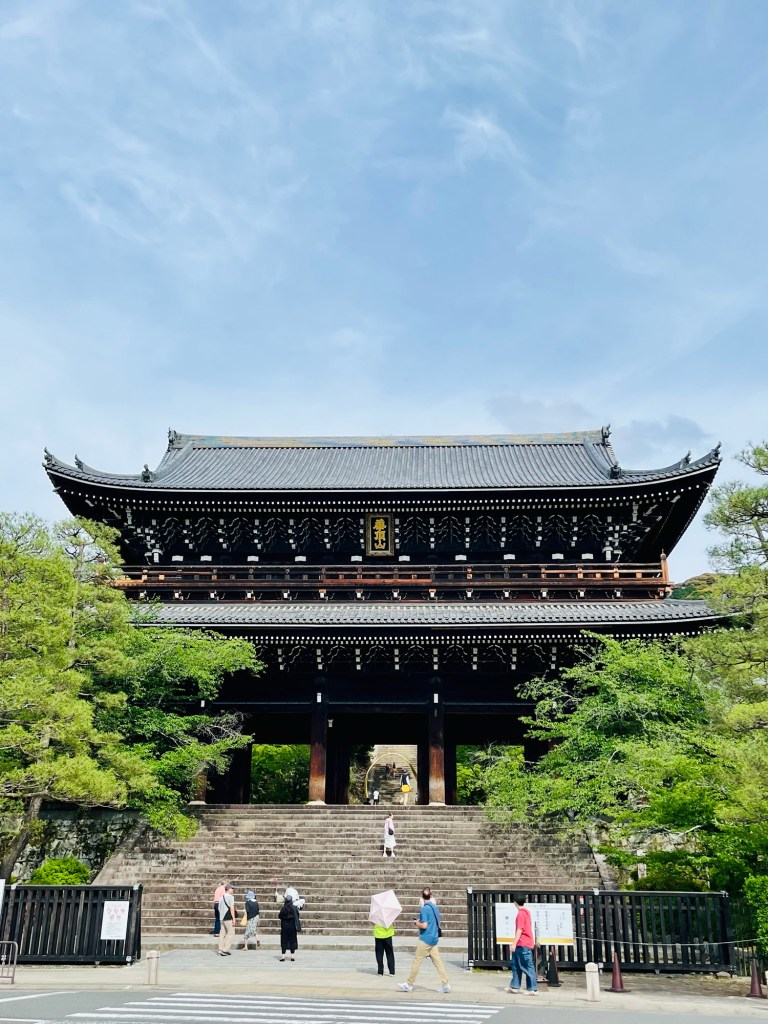
This the main temple of the JōdoShu school of Pure Land Buddhism. The current temple complex dates to the 1600s.
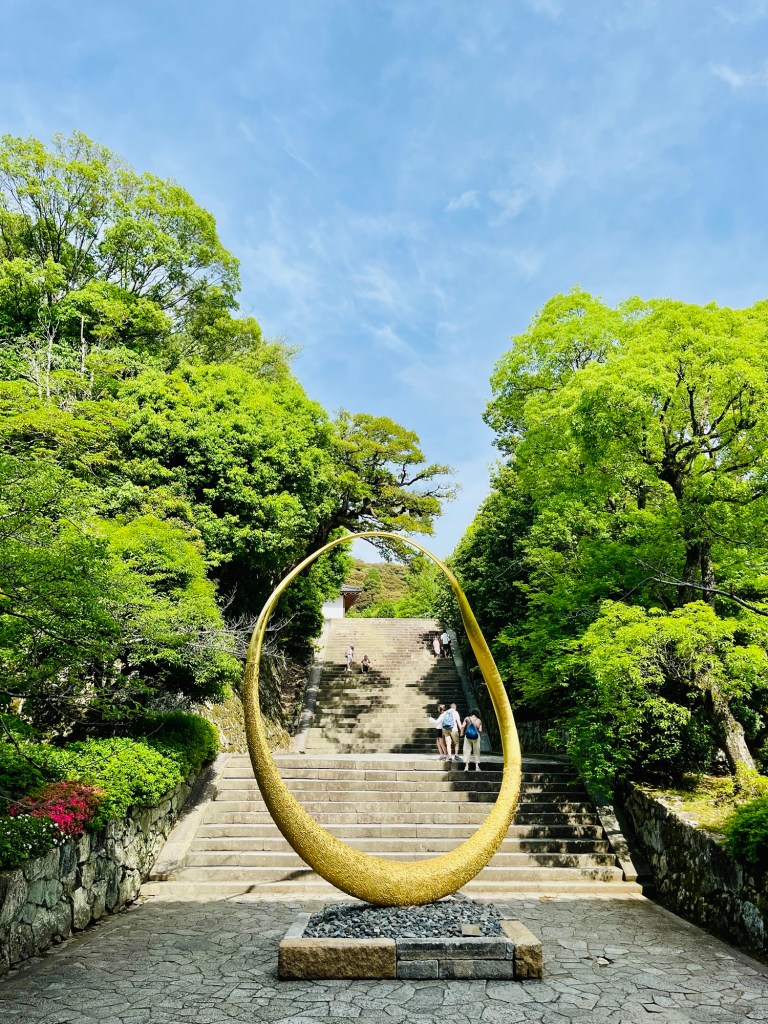
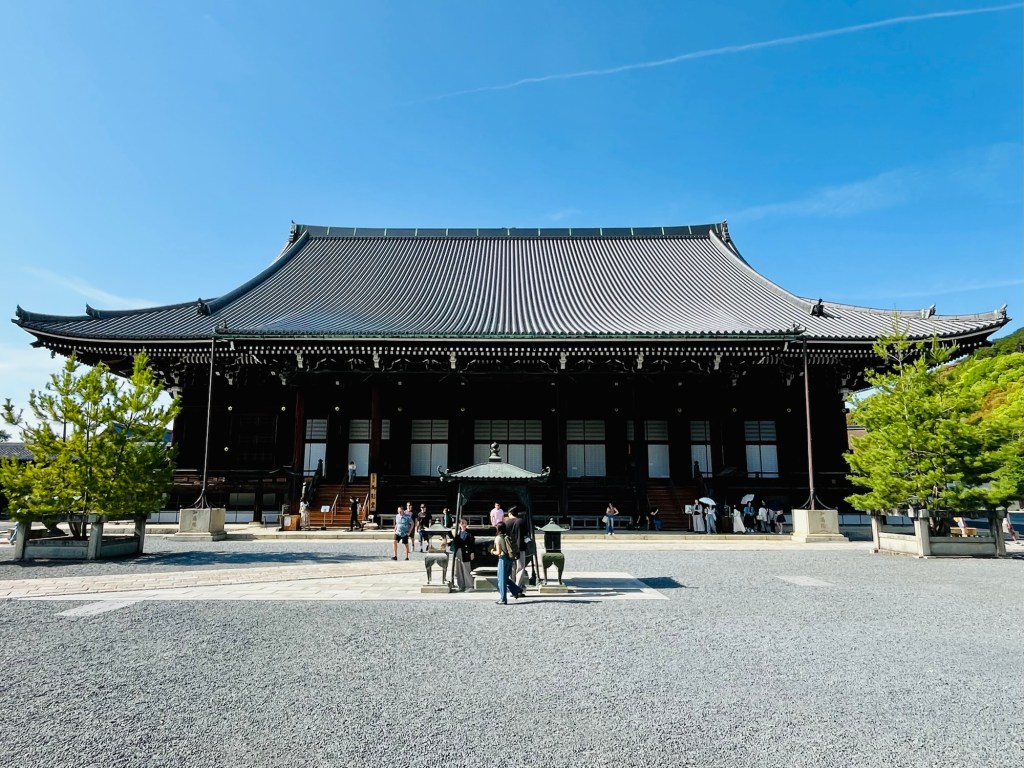
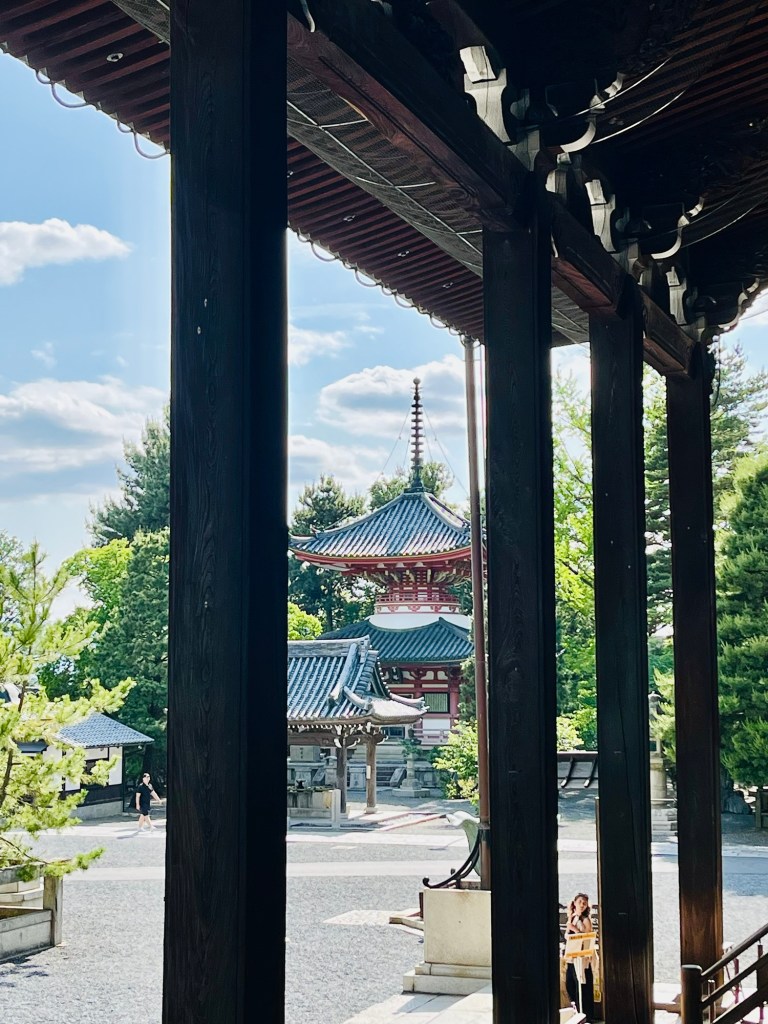
It’s Big – The Sanmon Gate for the Chion-In Temple, this is the largest gate in Japan and dates to 1619.This sculpture called Magnus Rinn is by the Irish Artist Joseph Walsh in front of the steps leading to the temple. The Main Hall – it was still wildly hot when I scrambled out to take this photo in the sun.View from the main hall to the pagoda
Shōren-In Temple
This temple is literally next to the Chion-in. However, most of the Buddhist temples in Kyoto seem to close at 4.30pm, we were rapidly running out of time so we largely popped our heads in to check it out. While the temple as an entity has existed since 1150, the current temple only dates to 1895, after a series of fires burnt down previous iterations of the temple. This is also the main temple for the Tendai School.
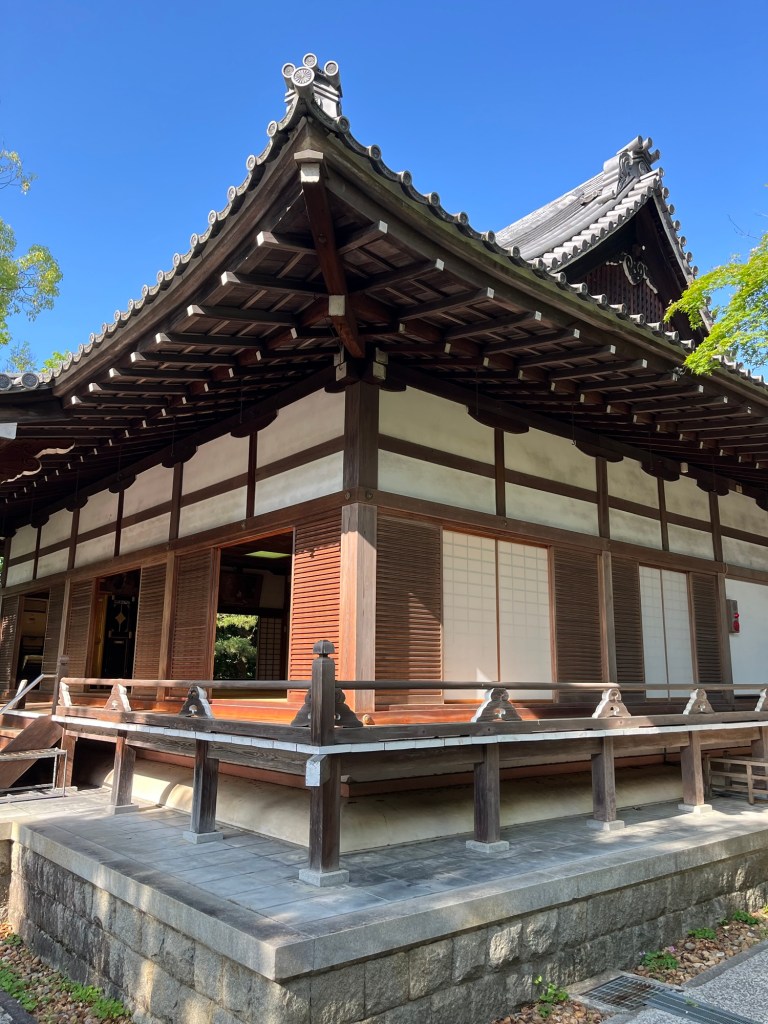
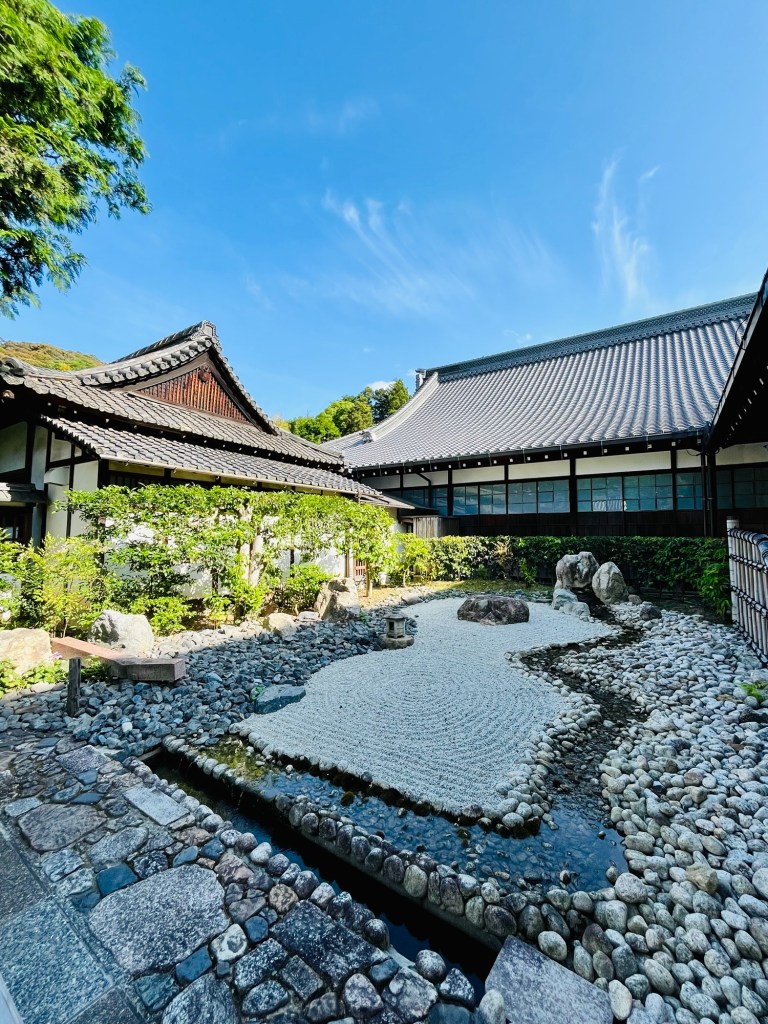
The Uekamido a sub-hall of the Shōren-in templeA Karesansui or Japanese Rock Garden.
Yasaka Shrine
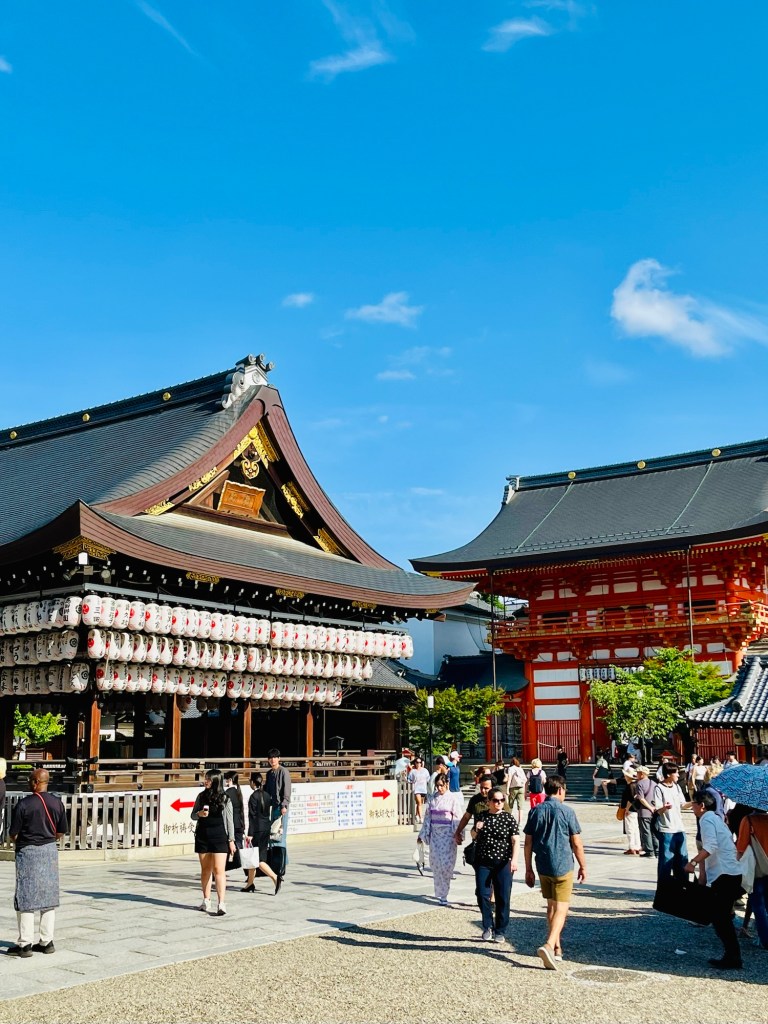
This Shinto or Japanese Folk Religious shrine dates to 656. Shinto focuses on Kami these are spirits or gods that reside in nature. Up until the Meiji restoration in 1868, Shinto & Buddhism were largely intertwined in Japan. The shrine until that point had Buddhist buildings, with shrine’s principal deity Susanoo-no-Mikoto having become associated with Buddhist figures.
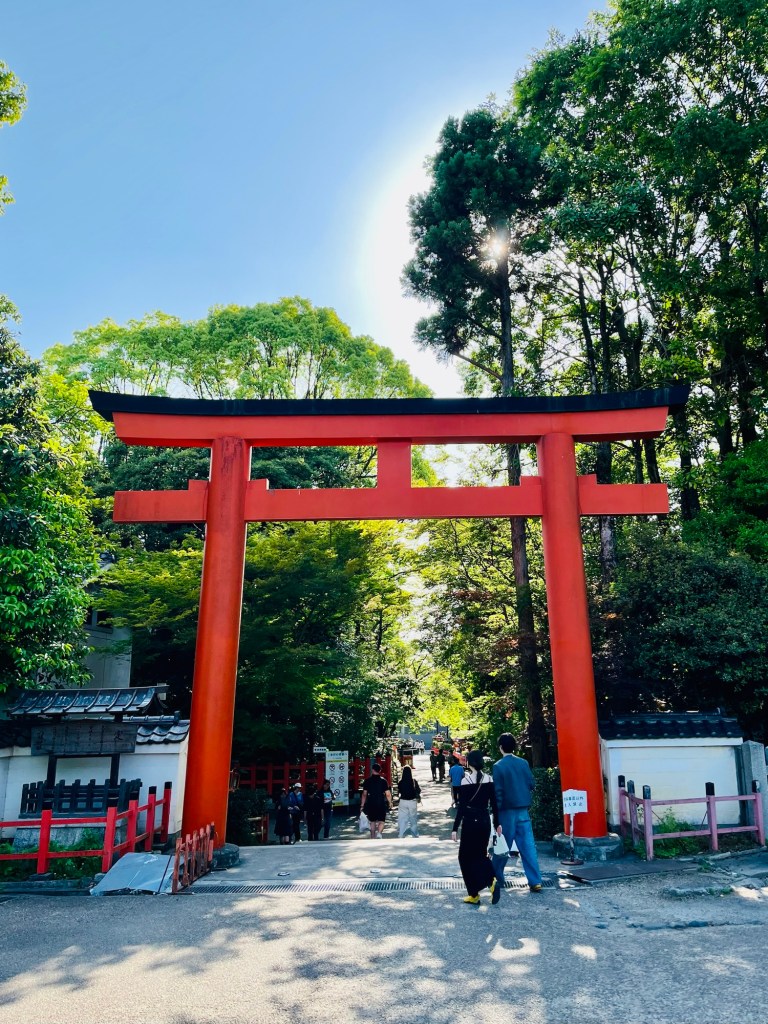
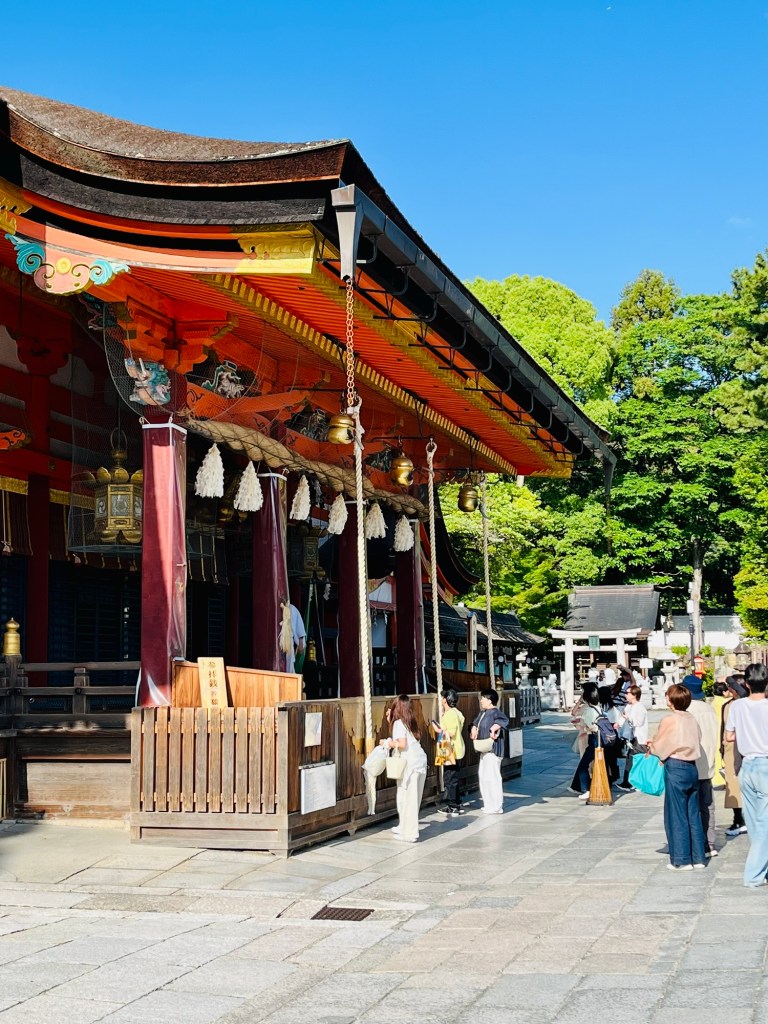
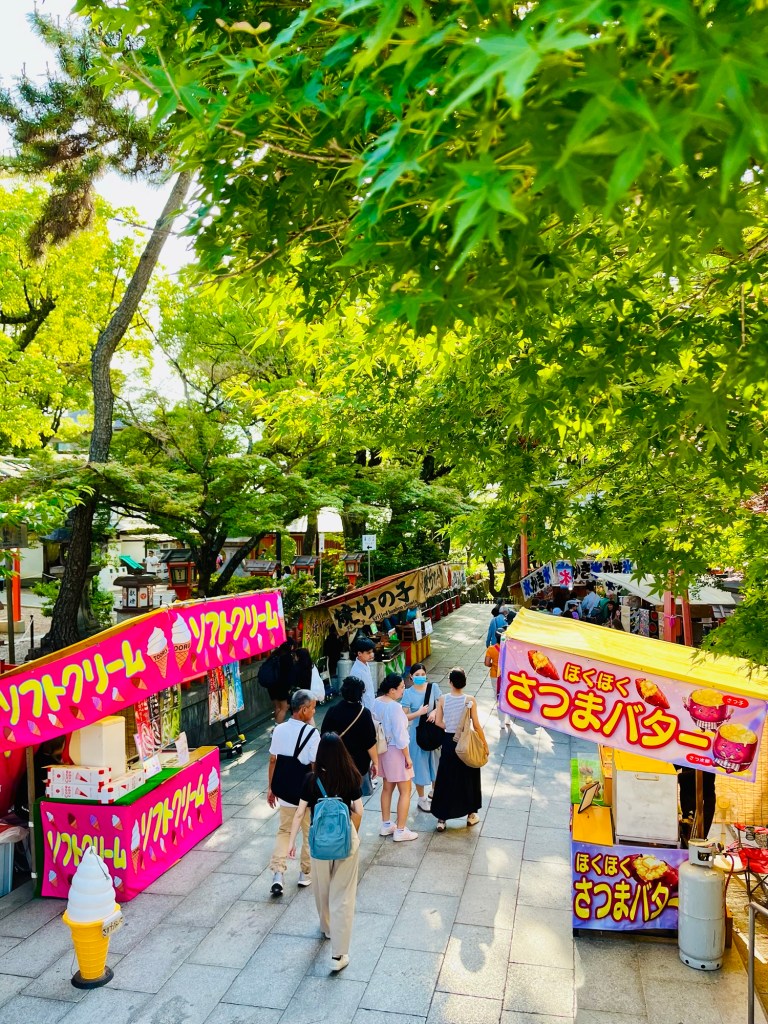
The Torii Gate to the Yasaka Shrine, these mark thresholds to Shinto Shrines.The Yasaka Shrine – this is the centre of the Gion Matsuri festival, which is largest held in Japan. People ringing the bell for good luck at the ShrineYasaka Shrine comes with snacks – food stalls
Bye Higashiyama
Leaving the Yasaka Shrine we headed back to our hotel.
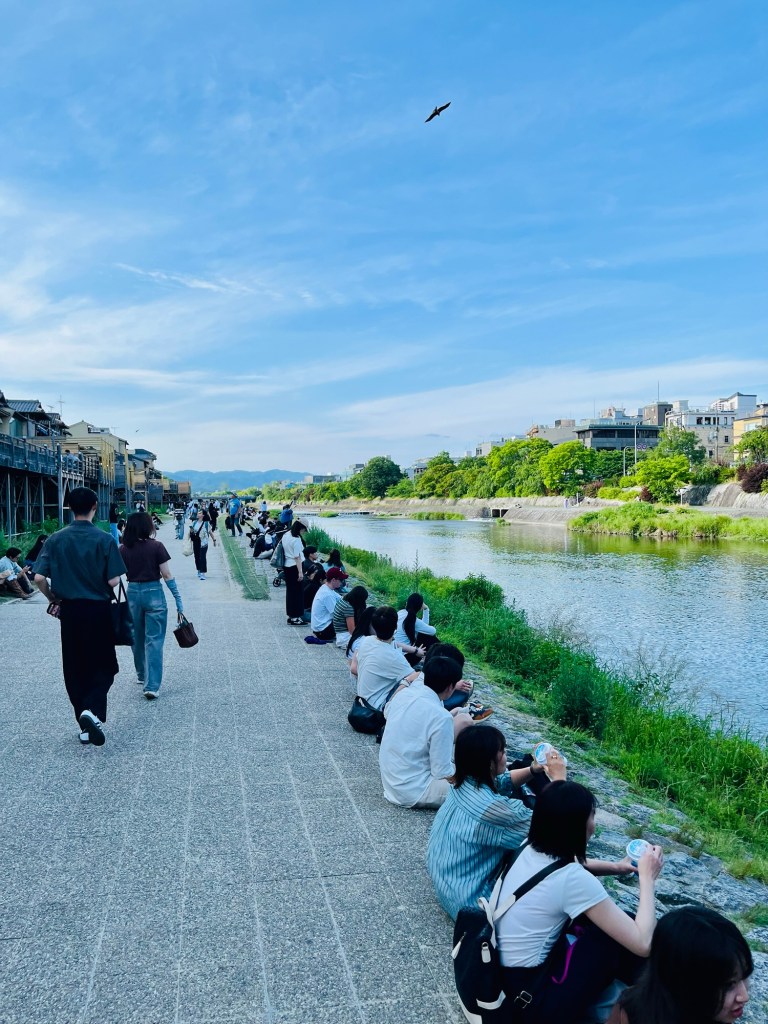
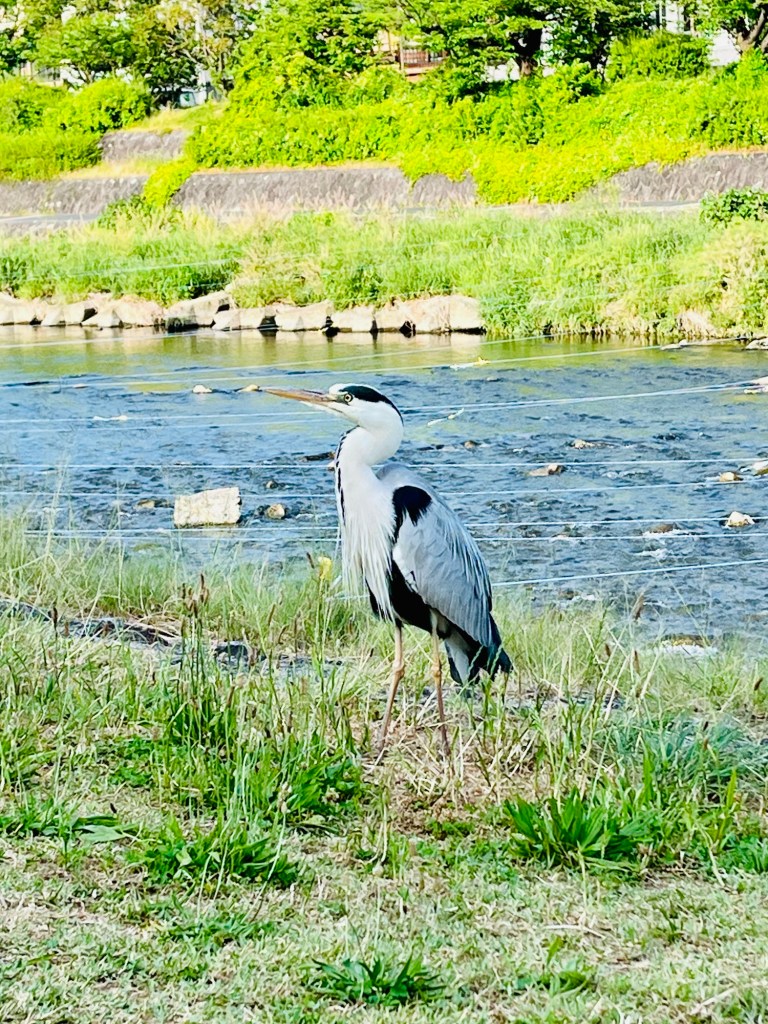
People relaxing in the cool, beside the Kamogawa River. Even the Heron’s were relaxing in the cool. Sun setting on a fairly large day
 MM4.Travel
Leave a comment