Saturday October 5
In the post-Covid-hyper-over-tourism age we were well aware that you had to book well in advance to even have a chance to get in the door of some places. This brings us to the Sagrada Família; where, at some point over the Mediterranean at 30,000 feet or so, it occurred to us that we hadn’t booked. It had been on the list but for whatever reason we never got to it, something for next time. Not that there’s a shortage of Gaudi buildings in Barcelona.
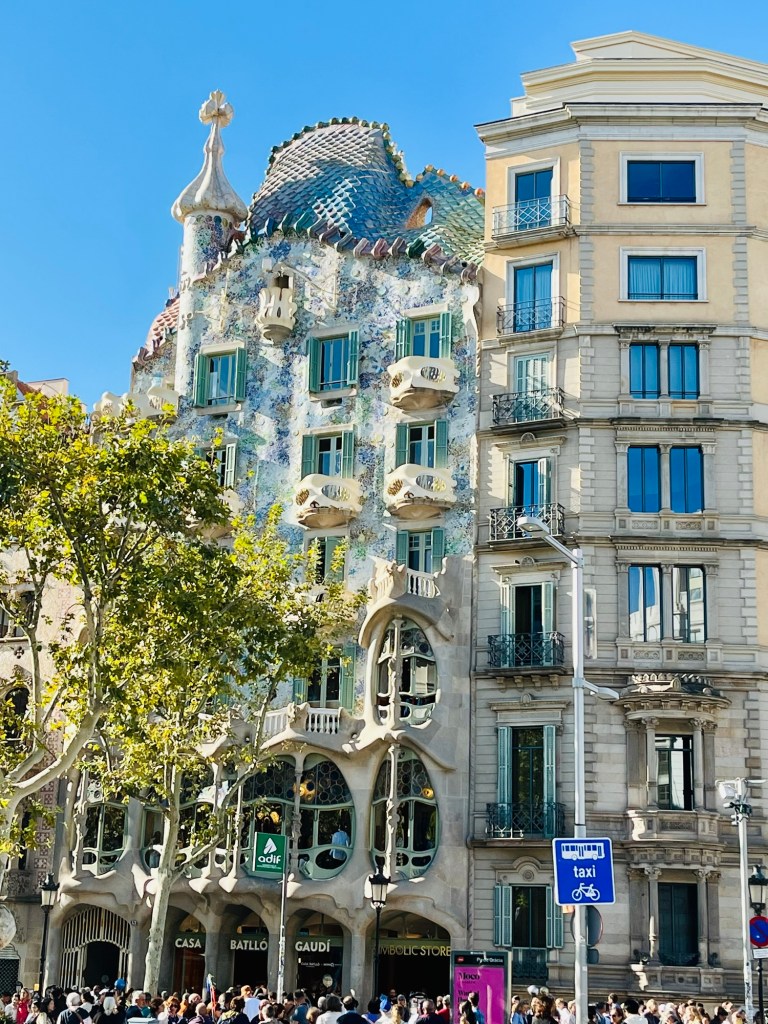
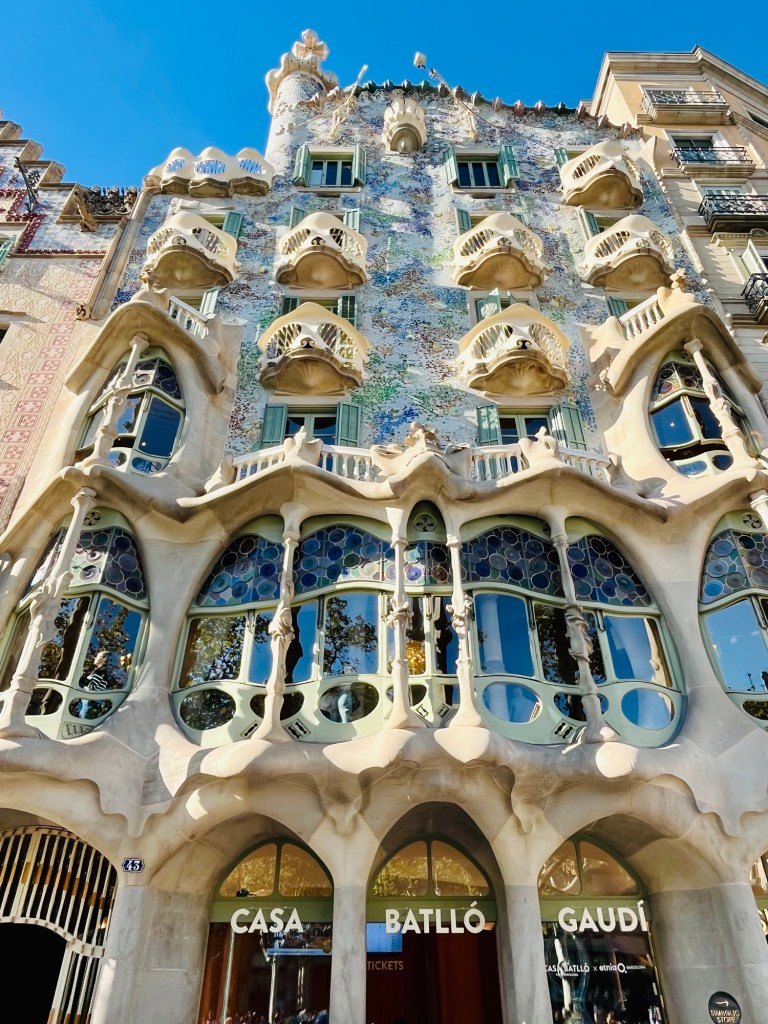
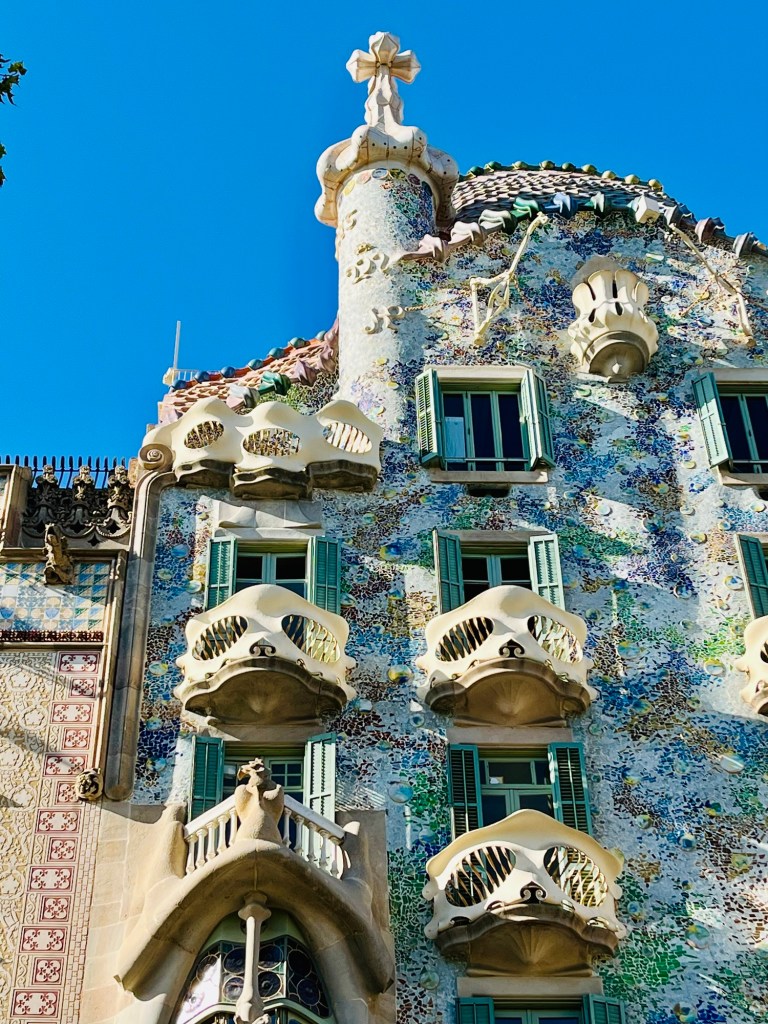
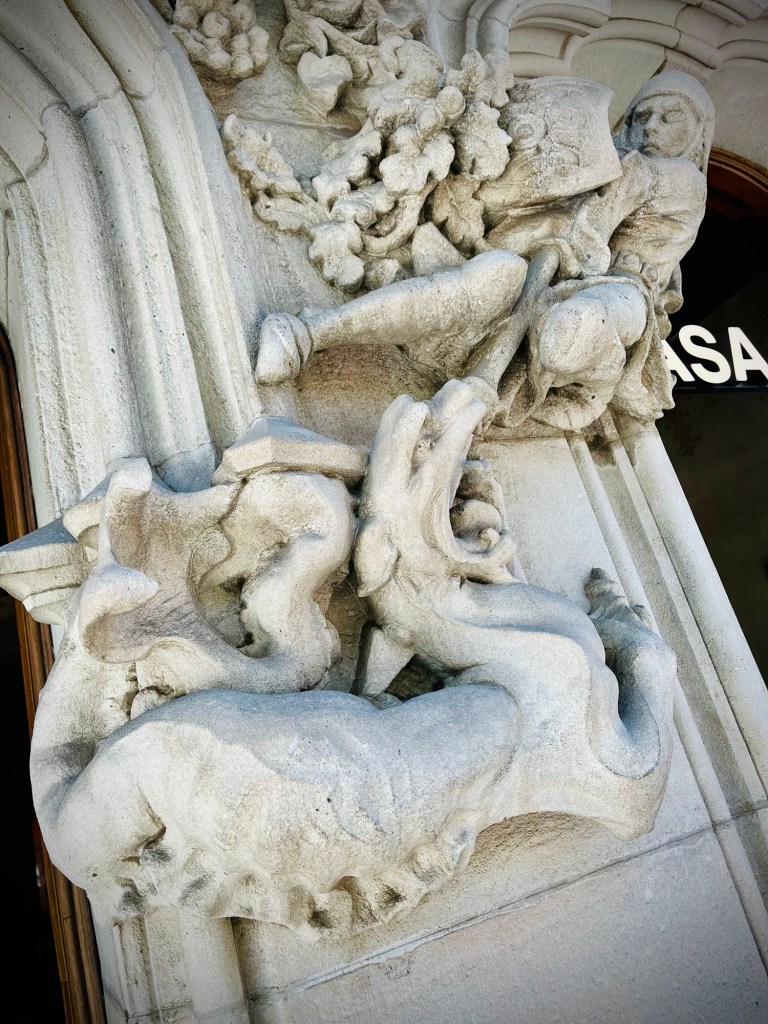
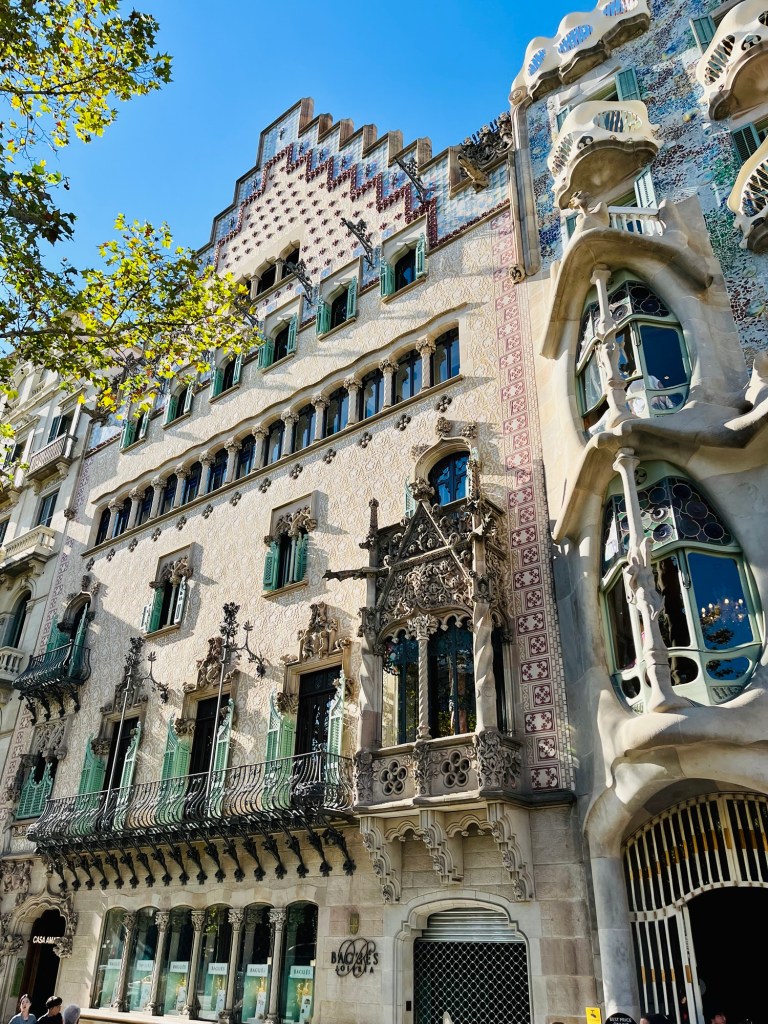
Casa Batlló
As it happens Casa Batlló was a short distance from our hotel, the house was built in 1877 but remodelled by Gaudi in 1904-06 for a wealthy industrialist. It was made an UNESCO World Heritage Site in 2005.
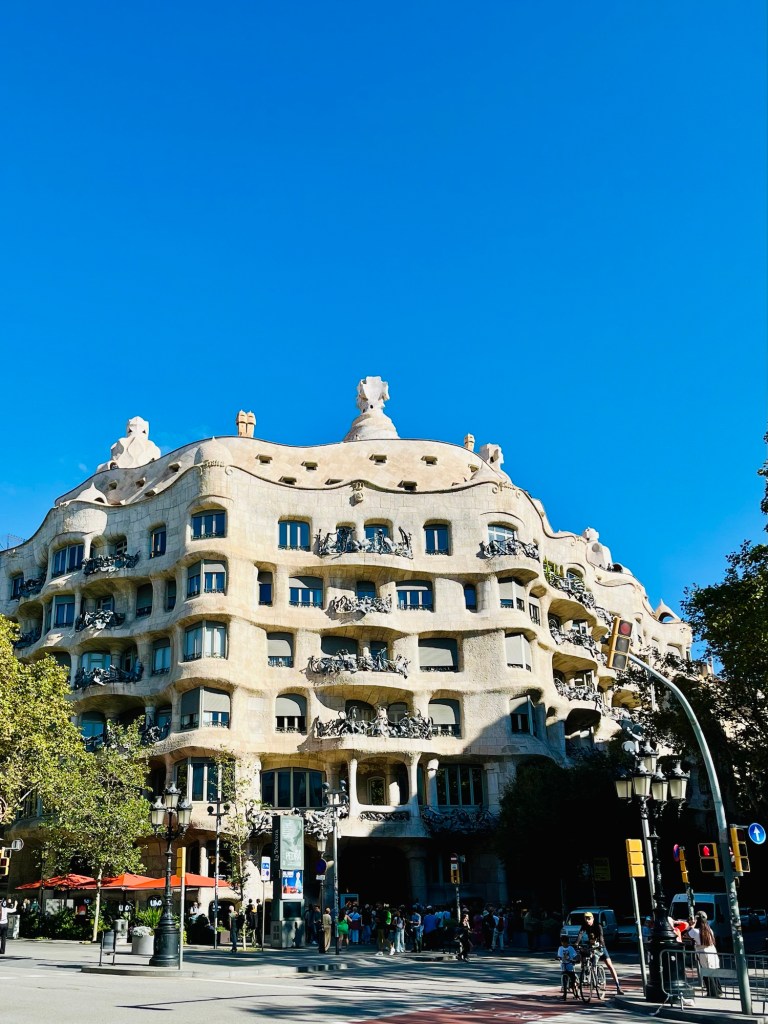
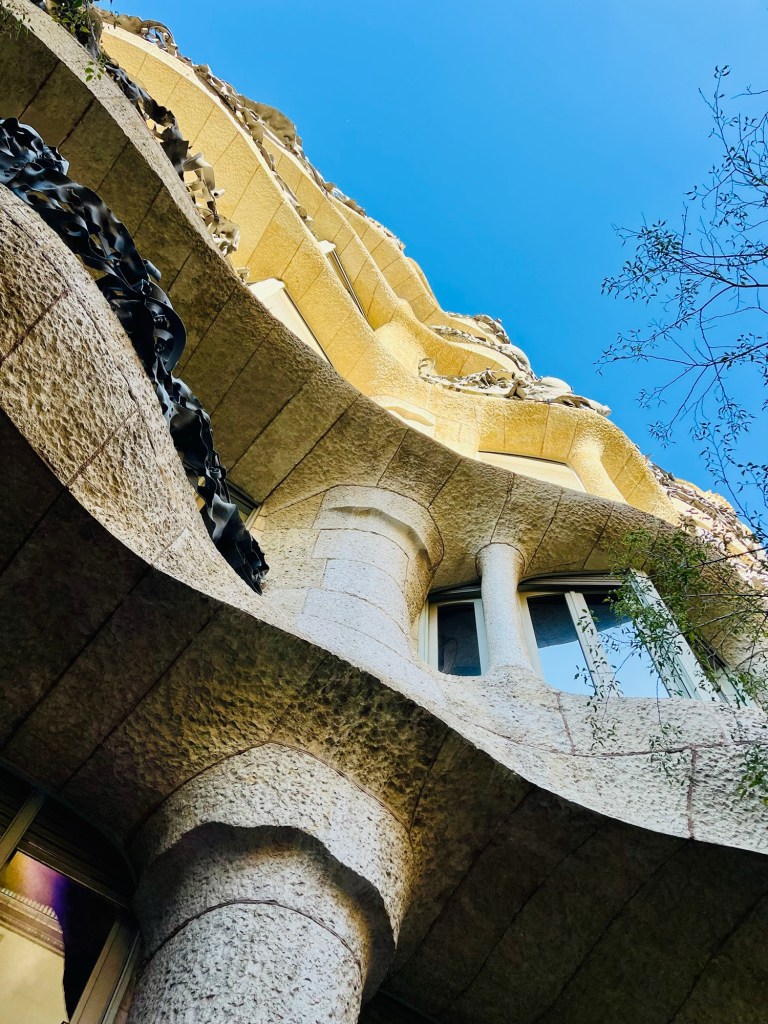
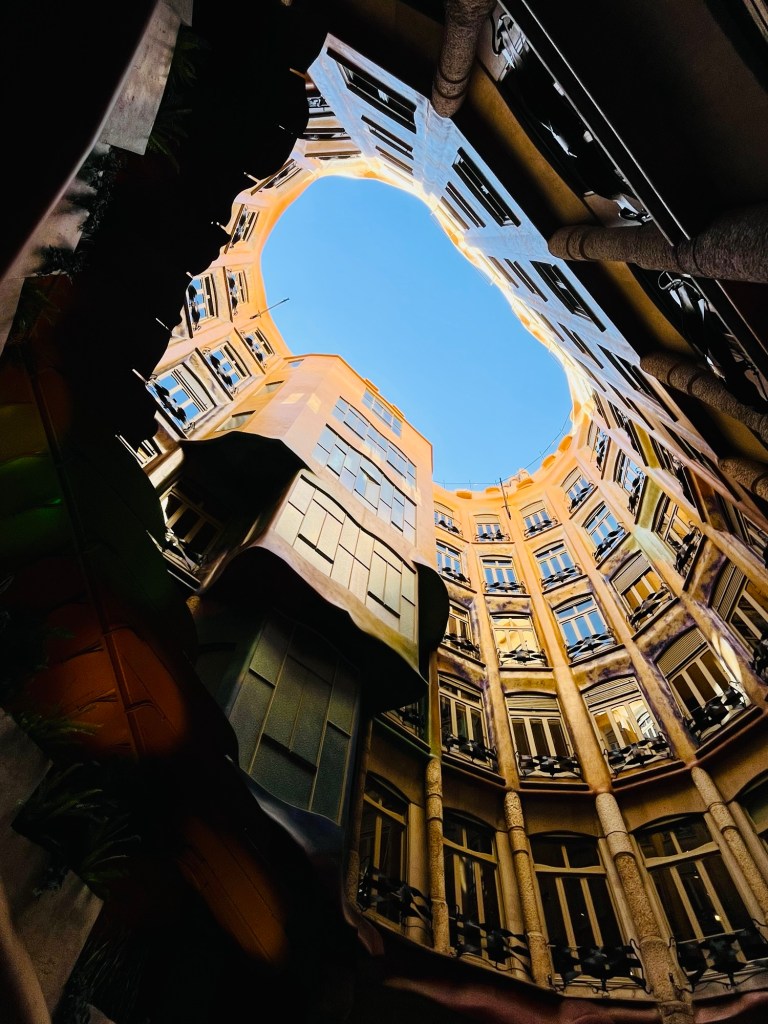
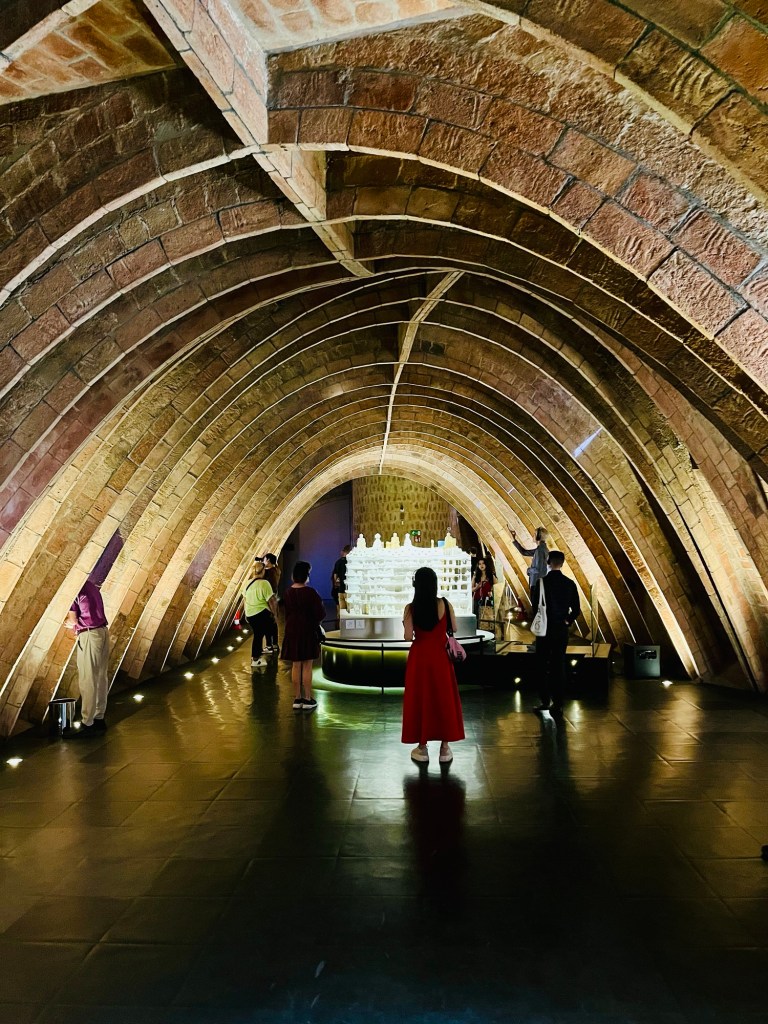
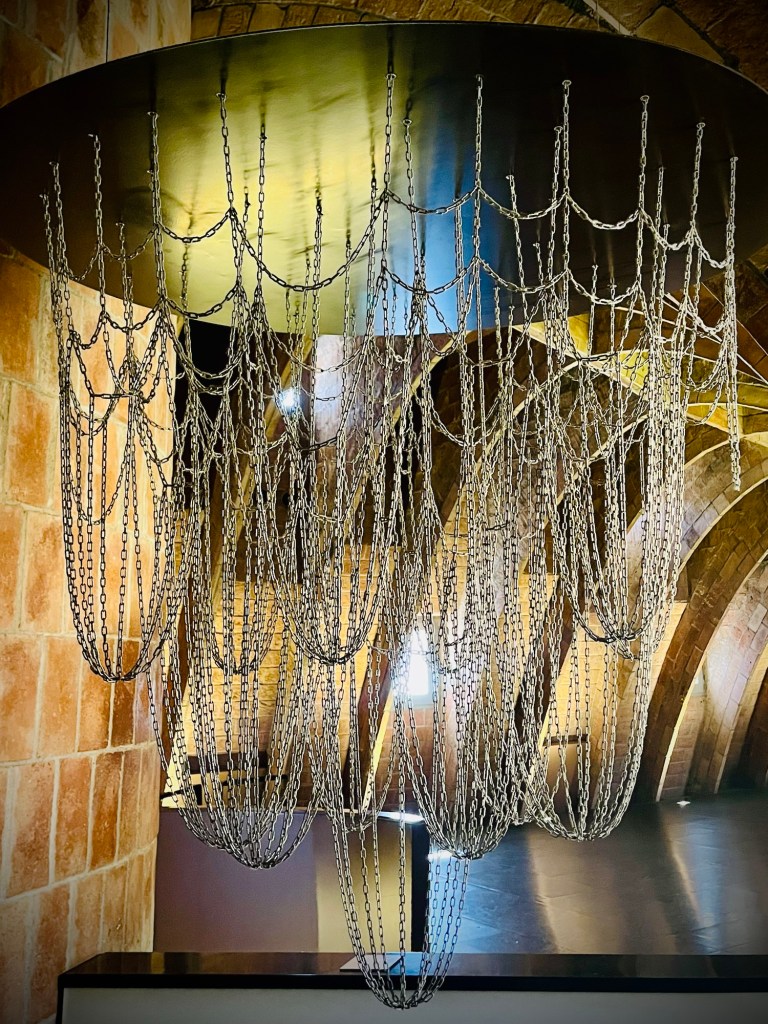
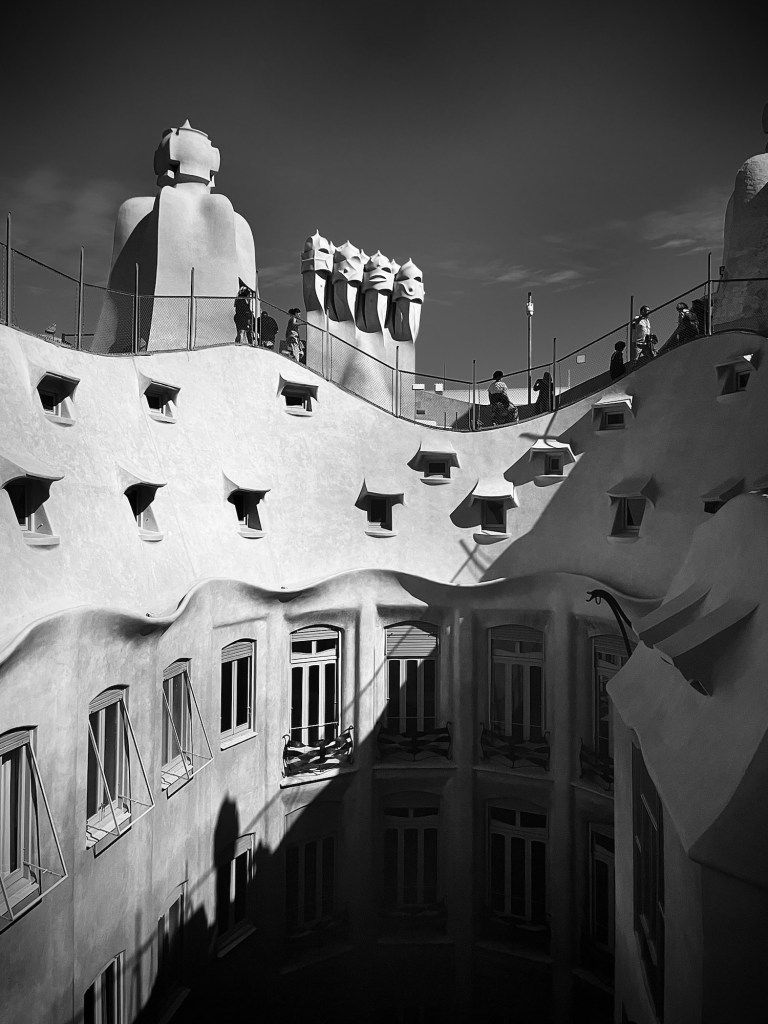
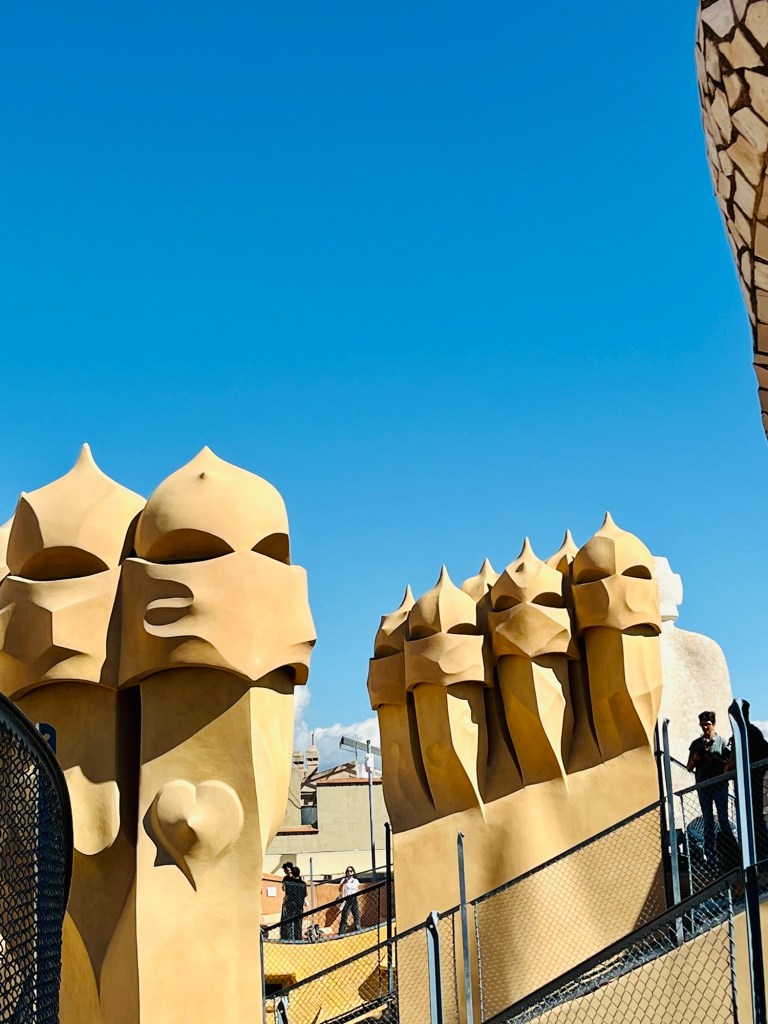
Casa Milà
A short walk up the road is Casa Milà another Gaudi building, built between 1906-12, it also became an UNESCO World Heritage Site in 1984.
Passeig de Gràcia
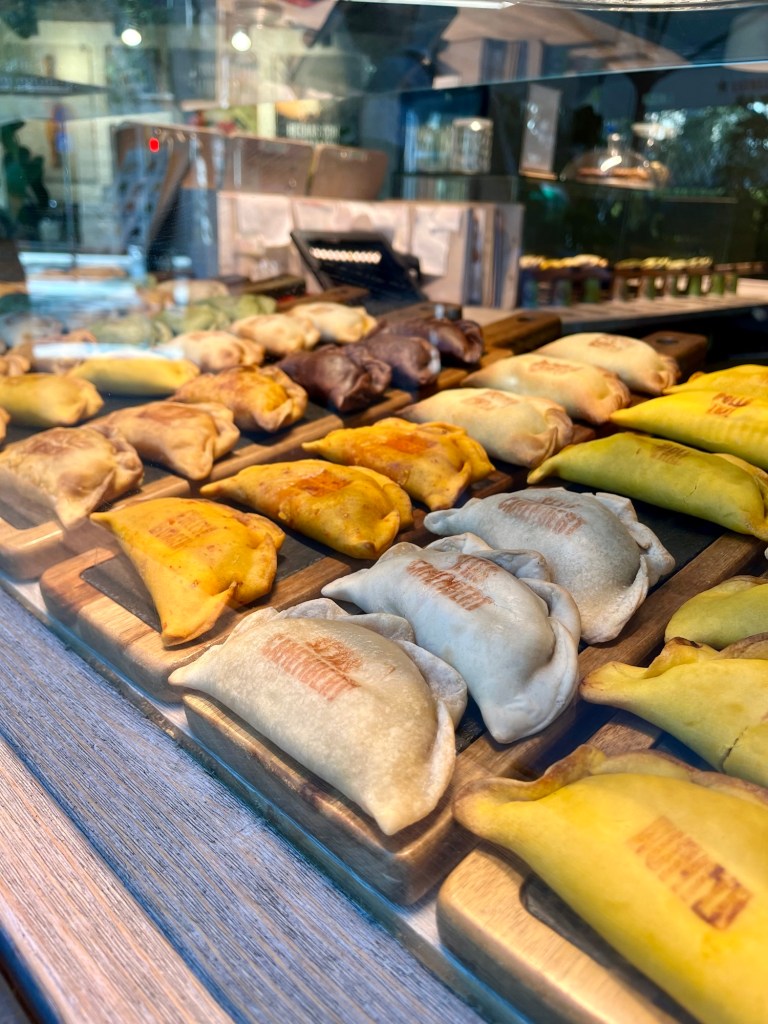
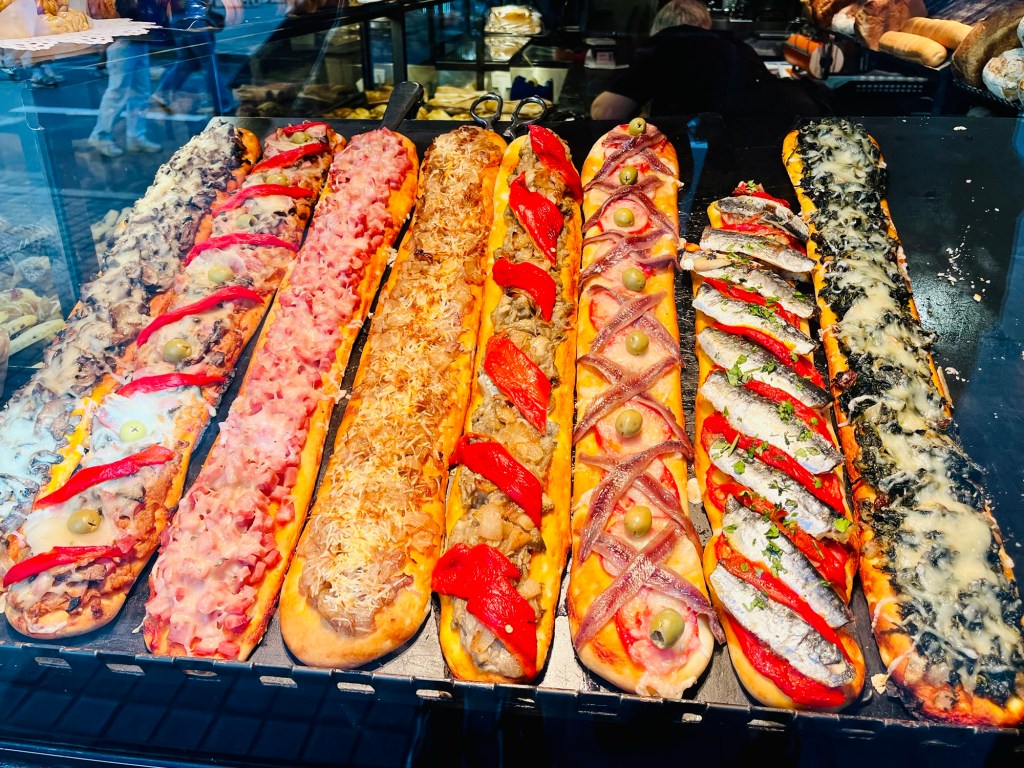
Both Casa Milà & Casa Batlló are on Passeig de Gràcia which happens to be the fanciest street in Barcelona. The street had the ubiquitous usual suspects of high-end retail found in most cities, but further up the road there still were interesting eateries.
Park Güell
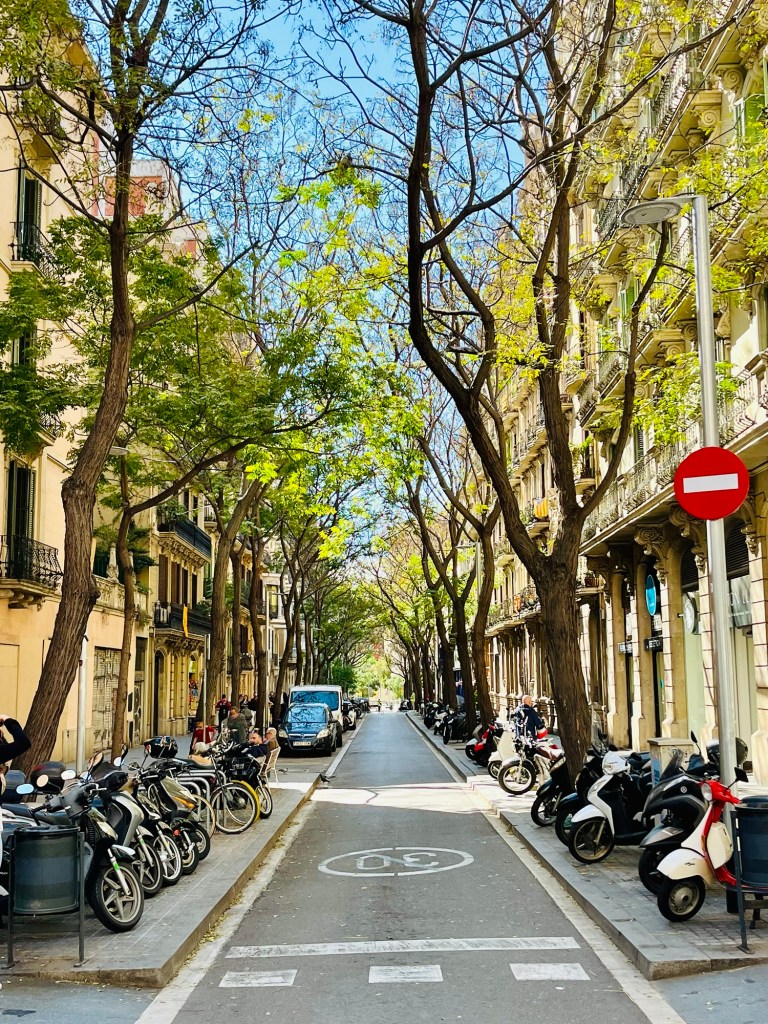
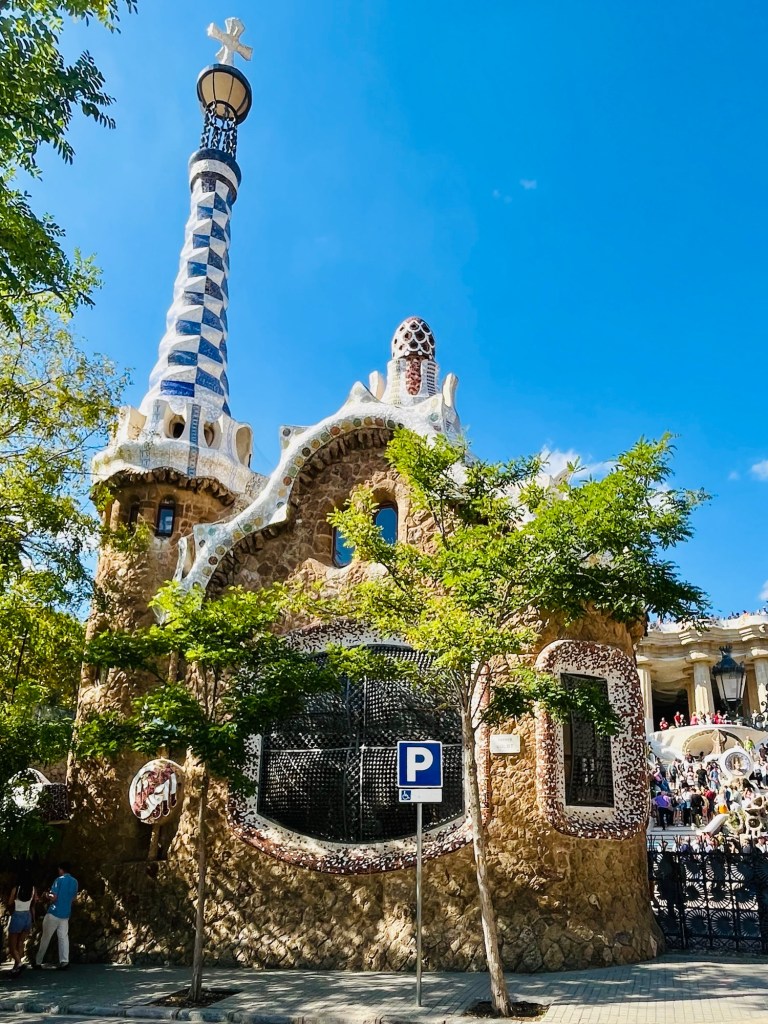
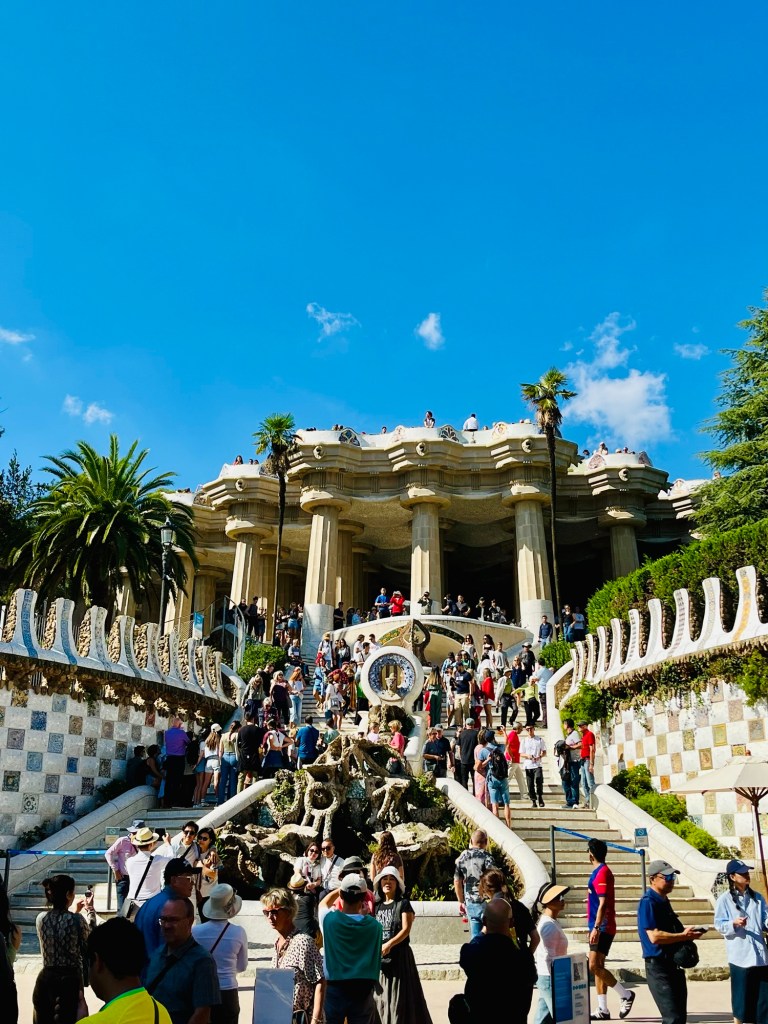
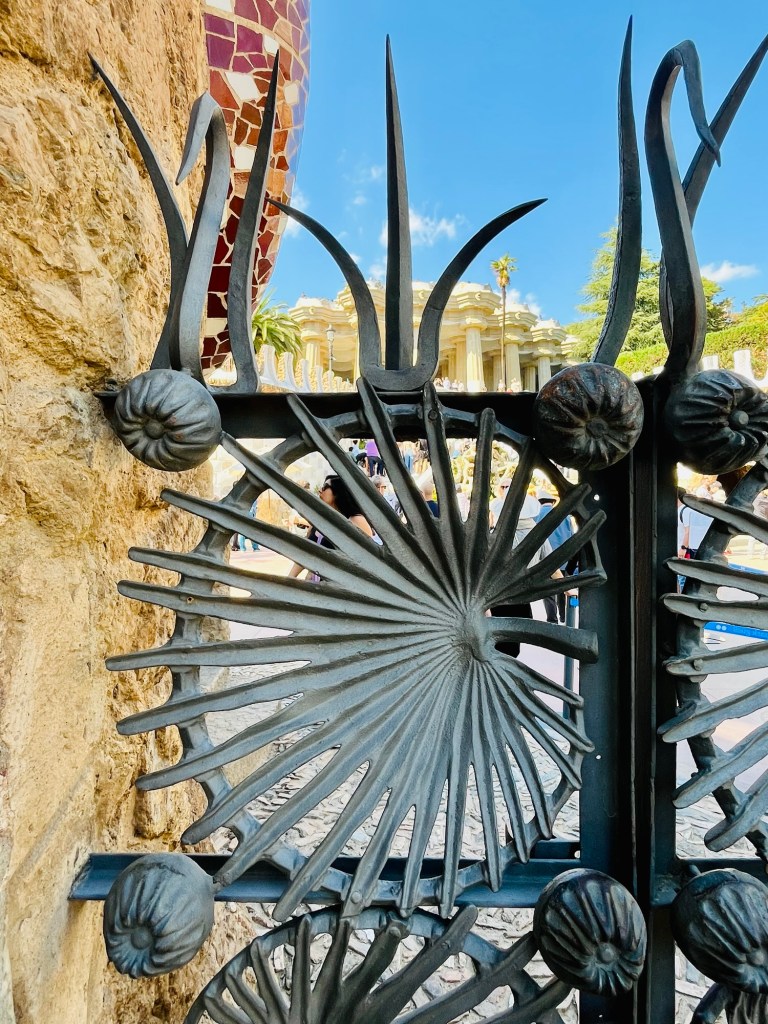
We had no idea whether we’d be able to get into Parc Güell, it turns out it was a no. Not that we really minded, we just enjoyed walking through the streets.
Sagrada Família
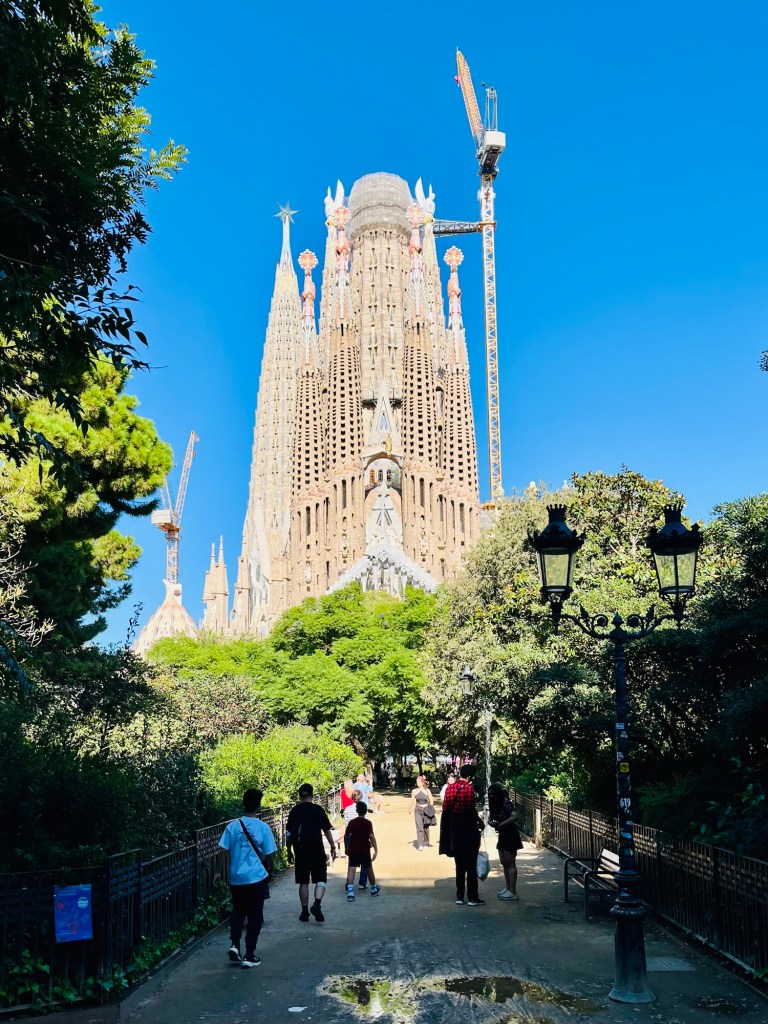
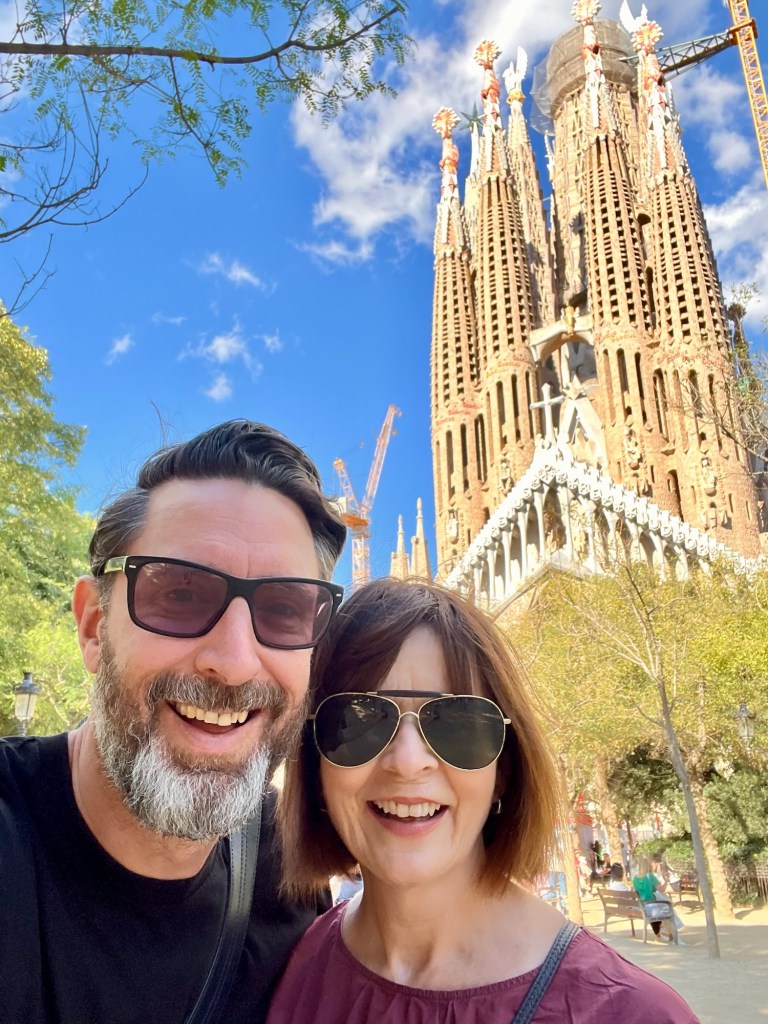
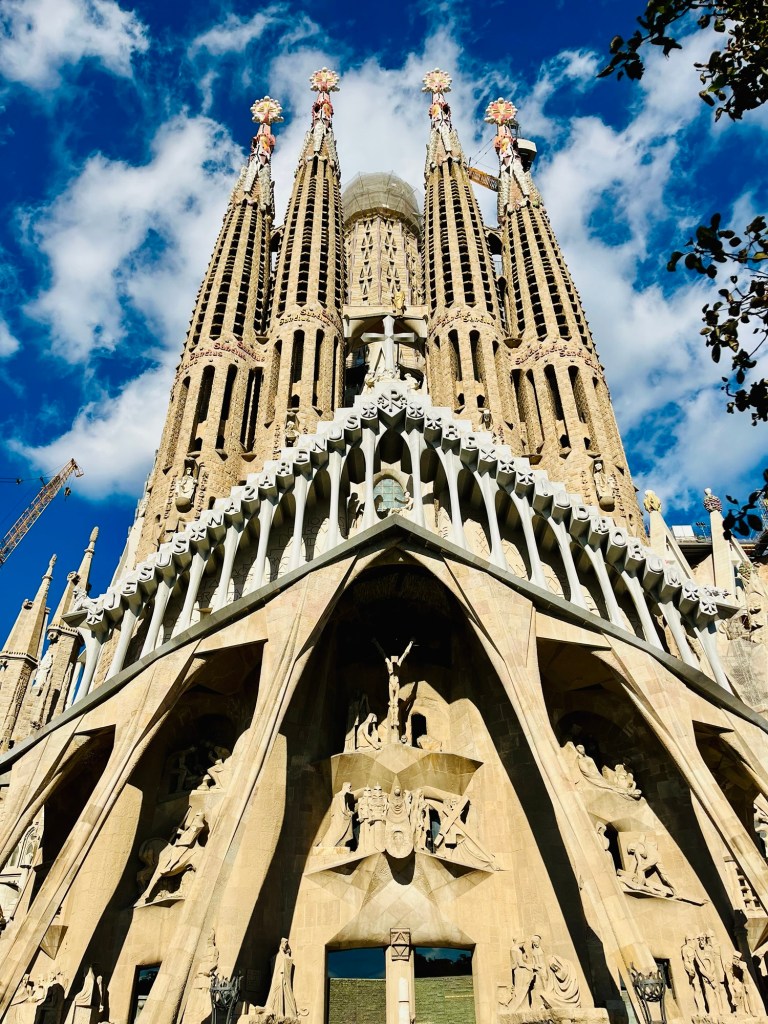
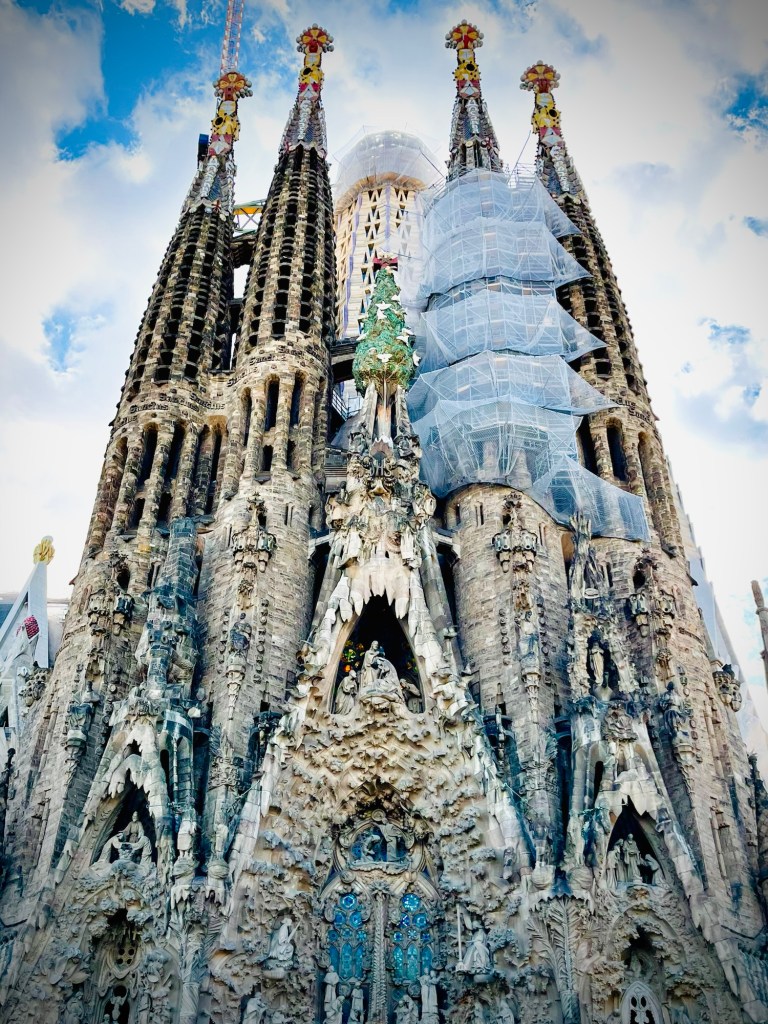
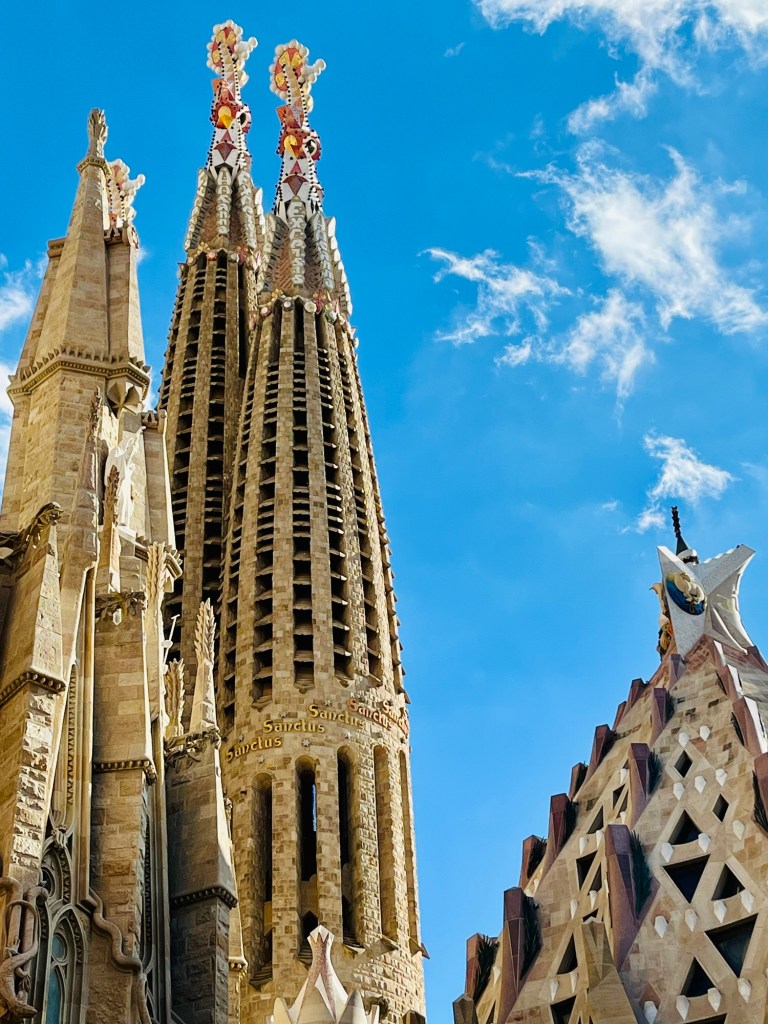
Just so we could get as much Gaudi as we possibly could, we decided to walk back down the hill to look at the Sagrada Família again.
Work had started on the church in 1882, Gaudi took over the following year when the previous architect resigned. He changed the design from being a straight gothic revival building to his idiosyncratic organic art nouveau/gothic one. From 1915 he worked solely on the Sagrada Família until his death in 1926 when he was hit by a tram. At this point only a quarter of the church had been built, work continued ever since, only stopping during the Spanish Civil War. It was made a UNESCO world heritage site in 2005. Building work is expected to finish in 2026 & to be totally completed in 2034.
There is also a New Zealand connection, a Kiwi architect Mark Burry worked on the project between 1979-2016 & ended up being the senior architect & researcher.
Walked
12,694 steps
8.9km
 MM4.Travel
Leave a comment