Our third day in Rome was less hectic, which was a nice change of pace. After breakfast we went to a couple of churches down from where we were staying. These were by the baroque era’s biggest frenemies Bernini and Borromini. While this is usually put down to their vastly different backgrounds & personalities, my wild hypothesis is it’s probably in some part due to their names being slightly similar being all b’s and -ini’s. Nevertheless, they built two of the most significant baroque churches in the world within 500m of each other.
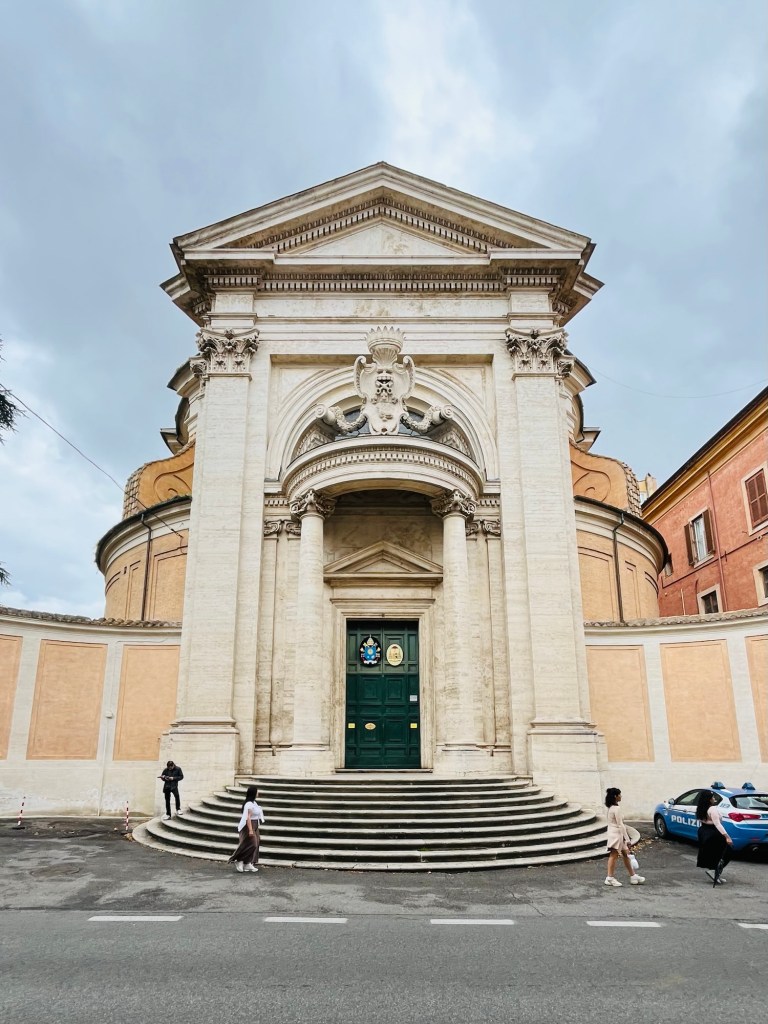
Chiesa di Sant’Andrea al Quirinale
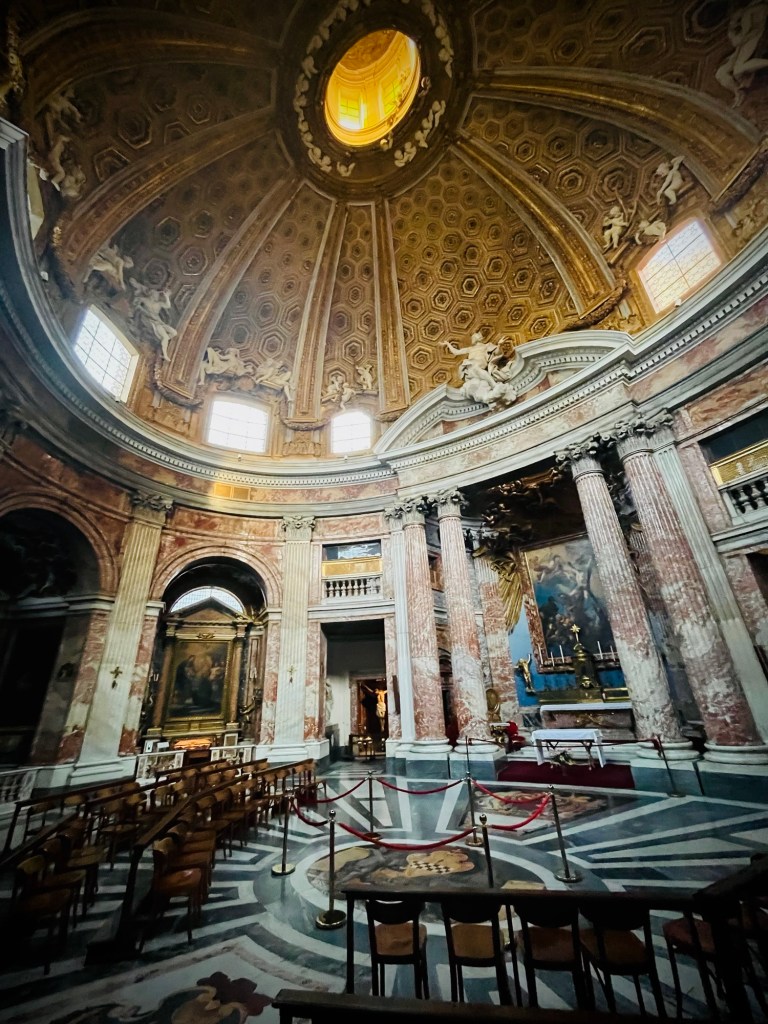
The church of Saint Andrew on the Quirinal was designed by Bernini and was completed in 1670. Bernini was basically one of those people who are ridiculous overachievers, he was a talented painter, an amazing sculptor, an architect and urban designer, he even wrote and produced theatrical plays in his spare time.
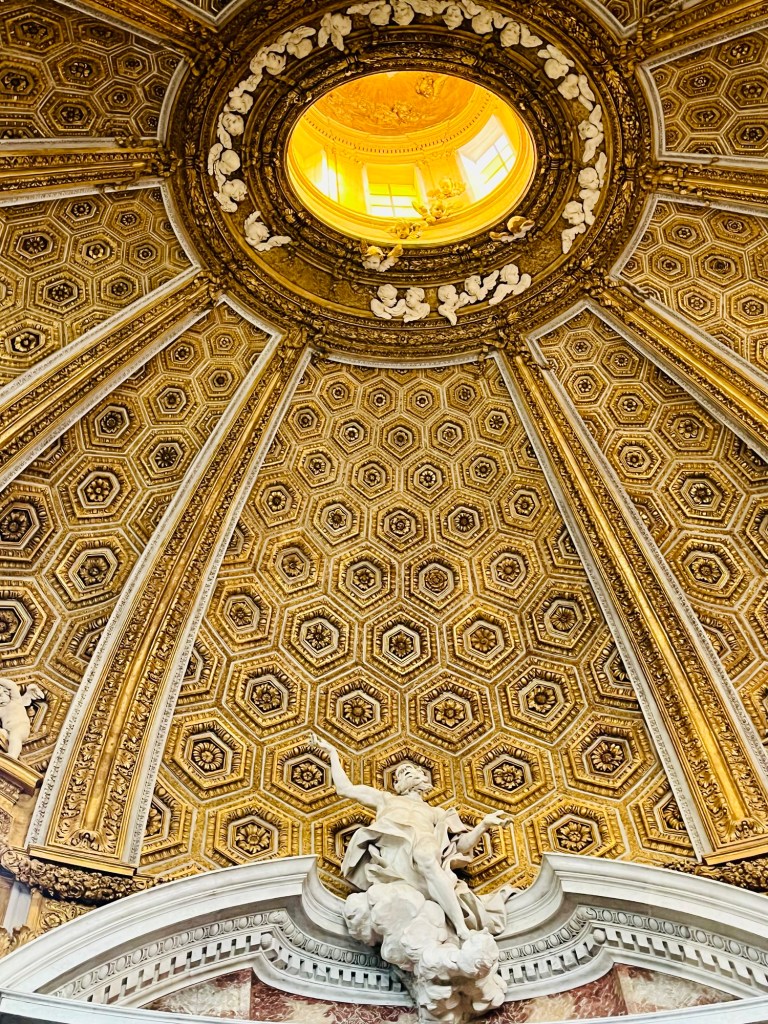
The exterior is relatively restrained for a baroque church, with the stairs and entry canopy breaking with the strict classical architecture. The interior is definitely not restrained. St Andrew ascending to heaven with cherubim above him. The descending cherubs are slightly mad.
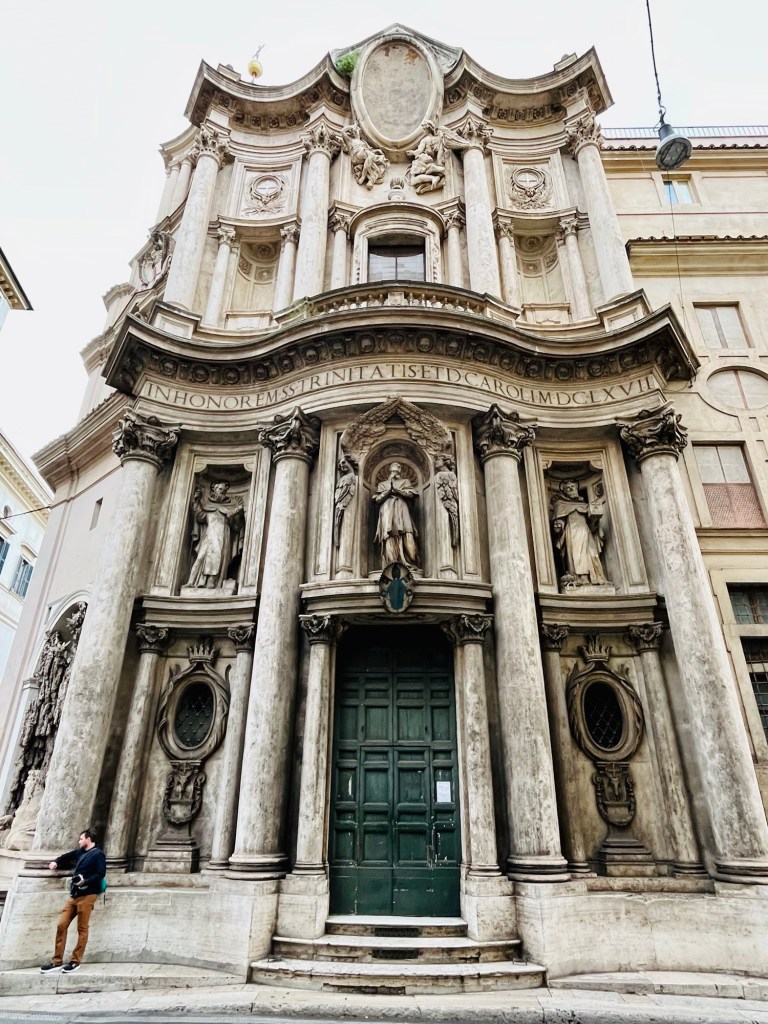
San Carlo alle Quattro Fontane
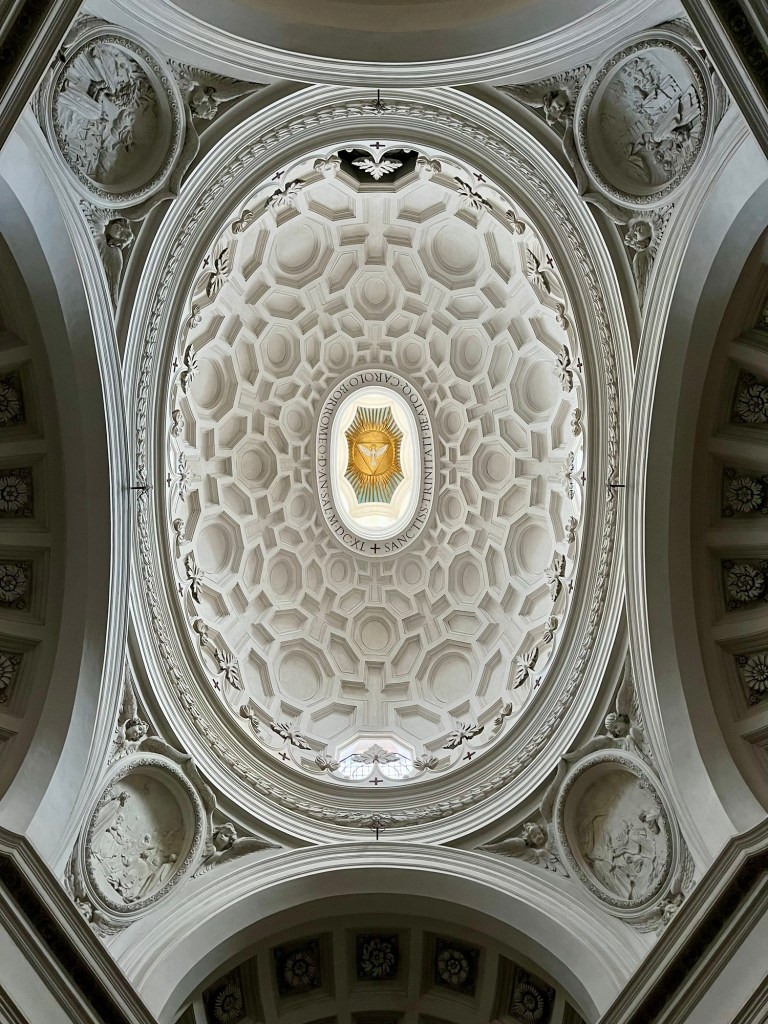
A short walk away is Borromini’s church of St Charles of the Four Fountains, this was completed in 1646. The church is quite small and would fit into one of the giant piers inside St Peter’s.
The exterior of Borromini’s church is definitely not restrained, it’s like he’s melted a Roman temple in the sun.The church is known for its extraordinary coffered dome.
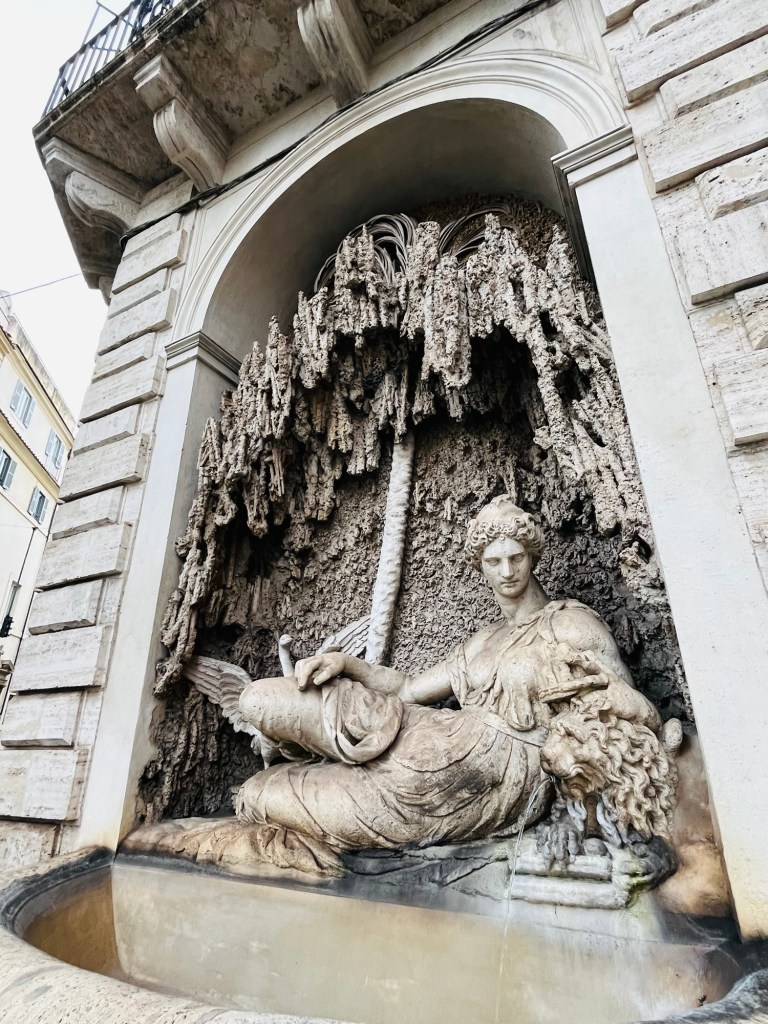
The church is on an intersection, and on each corner there is a classical style statue of Roman gods representing four main rivers, which is how the church got its name.
This is Juno or that’s what Wikipedia is telling me by the sculptor Domenico Fontana. He was on team Bernini so not quite sure what Borromini would have thought of it.
Capitoline Hill
We had decided to head back to the Forum to look at St Maria in Ara Coeli, which is the church on top of Capitoline Hill.
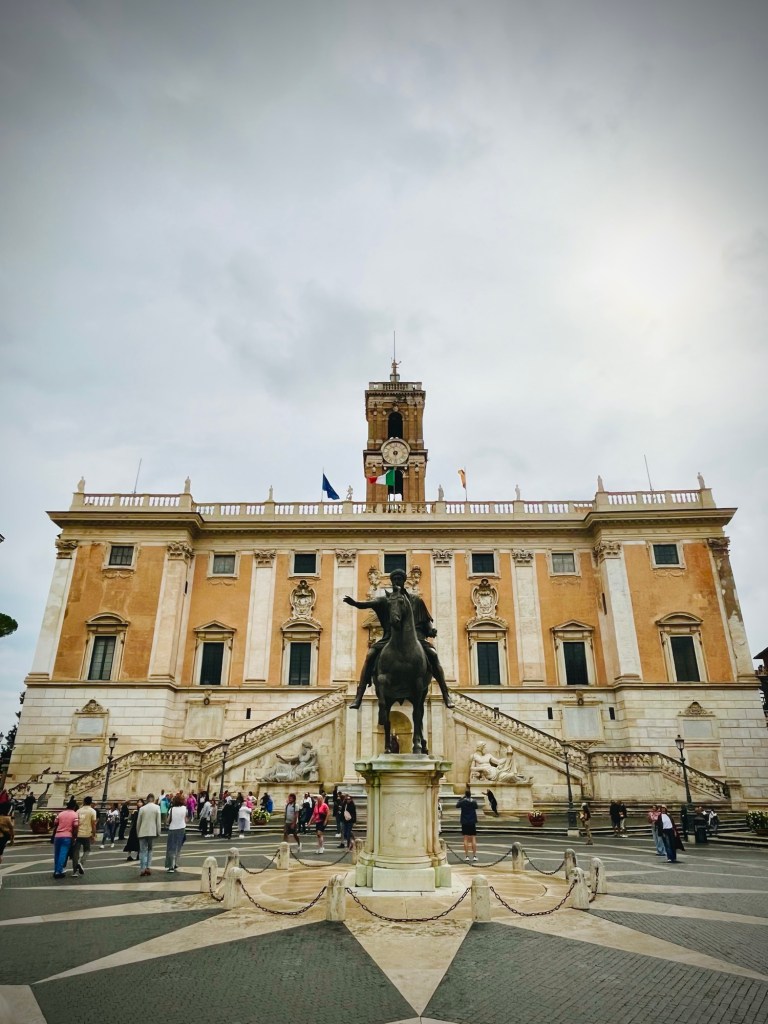
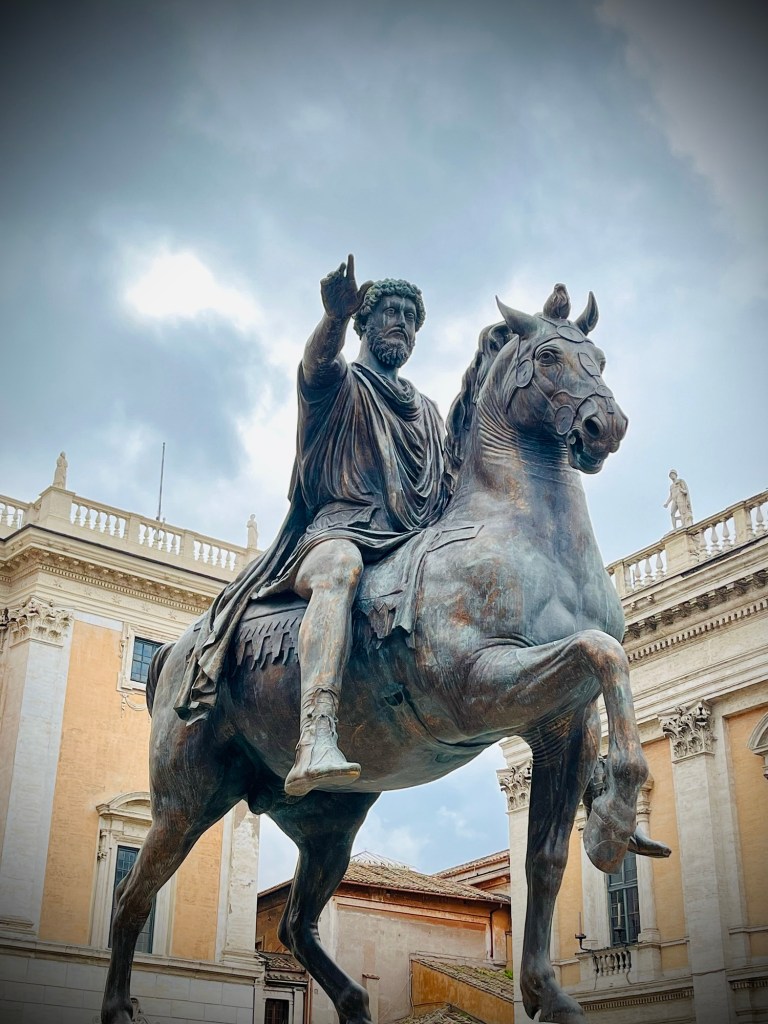
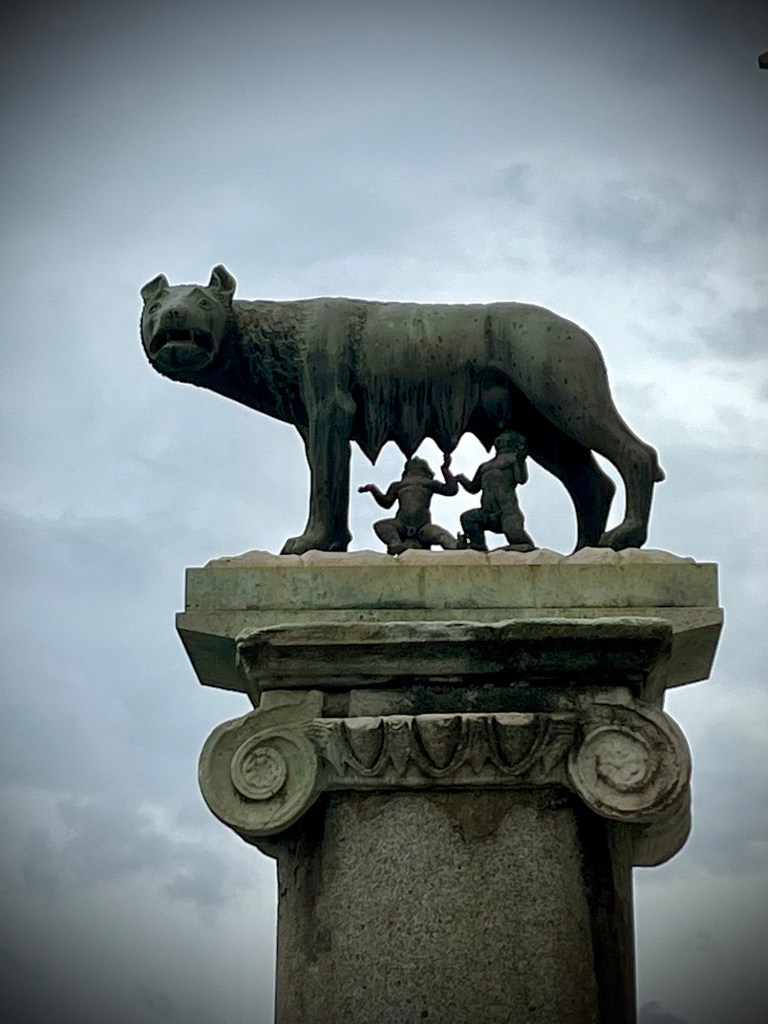
At the top of the hill is the Piazza del Campidoglio, the square was designed by Michelangelo in 1536-1546. The Palazzo Senatorio behind was built on top of the ancient Roman archive building the Tabularium. It is now part of the Capitoline Museum.Emperor Marcus Aurelius on a horse dates to 175AD, well not this one, the real one is in the museum. Beside the palazzo is the statue of the Capitoline Wolf, this show’s legendary founders of Rome Romulus & Remus being suckled by a she-wolf.
Santa Maria in Ara Coeli
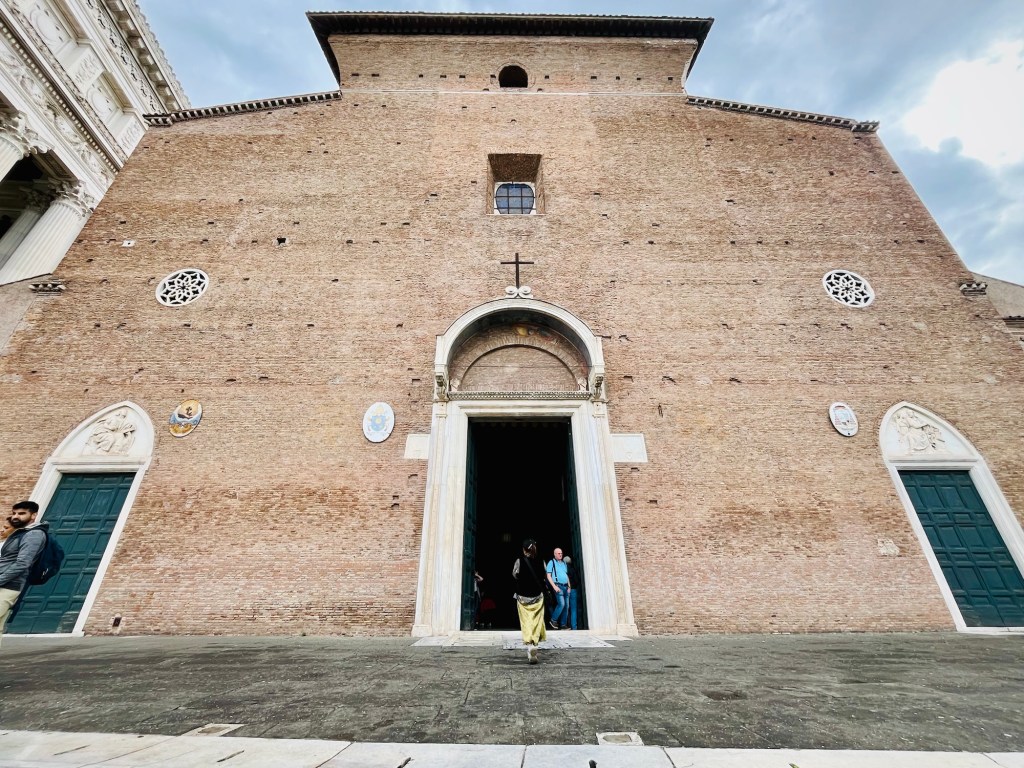
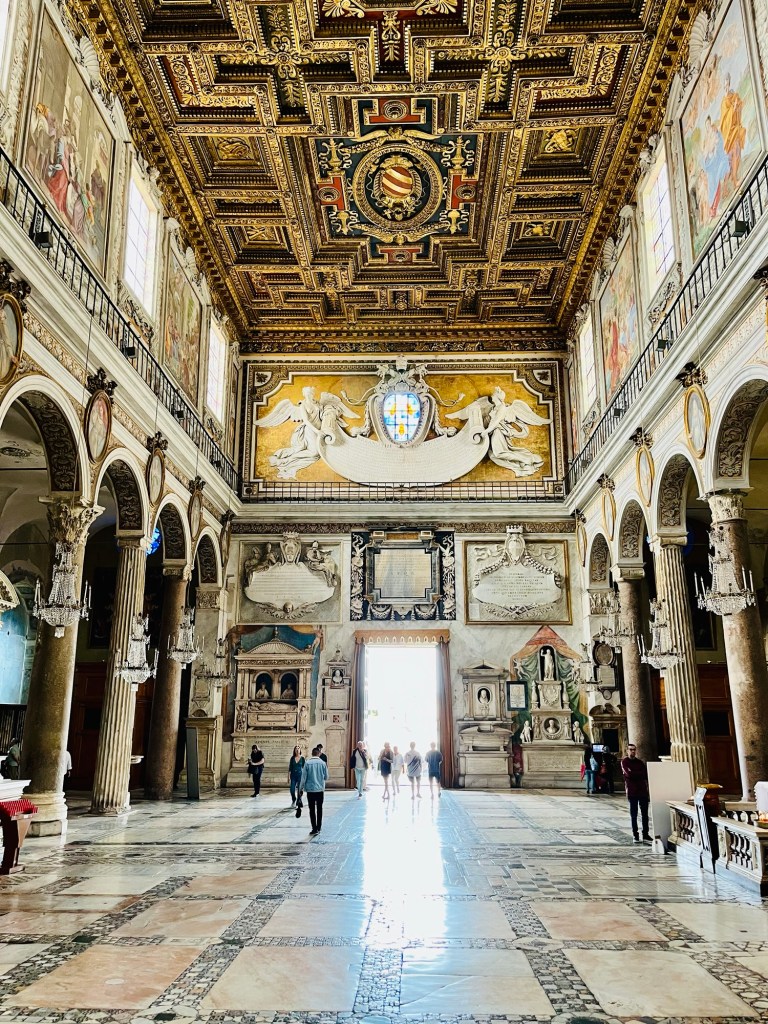
The church dates mainly from 1250s, but there had been a church since at least 575AD. It is thought the church was built on top of the Temple of Juno Moneta.
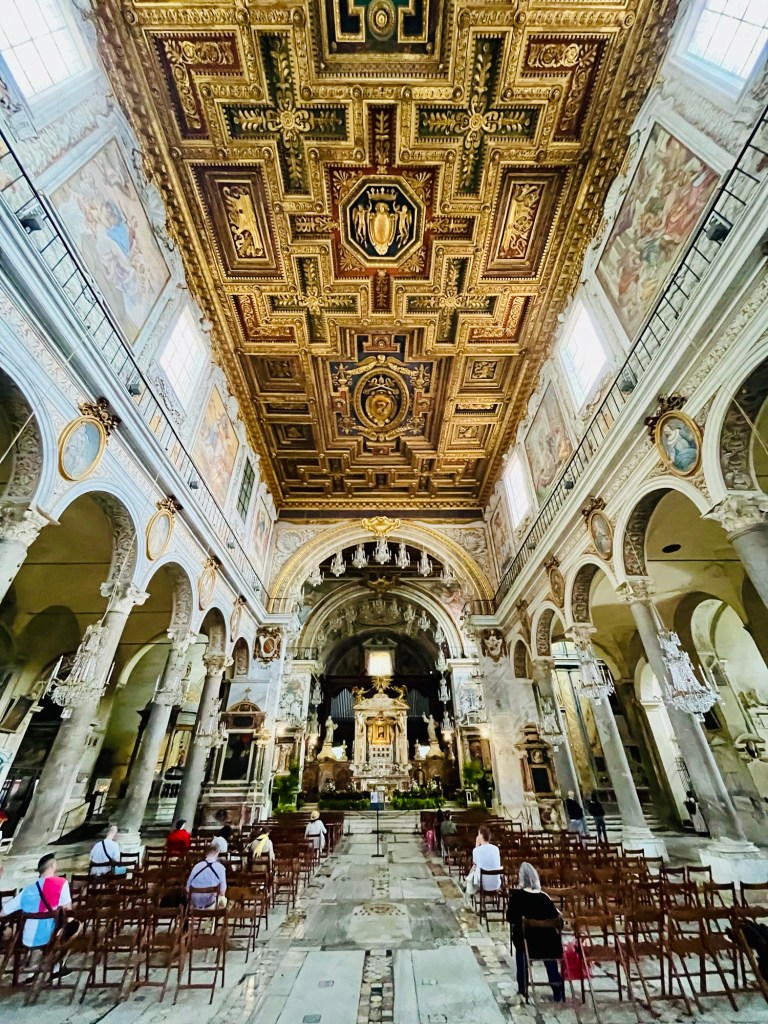
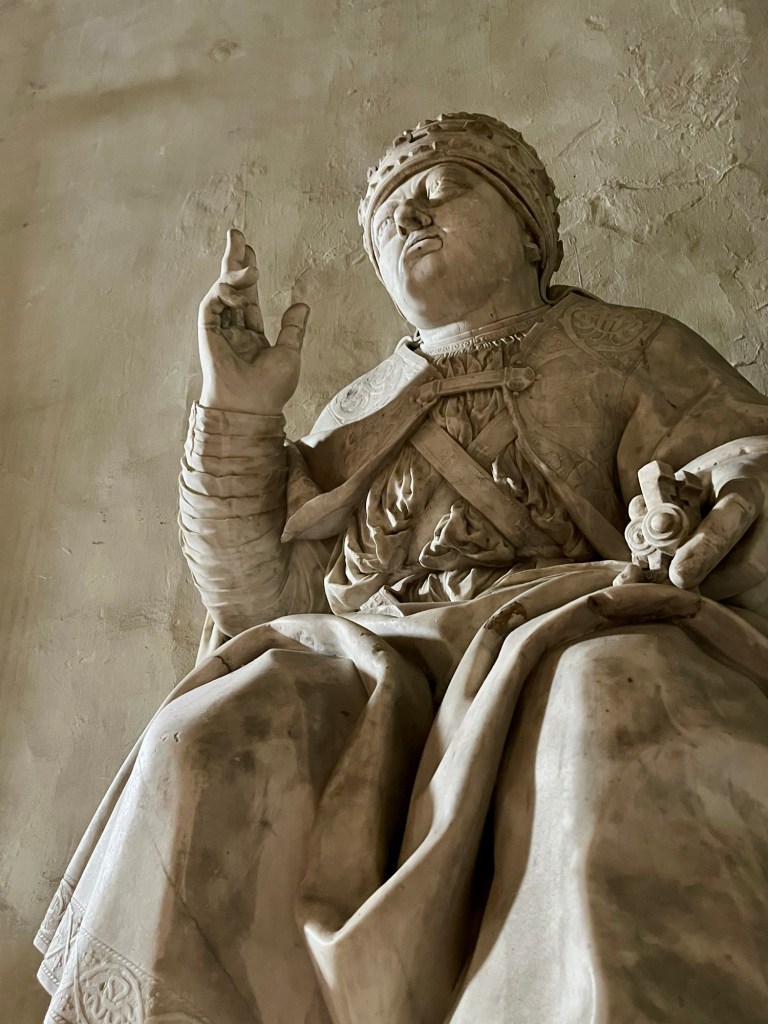
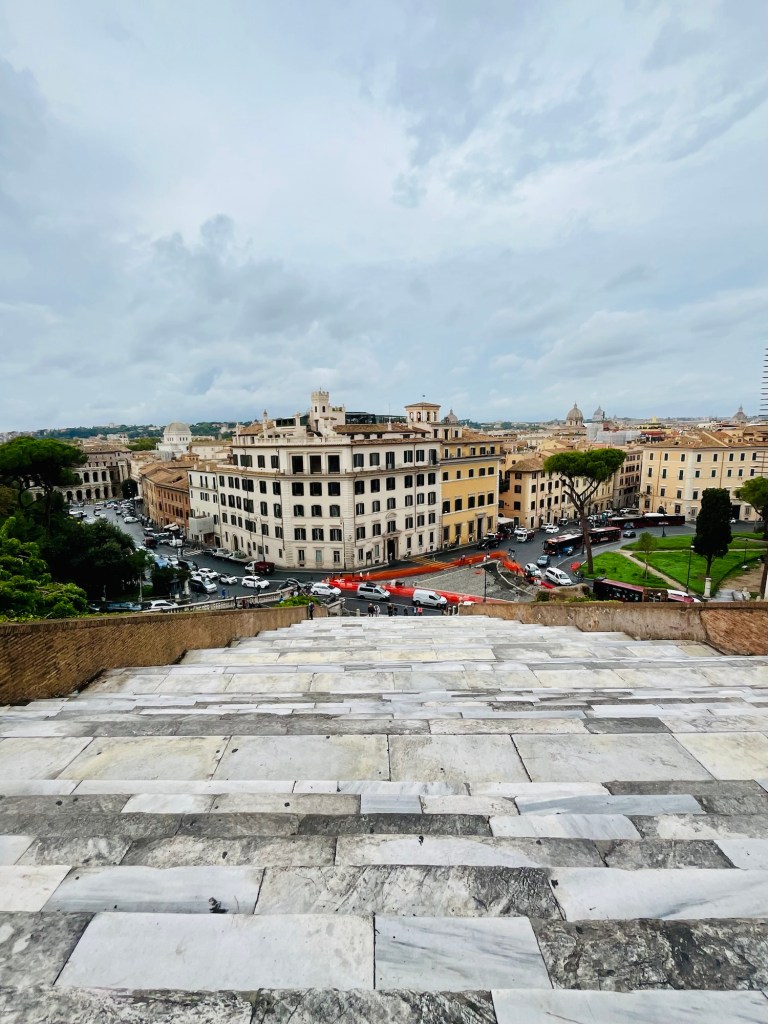
The exterior looks plain now but it was originally covered in mosaics and frescoes. The interior is definitely not plain – none of the columns match as they are reused from earlier Roman buildings. Pope Leo X – cracking sculpture but couldn’t find much about it. Leo was an interesting character, he was a spendthrift which partly kicked off the reformation. He also had a pet elephant called Hanno as you do.The church faces toward the Vatican, whereas the earlier temples faced the forum, this was to deliberately orientate the buildings from Rome’s pagan past.Leaving the Capitoline, the top of the Ara Coeli Steps. The Roman ruins to the far left are the Theatre of Marcellus.
San Vitale
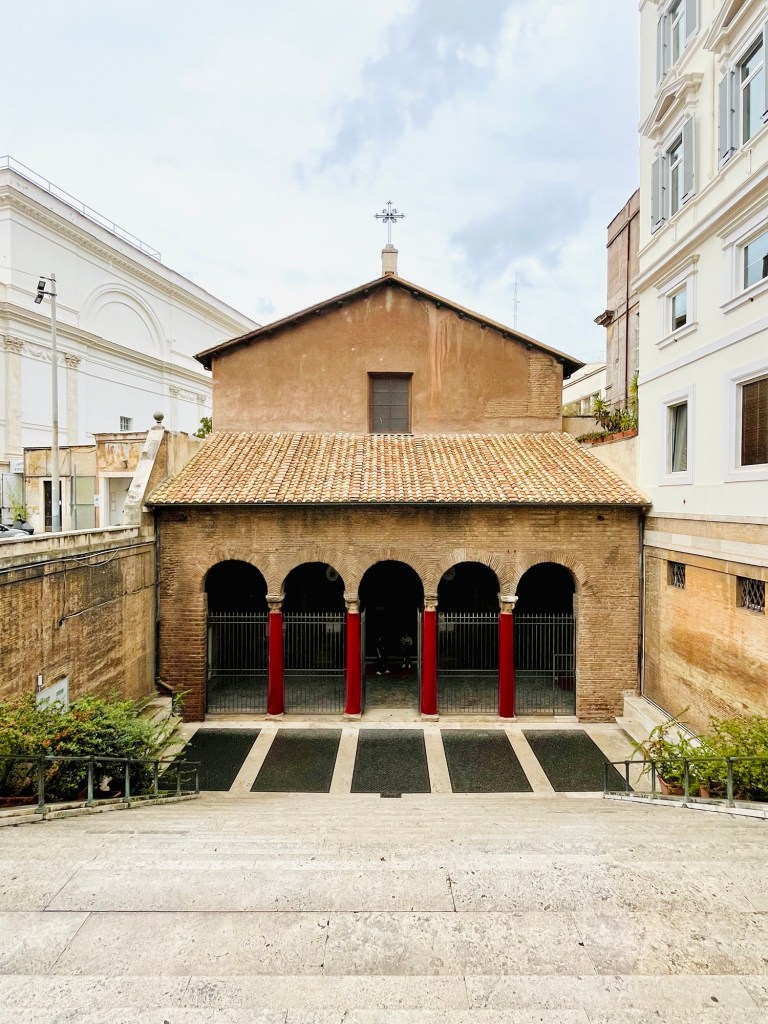
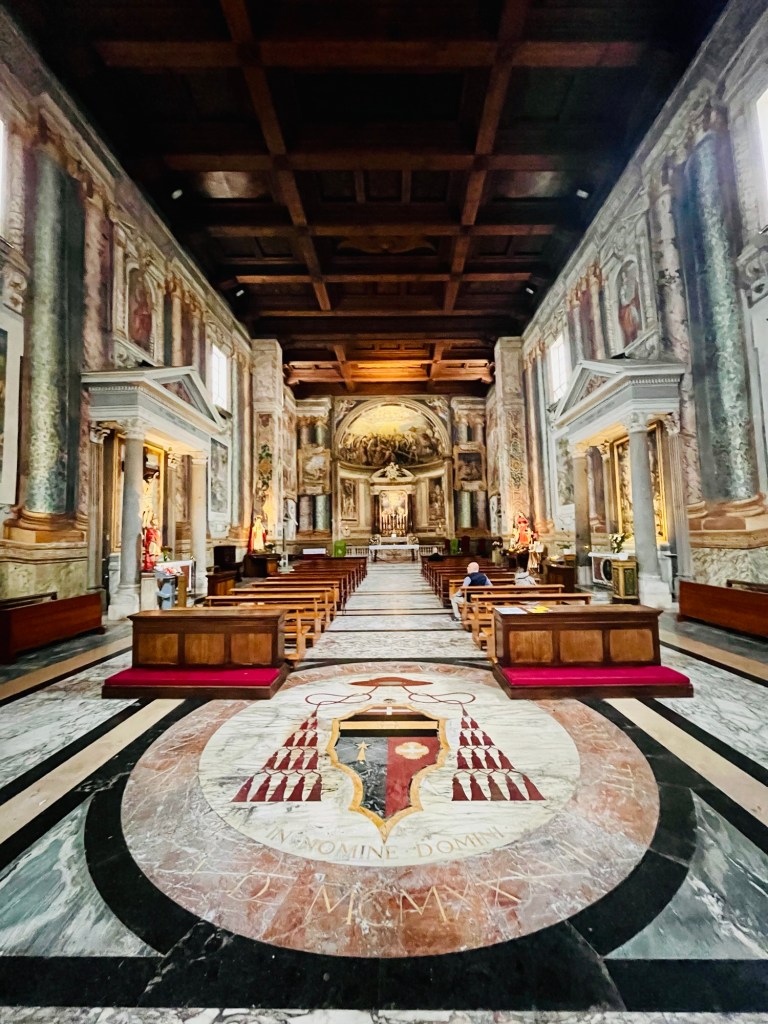
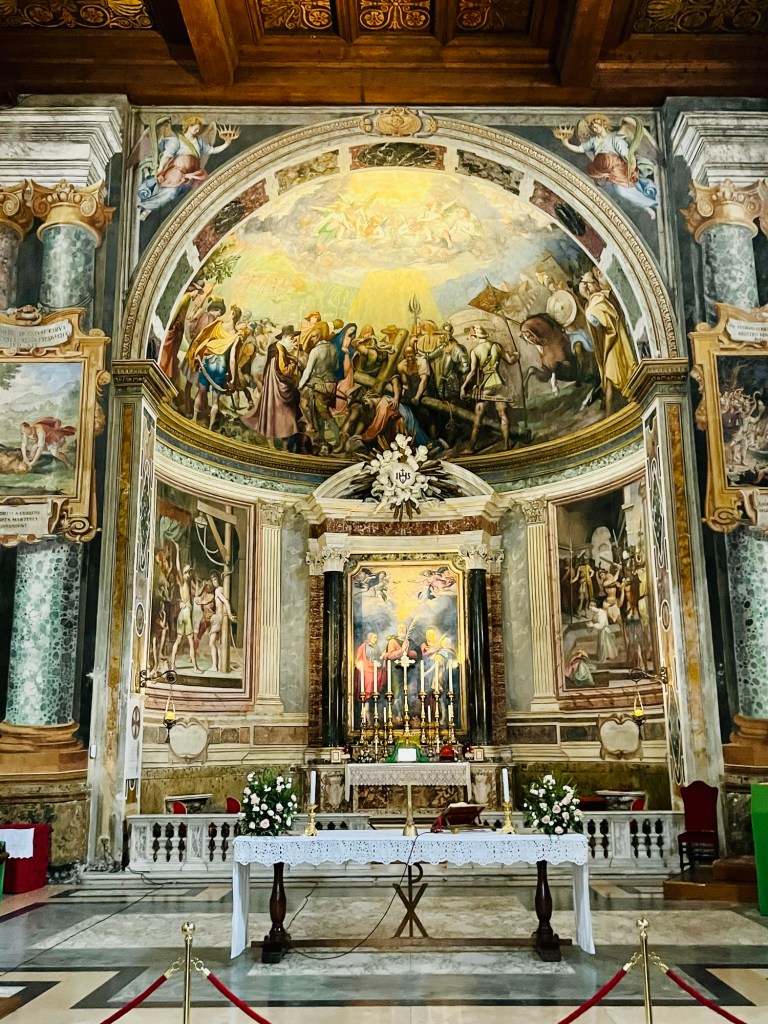
From the Capitoline we headed back to do the most exciting part of travelling, which is trying to find a half decent laundromat that isn’t miles from where you are staying. On the way we found another half buried church, the Basilica of San Vitale. It is one of Rome’s oldest churches with a church being here since 401AD. The porch dates to the 5th century but the remainder of the church was rebuilt in 1475.
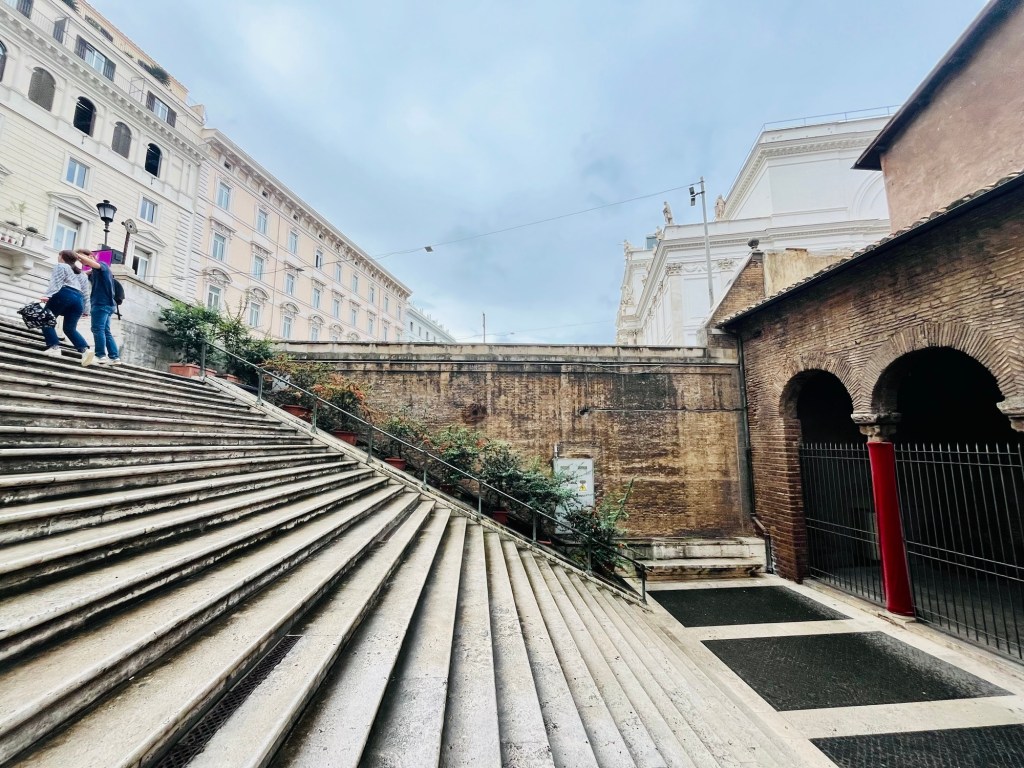
The church is a least a storey below the surrounding buildings. Definitely not wheelchair accessible. The interior mainly dates to the 16th century. The altar was by the painter Andrea Commodi.
Piazza Scanderbeg
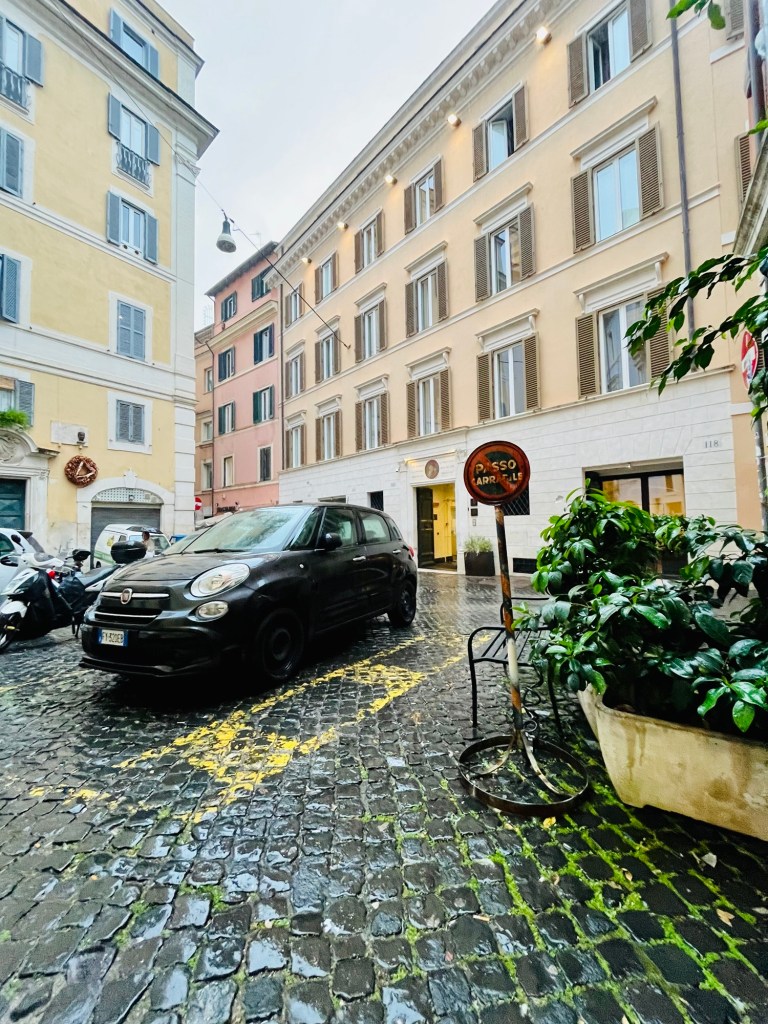
You can’t but stumble across history in Rome, having found a laundromat in the small square Piazza Scanderbeg.
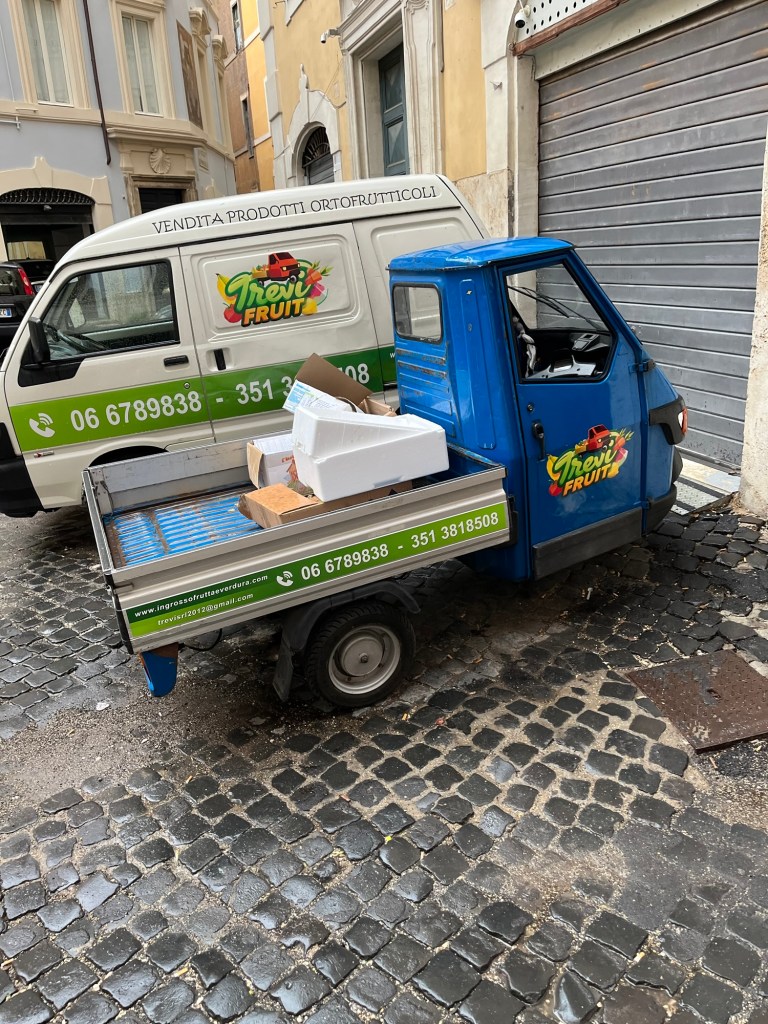
The view from the laundromat, to the right is Palazzo Scanderbeg named after the 15th century Albanian resistance leader Gjergj Skanderbeg who lived there in 1466. It was also recently the National Museum to Pasta but is now a hotel. To the left is a plaque & wreath to Giuseppe Celani an anti-fascist resistance leader who was murdered by the Nazis in the Ardeatine Massacre.A little more upbeat is this tiny Italian ute.
 MM4.Travel
Leave a comment