If the previous day was huge, then this day would be no different.
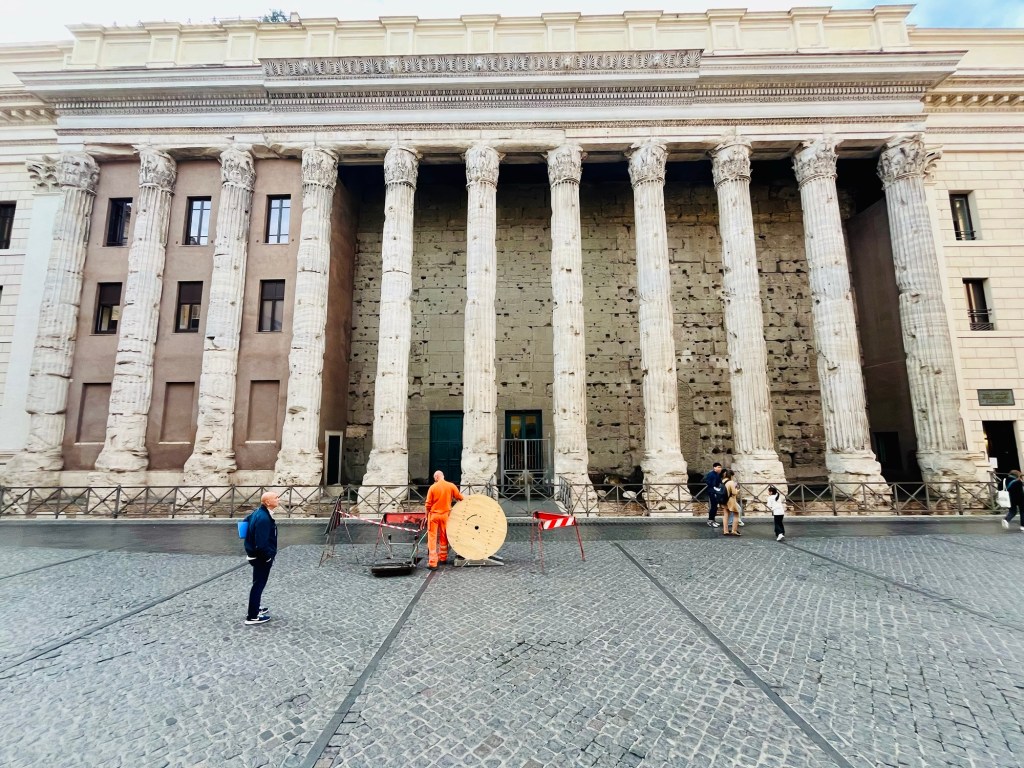
It was also quickly apparent that you stumble upon ancient stuff everywhere you look in Rome. Walking to the Pantheon we saw the Temple of Hadrian, which dates to 145AD. Only this facade remains, which was incorporated into a Palace in the 17th Century, and it is now is Rome’s Chamber of Commerce. Fancy.
Temple of Hadrian
Pantheon
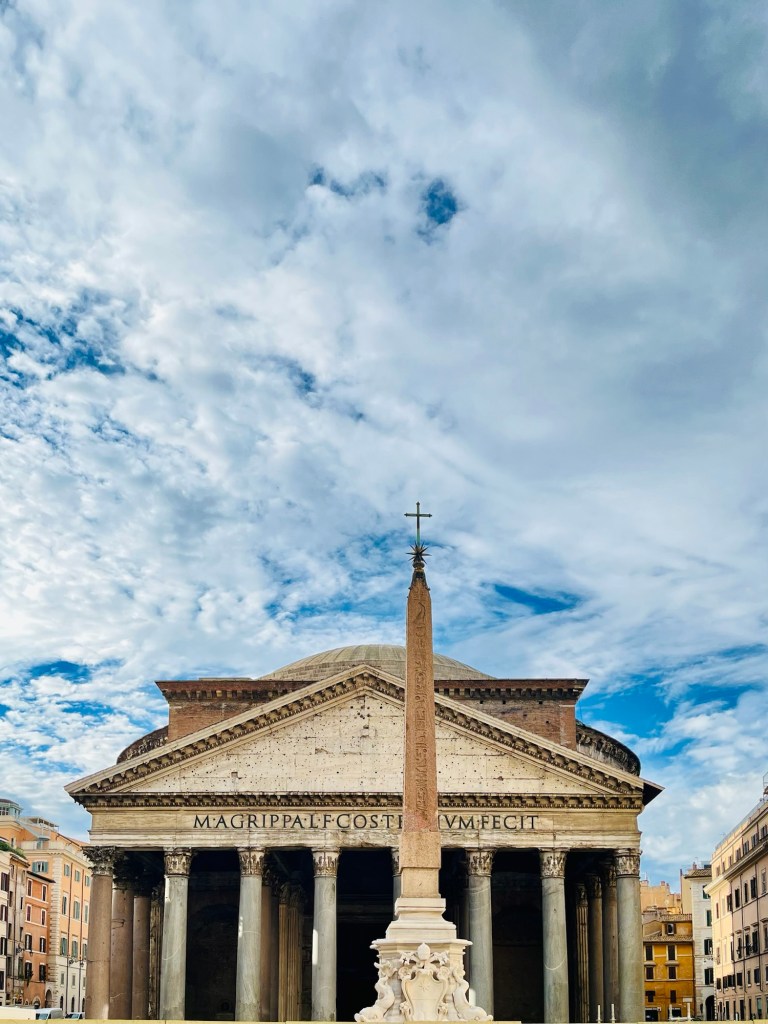
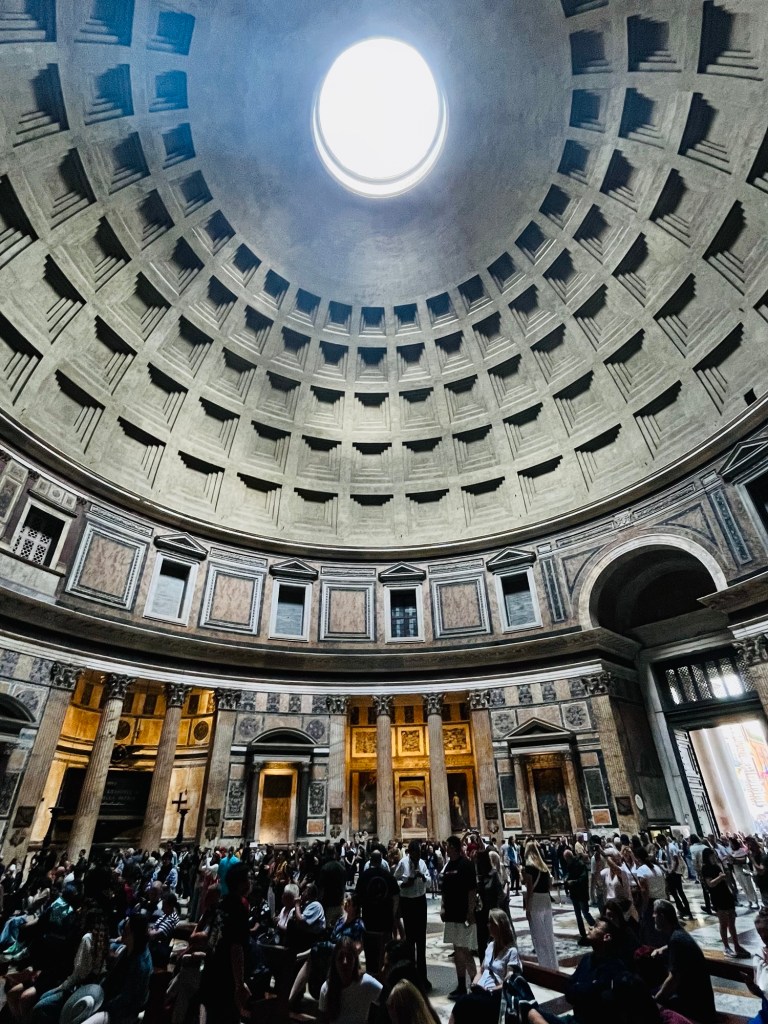
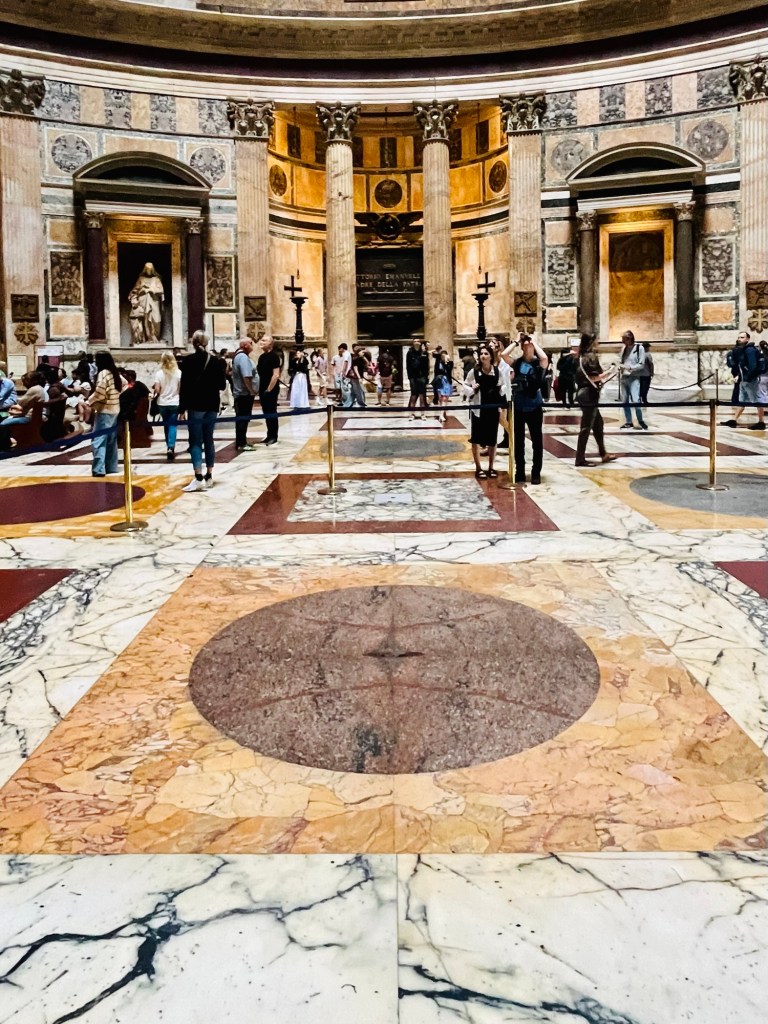
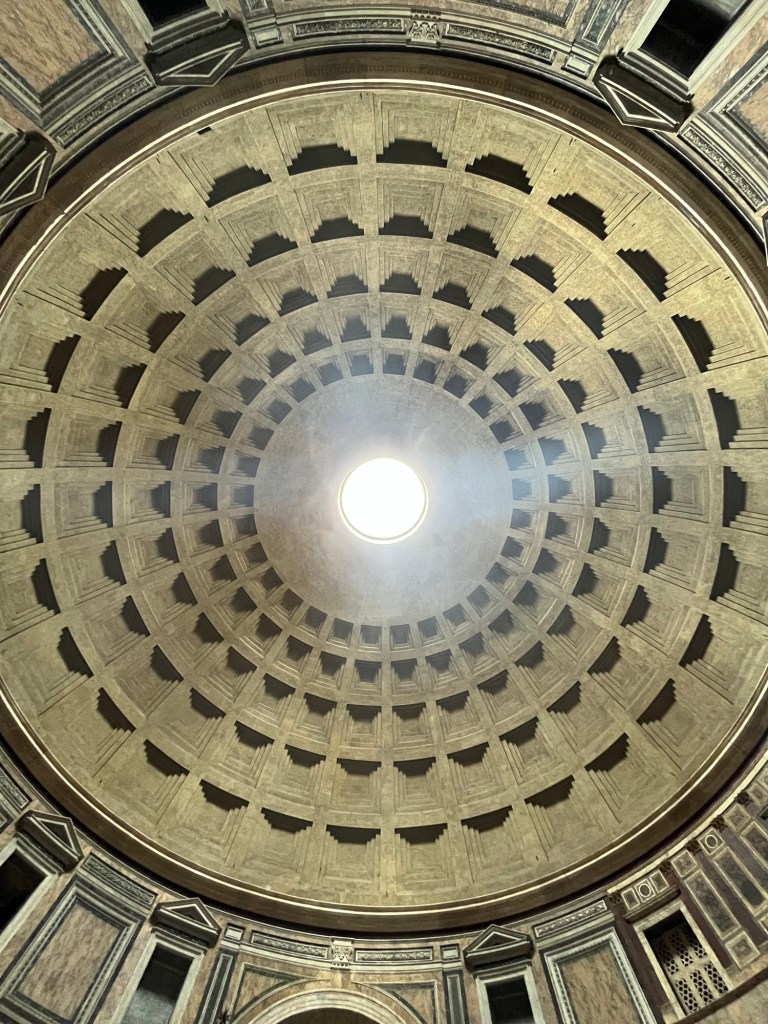
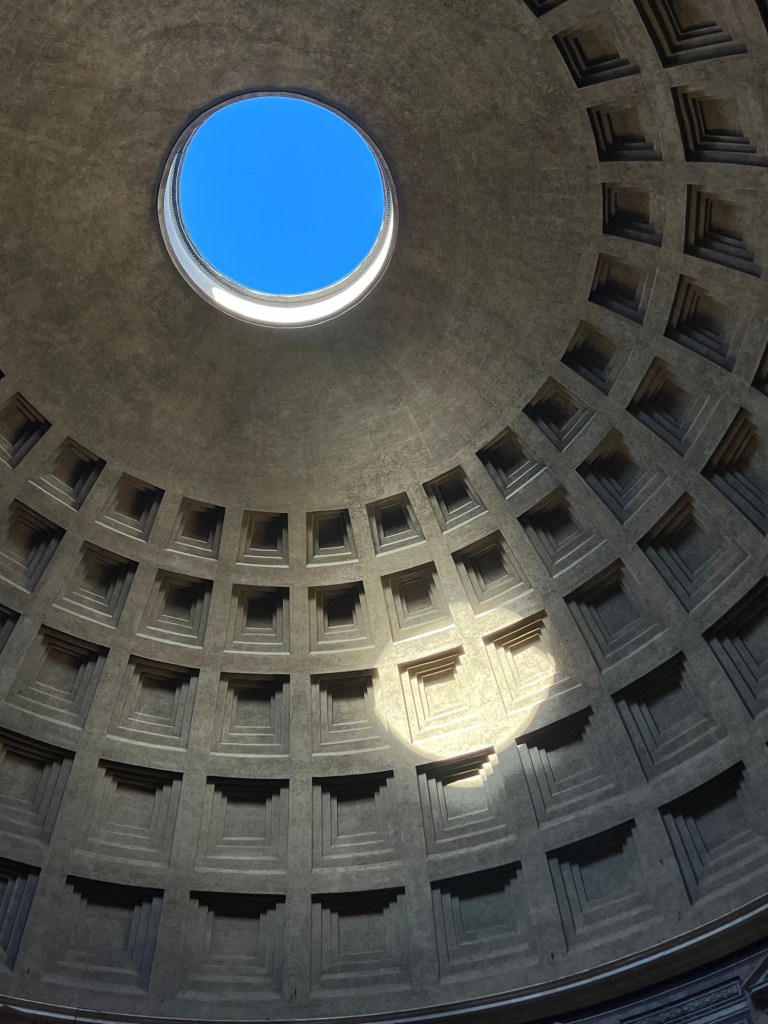
The Pantheon is the most intact Roman temple to survive from antiquity. It was likely completed in 126AD under the auspices of Emperor Hadrian to replace an earlier temple that burnt down, no one knows the exact date as they reused the earlier inscription to Roman general Marcus Agrippa. The thinking was it was dedicated to all the gods hence the name pan = all + theon = gods, though this is debated , it was later converted into a church in 609AD as the Basilica of St Mary & the Martyrs. Without going into a deep dive into classical thought, pure forms such as squares & circles where associated with divinity, basically you see circles & squares everywhere in the Pantheon, on the floor, the roof, if you cut a section through the building it fits a perfect sphere in a square. You get the idea.
The Pantheon & the Pantheon Obelisk, the obelisk is significantly older than Pantheon & dates to Ramses II or 1200BC or thereabouts.The dome is spectacular, the circular oculus is open to the weather. See circles and squares everywhere.More circles & squares. The floor has drainage built into it, due to the rain coming through the oculus, we had a bit of drizzle the day we were there so parts of the floor was roped off. On Pentecost Sunday Rome’s Firefighters pour rose petals through the oculus above.The Pantheon has the largest unreinforced concrete dome in the world
Piazza della Minerva
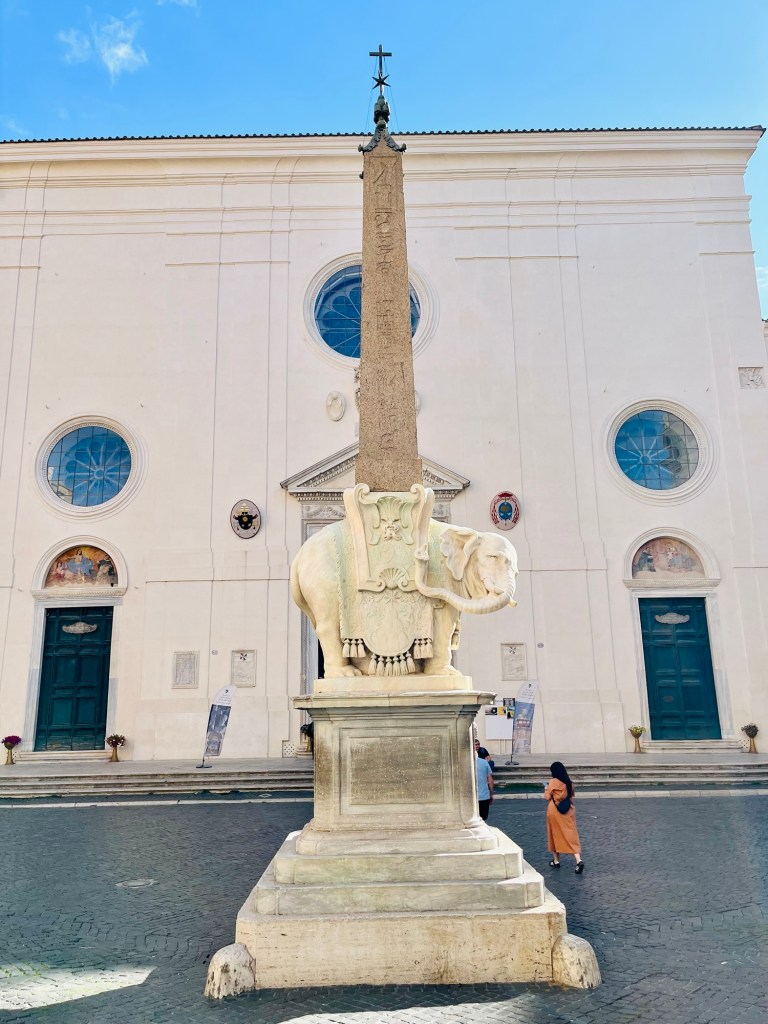
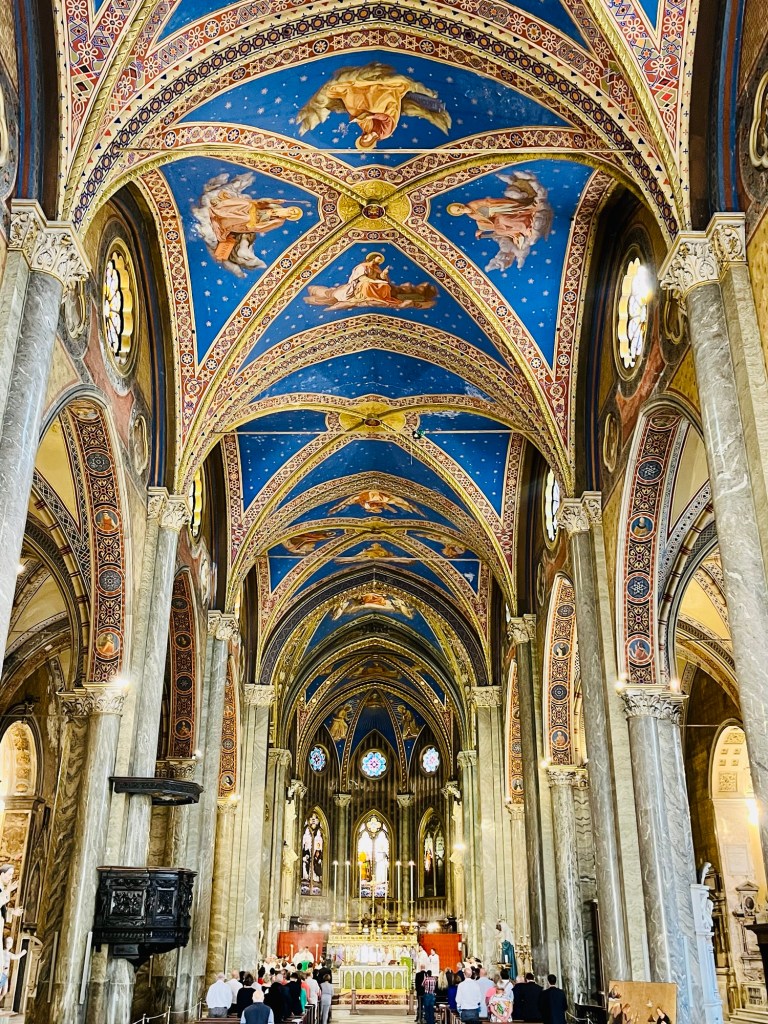
Just behind the Pantheon is the Piazza della Minerva & the church of Santa Maria spora Minerva, which built on top of the ruins of the temple of Minerva. The church is one of the few that have their original gothic interiors.
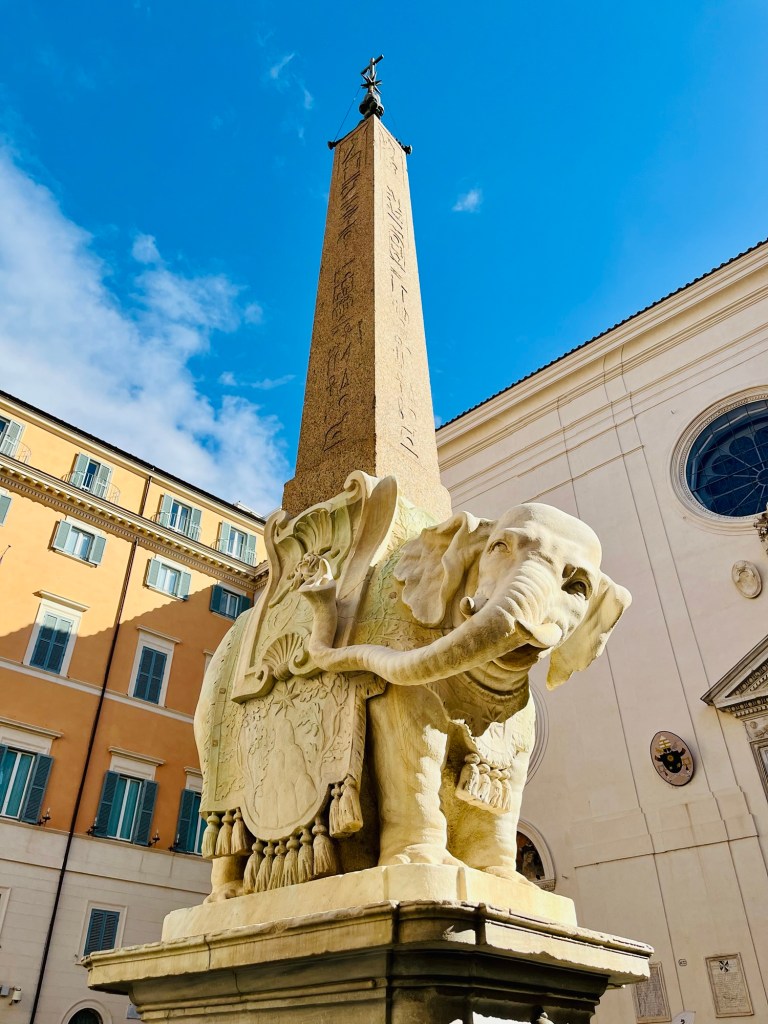
The church of Santa Maria spora Minerva, in front is the monument of the Elephant & Obelisk by Bernini that dates to 1667. The Obelisk was found nearby in 1665 and likely came from the ruins of the Temple of Isis that was nearby. The locals call the elephant “porcino” or piggy The church was built between 1280-1370
Sant’Eustachio
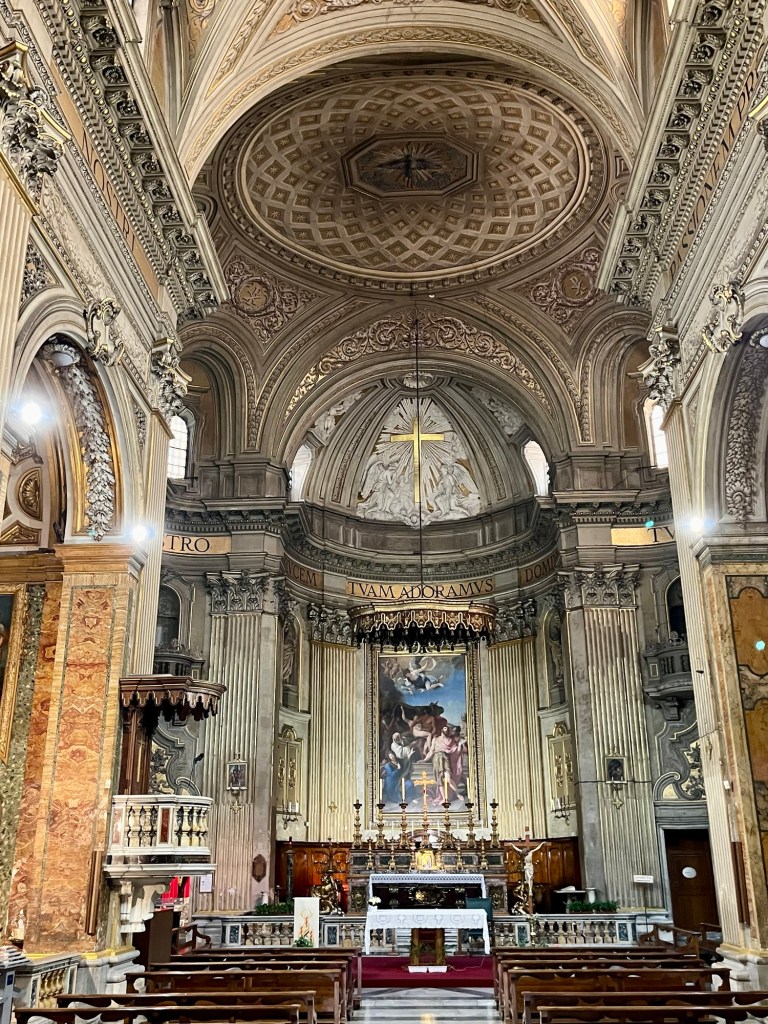
From the church of Santa Maria, we wandered to the nearby Piazza Navona, here was passed the Basilica of Sant’Eustachio.
The church dates to 800AD the altar dates to 1749
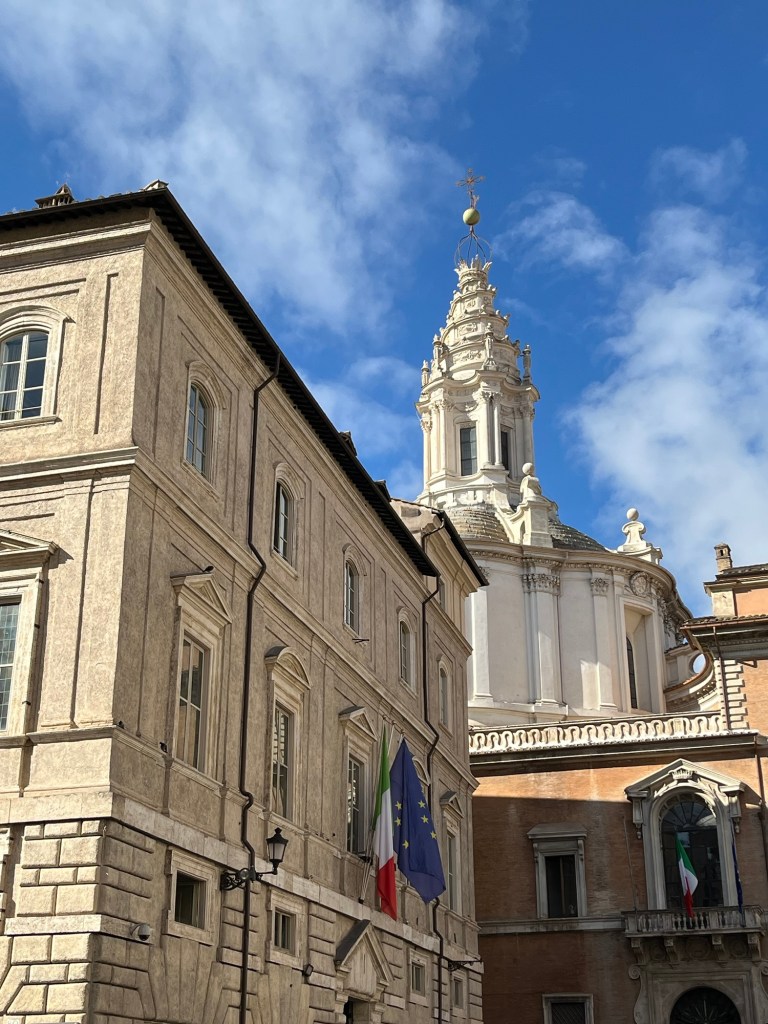
From the church you can see the spire of the church of Sant’Ivo alla Sapienza by Boromini.
The corkscrew spire was the inspiration for the similarly shaped spire for the Vor Frelsers Kirke that we saw in Copenhagen.
Piazza Navona
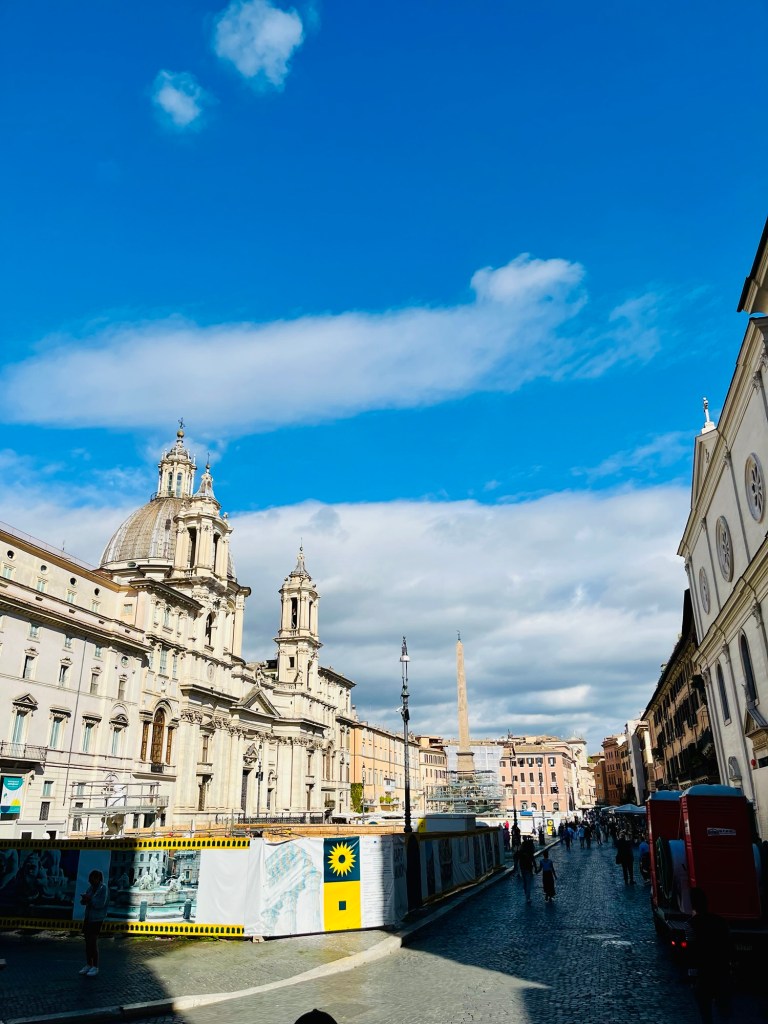
The piazza was built on top of the Stadium of Domitian, which was where running races were held for the annual Capitoline Games.
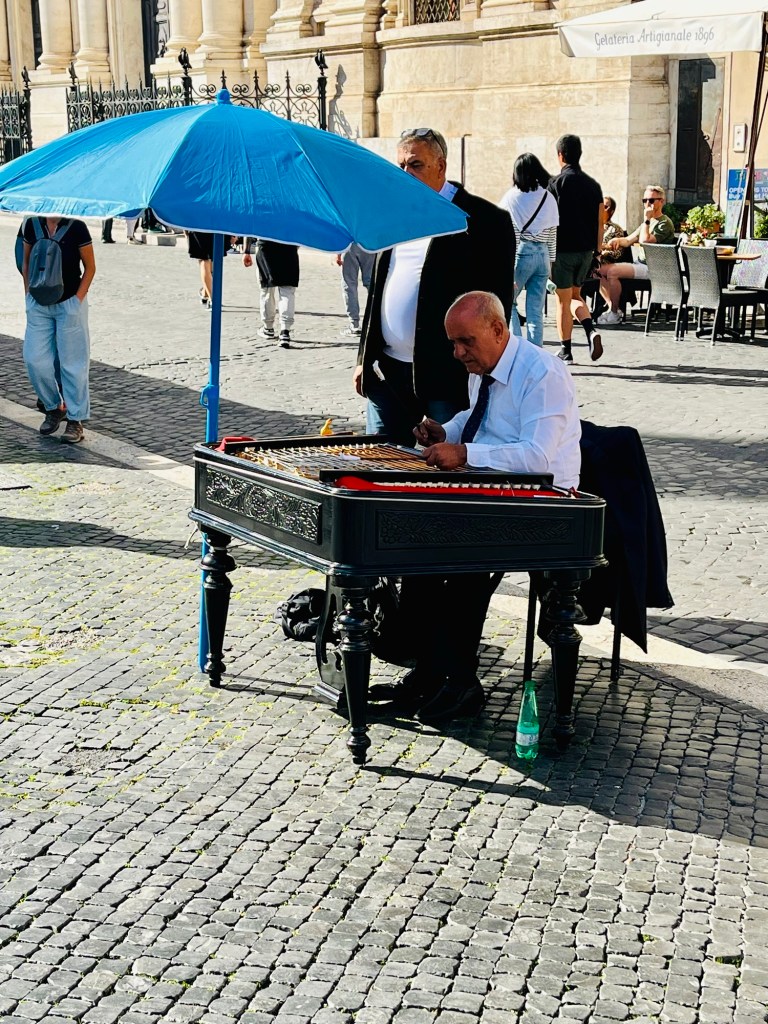
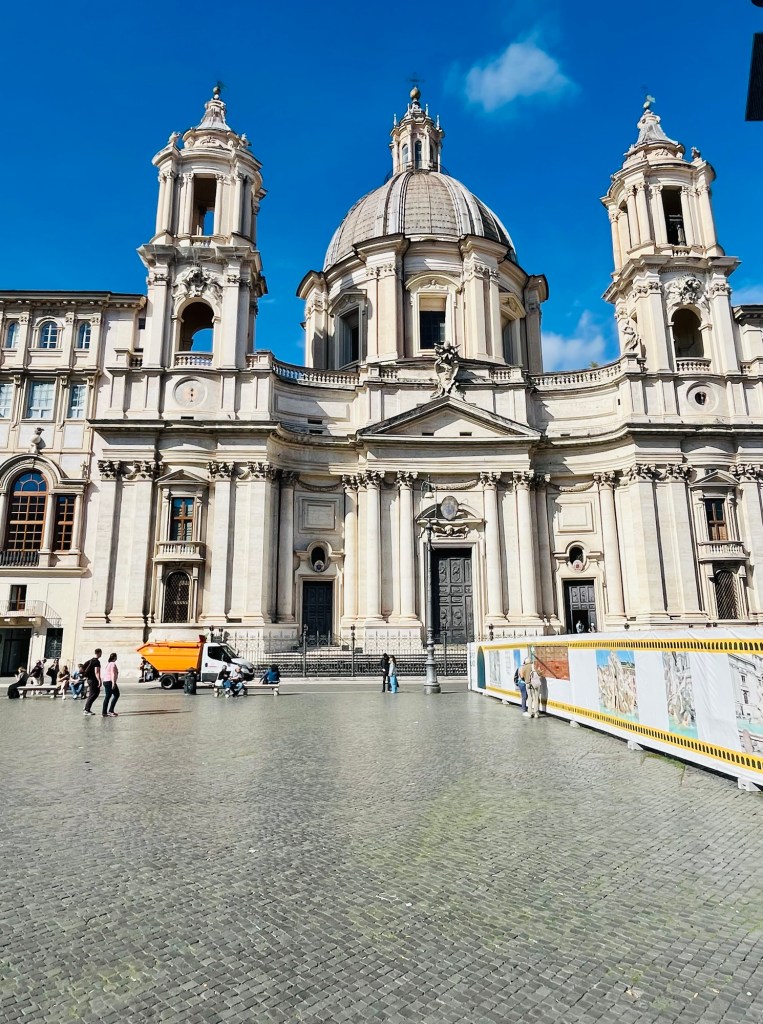
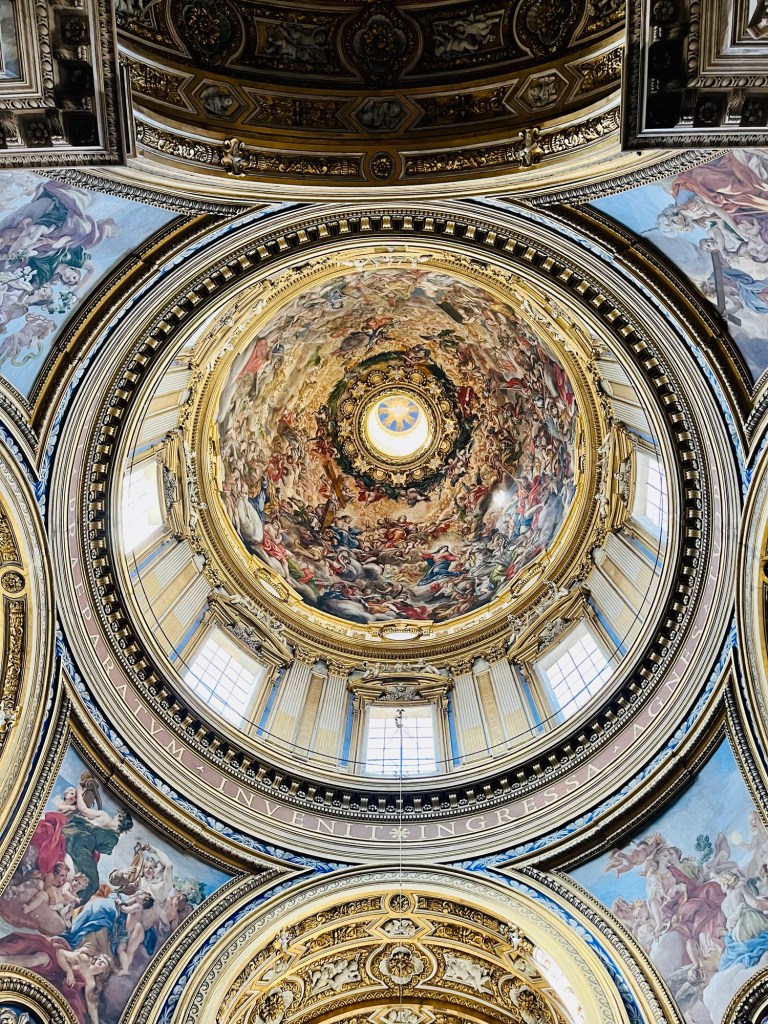
Okay not greatest photo with all the fencing but everything was being swished up the 2025 jubilee. This the Piazza Navona, the buildings are built on top of the ruins of the former stadium. The obelisk is famous Fountain of the Four Rivers by Bernini, and to the left is the church of Sant’Agnese in Agone.We saw this chap playing the Hammered Dulcimer, the instrument is the precursor for the modern Piano.The church of Sant’Agnese in Agone is built on the site where Saint Agnes was martyred, the current church dates from 1652.The cupola is of the Apotheosis of Saint Agnes (1670-89) by Ciro Ferri.
Leaving the piazza we headed towards the next stop of itinerary, the colosseum. And lunch.
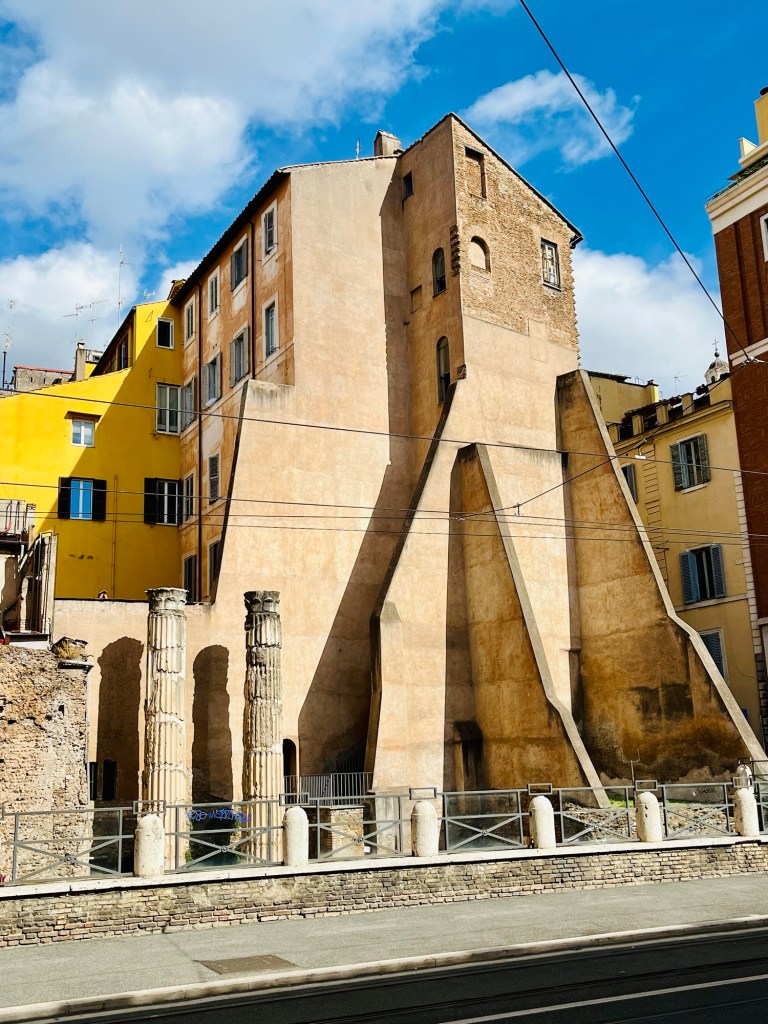
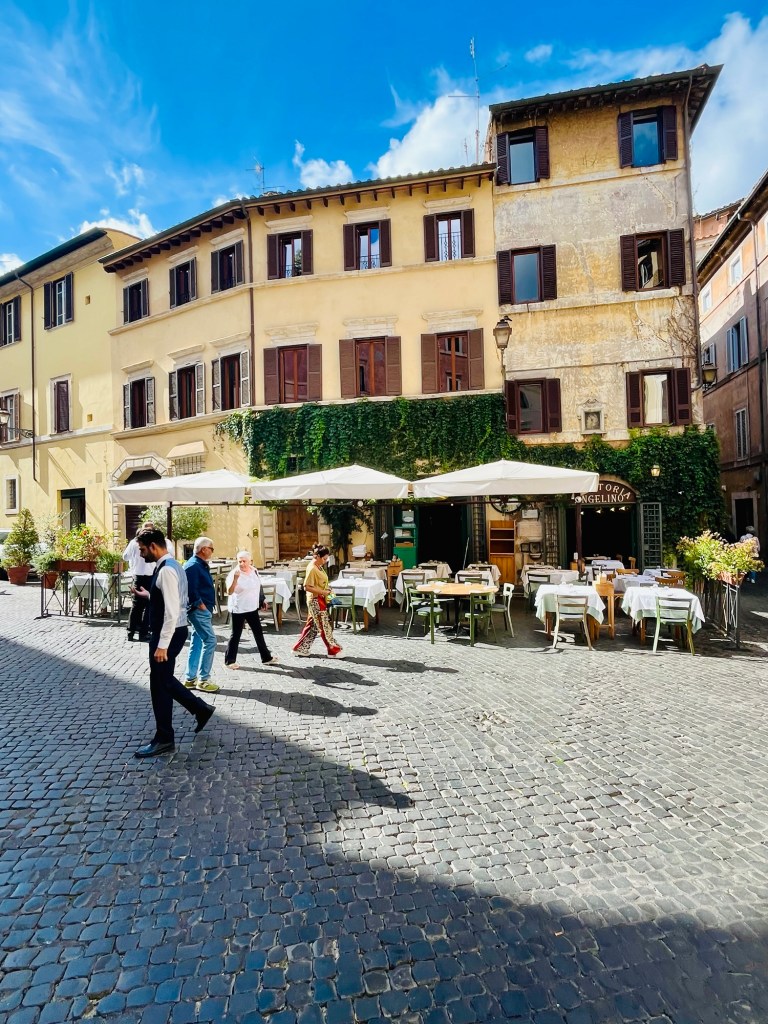
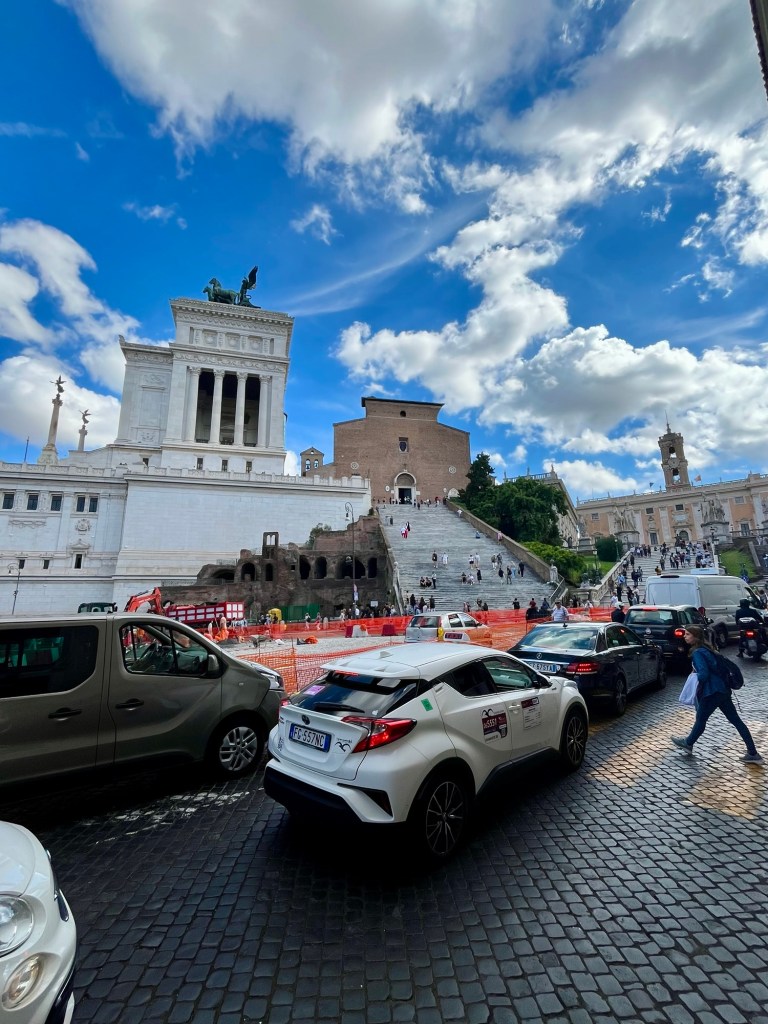
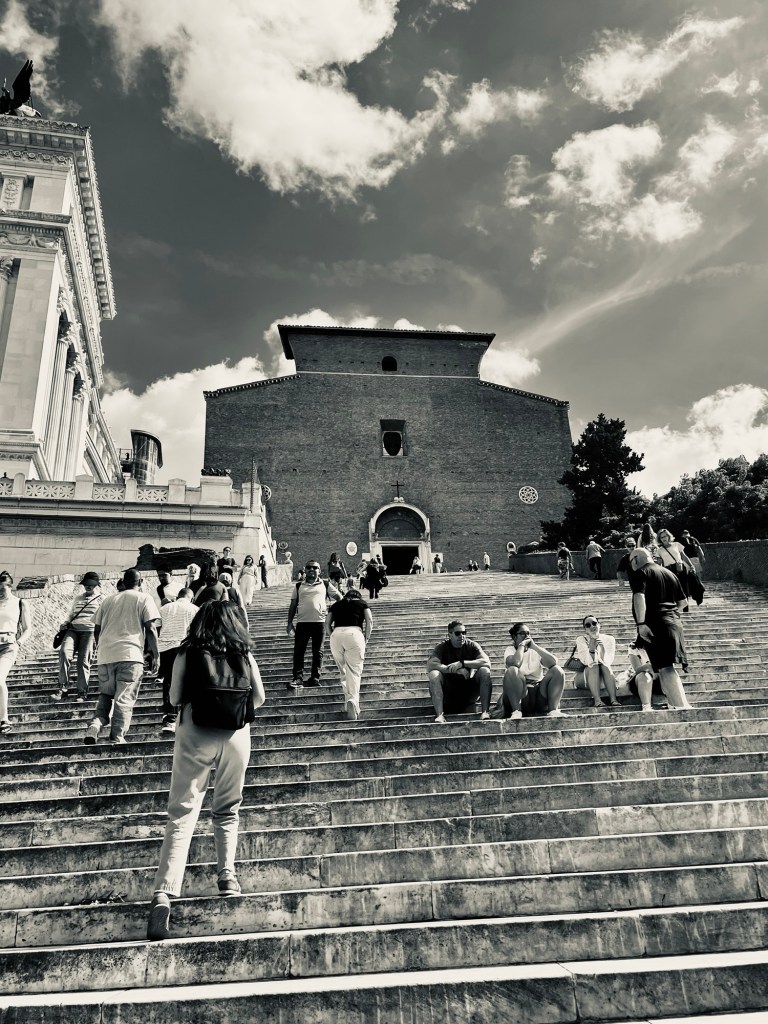
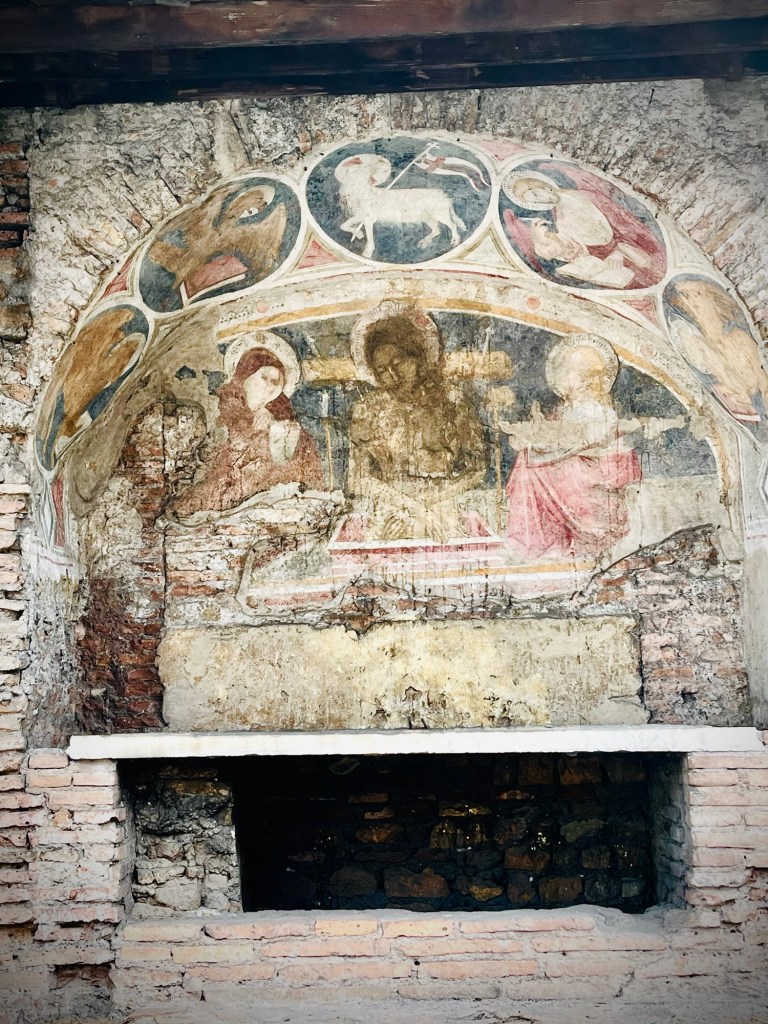
This crazy thing we randomly saw is “the temple of the nymphs”. I really like the slightly mad buttresses that are holding up the apartments. We avoided the madness of the main streets & found this quiet square to stop for lunch. We are at the more budget friendly venue across the road.This sums up the chaos of Rome, crazy traffic, the modern jostling against the ancient. The Capitoline Hill from the left is the Victor Emmanuel II monument (1885), in the centre is the Church of Santa Maria in Ara Coeli (1250) it was built top the Temple of Juno, to the left of the stairs are the ruins of a multi-storey ancient Roman apartment building (c.200), and on the right are the Capitoline Museums (1538) designed by Michelangelo.Looking up the steps to Santa Maria in Ara CoeliThis 14th Century tomb is literally on the side of the road, this by the ancient apartments. The tomb was discovered in the 1930s.
Roman Forum
Just behind the Capitoline Hill is ancient Roman Forum. We initially had feared that we might have left too late to avoid the crowds.
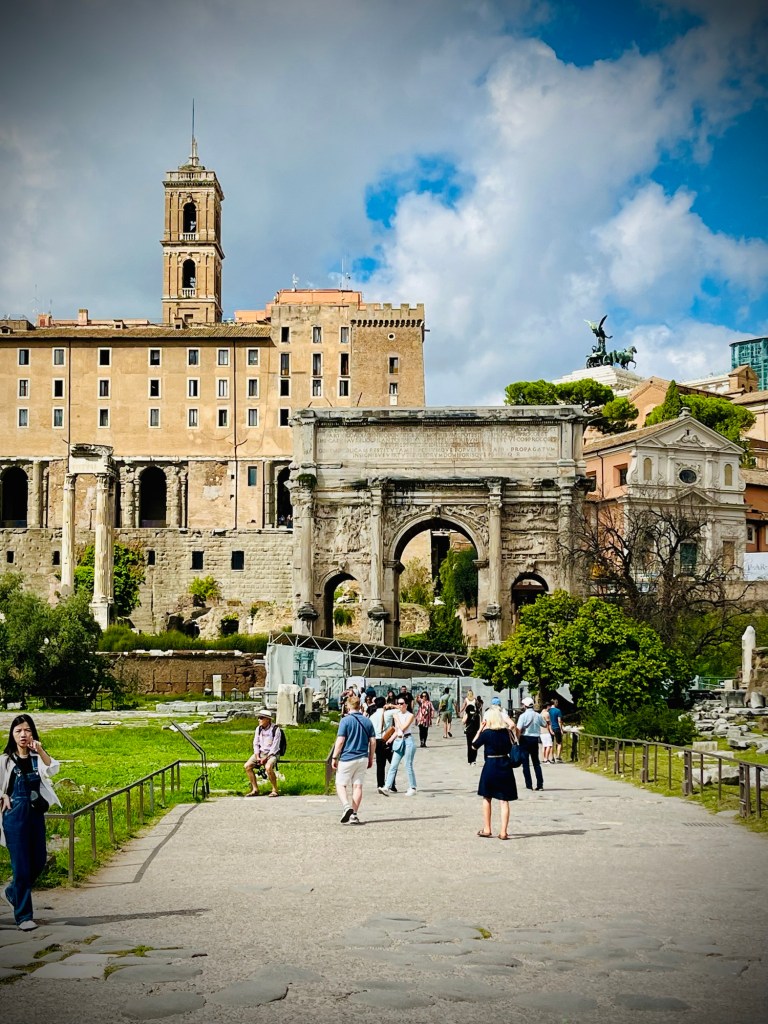
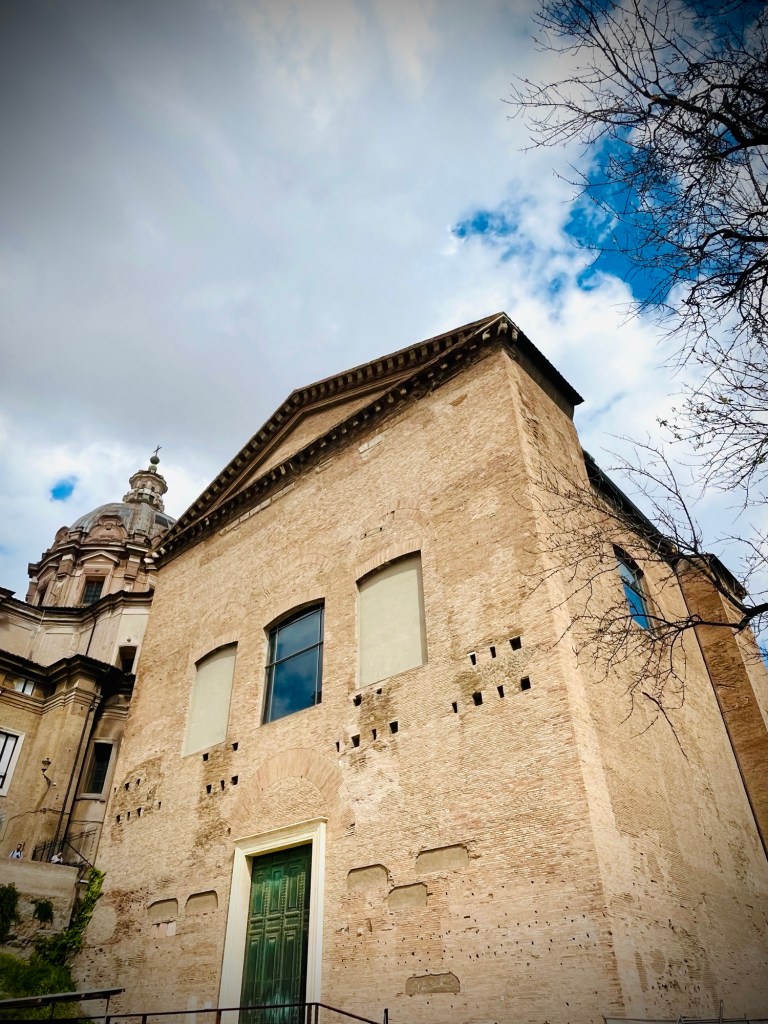
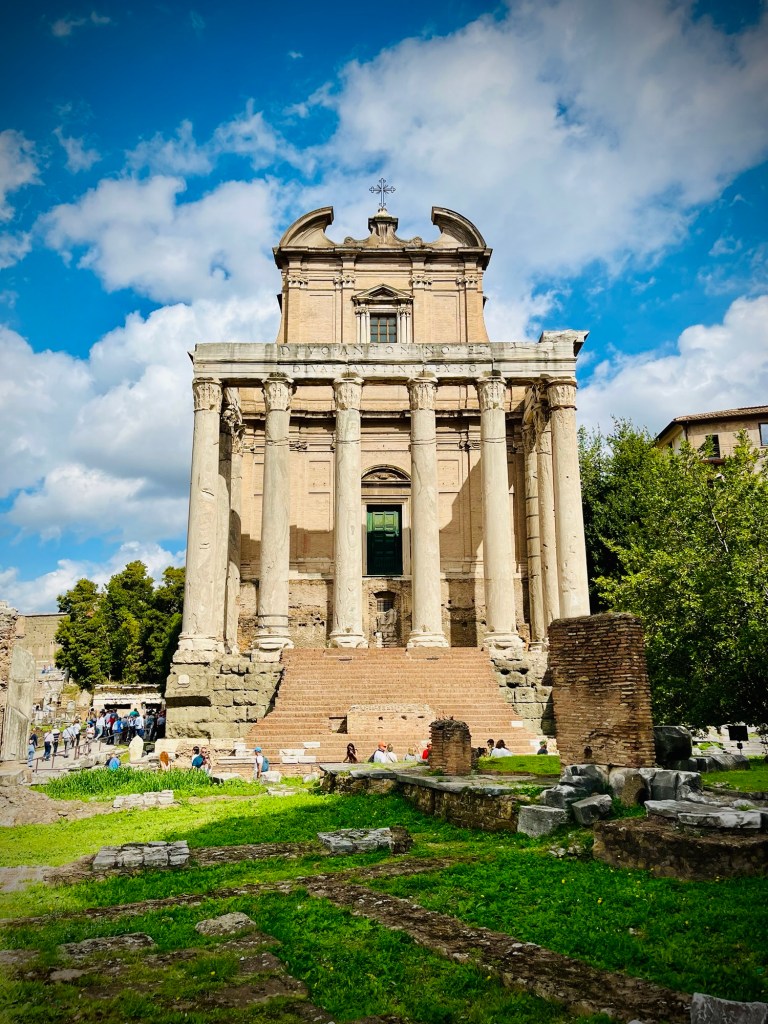
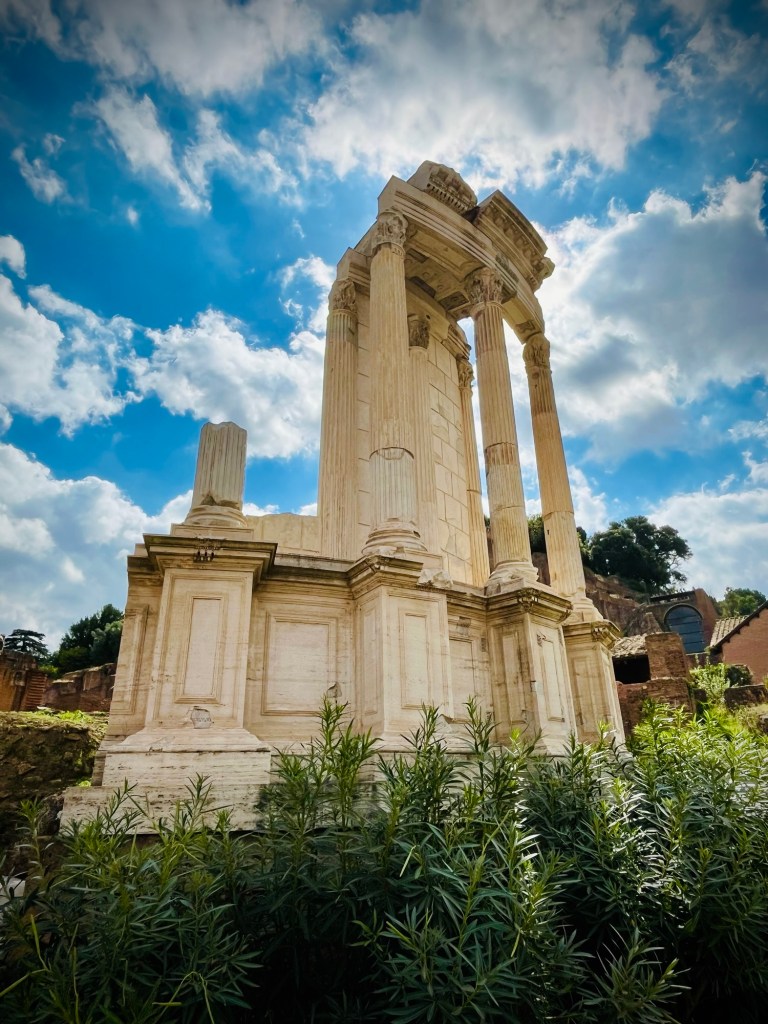
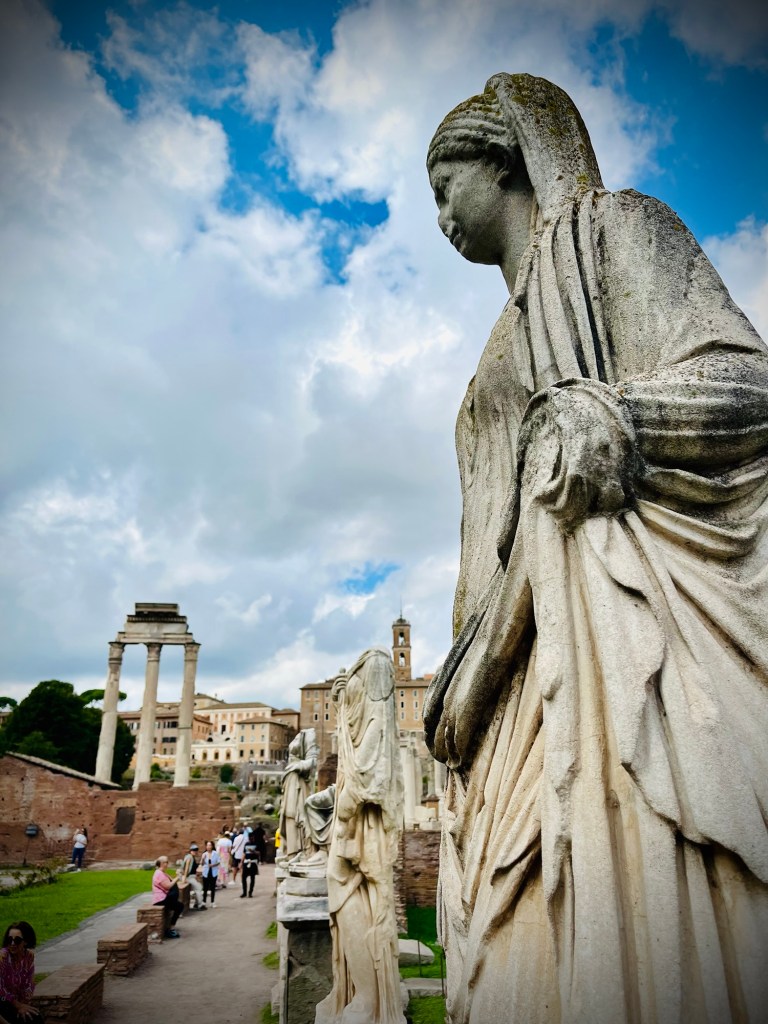
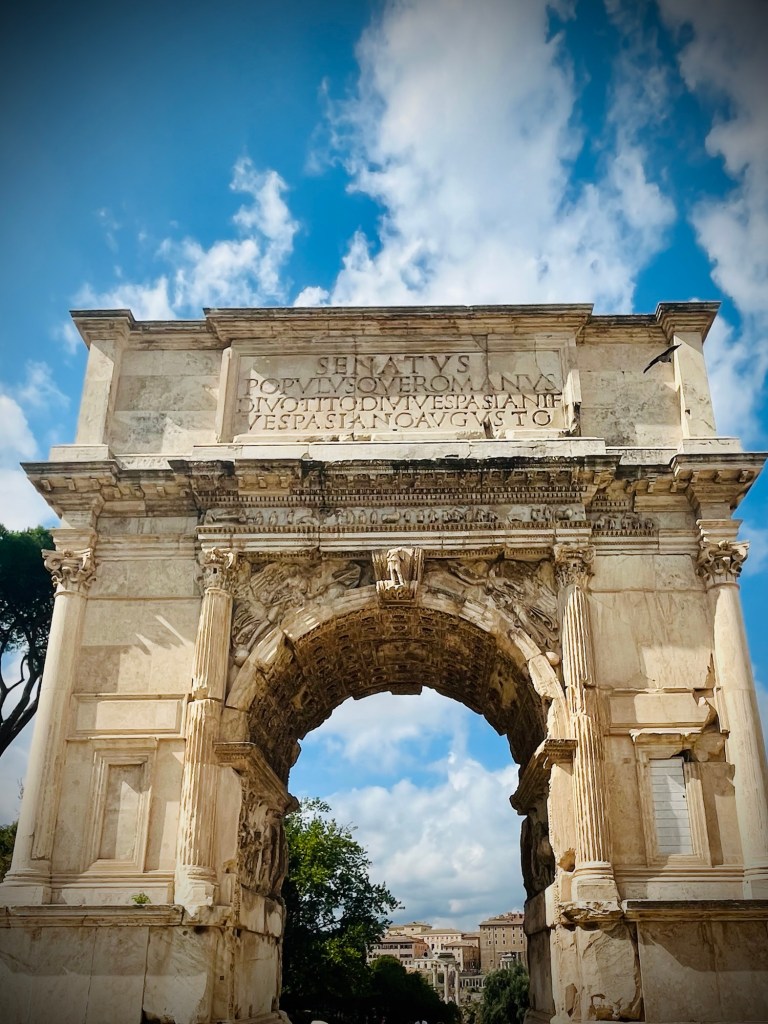
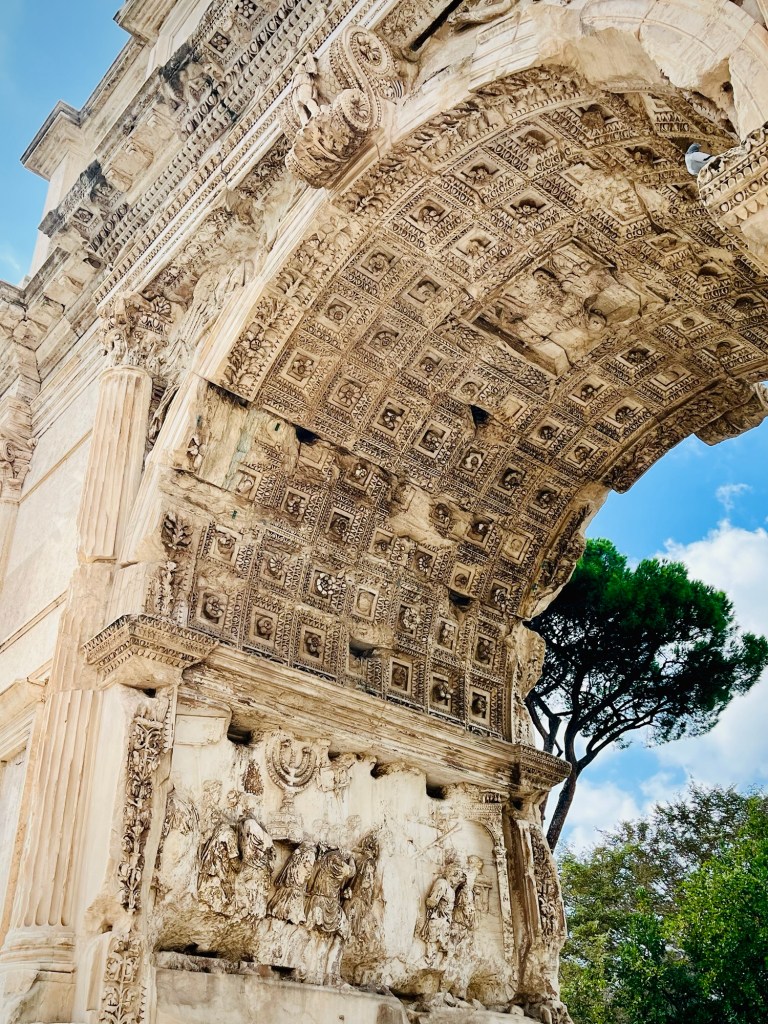
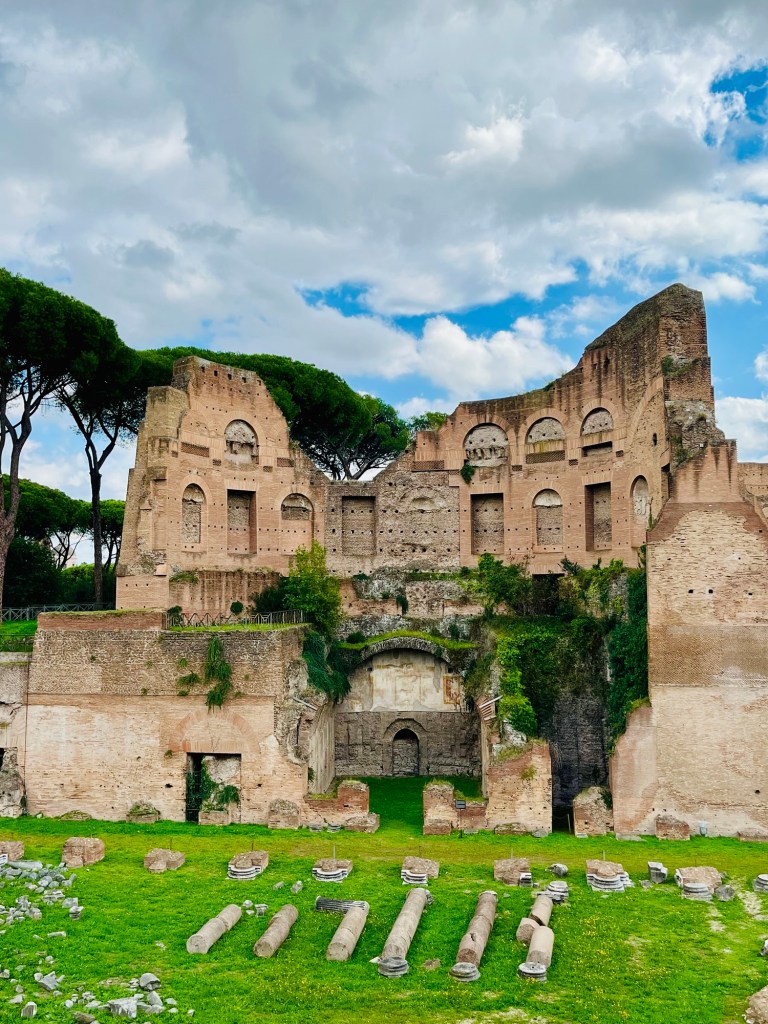
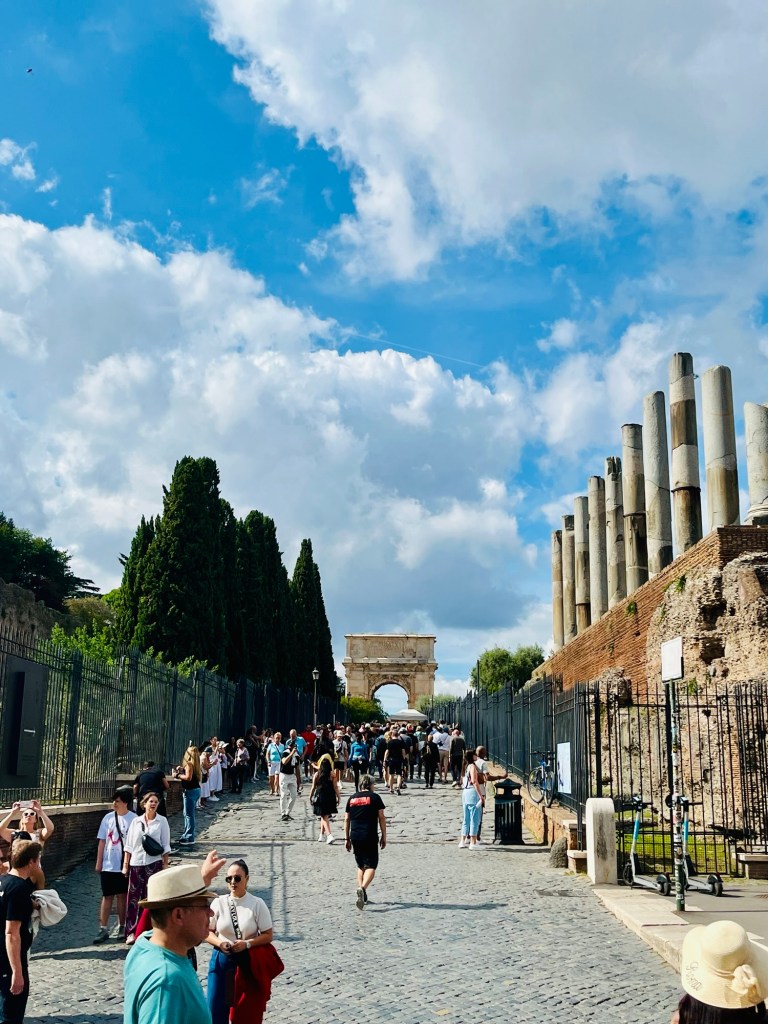
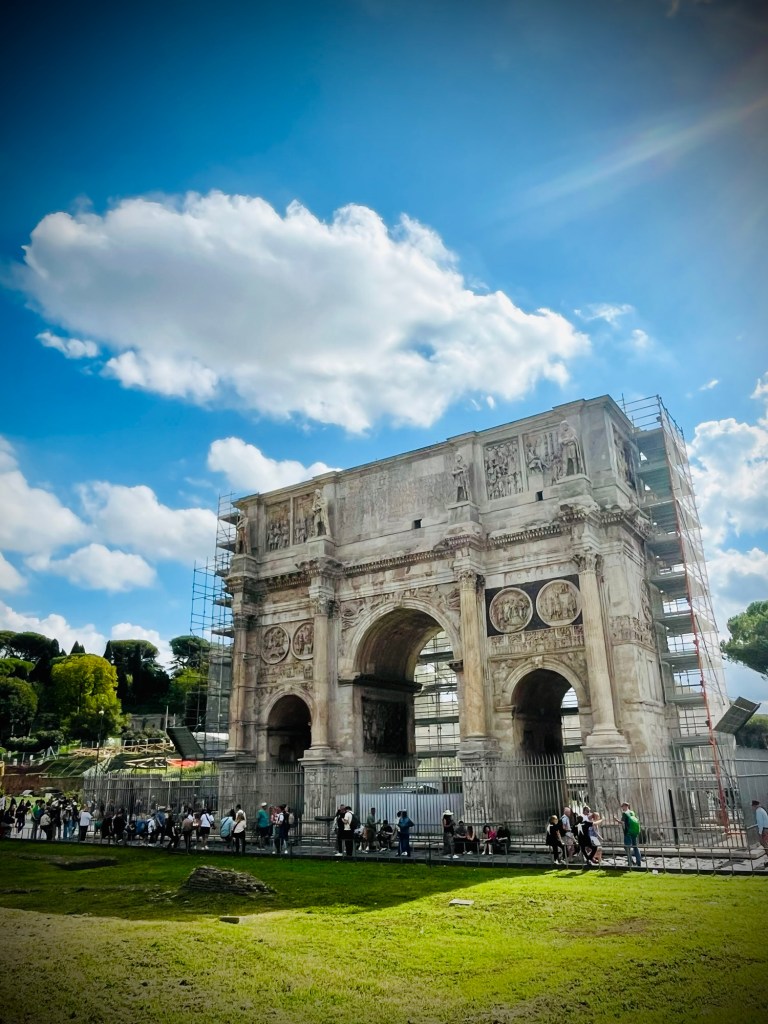
Looking toward Arch of Septimius Severus (203) celebrating the defeating the Parthians. The building at the top left, is the rear of the Capitoline Museum, it was built on top of the Tabularium the ancient Roman archives. This is the Curia Julia (44BC) built by Julius Caesar, this held the Roman Senate, which ironically he sidelined by his dictatorship. The Temple of Antoninus & Faustia (141) later converted into a church of San Lorenzo. The Temple of Vesta (211) where the sacred fire burnt until 394 when it was extinguished by the Christian Emperor Theodosius. House of the Vestals, originally a 3-storey palaceThe Arch of Titus (81) commemorating the victory over the Jewish Rebellion in Judea. Sculptural panel in the arch showing the plundered menorah & other temple goods from the destruction of the Temple of Jerusalem (71AD)Above the Forum is the Palatine Hill, where the Emperor lived, the scale is crazy this is just a dining hall that could easily been 6-storeys high & was only tiny portion of the complex.Leaving the Forum the view up the Via Sacra toward the Arch of TitusThe Arch of Constantine (312) celebrates his victory over his rival Maxentius at the battle of Milvian Bridge. Most of the sculptures were nicked from earlier Triumphal Arches.
Colosseum
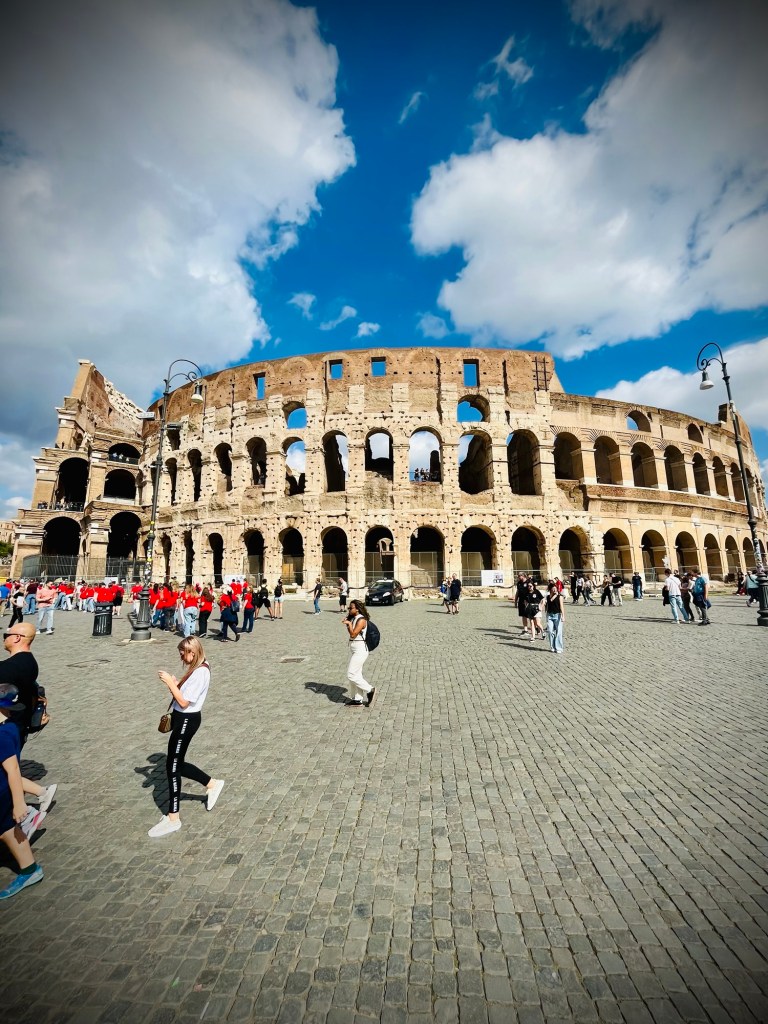
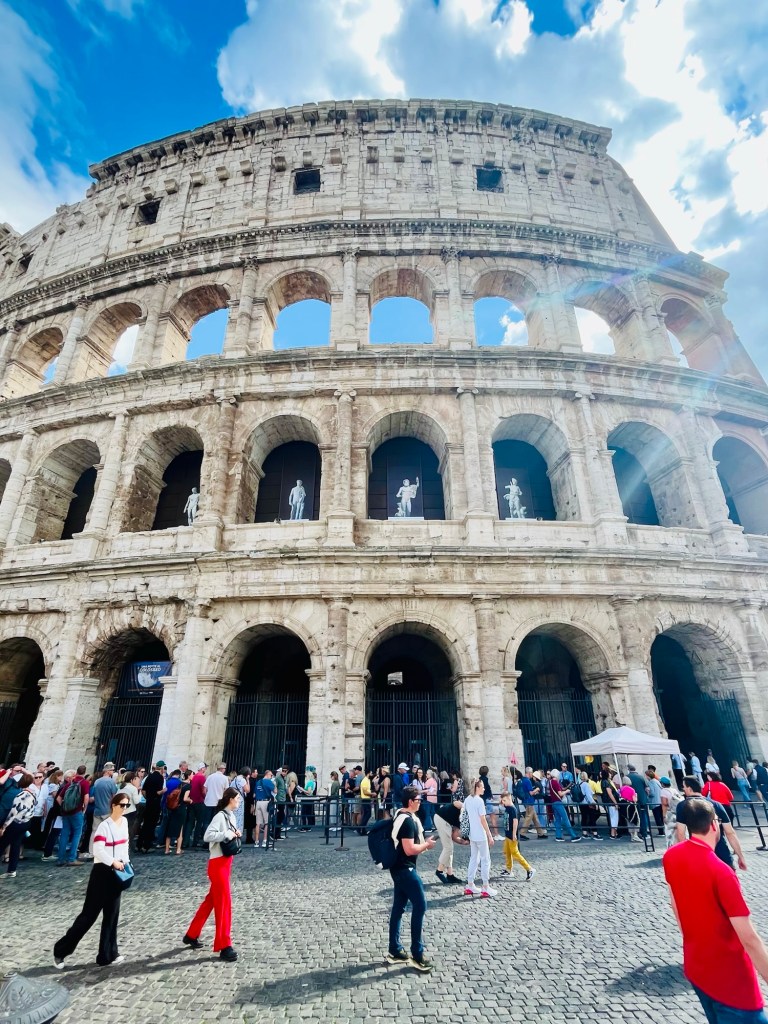
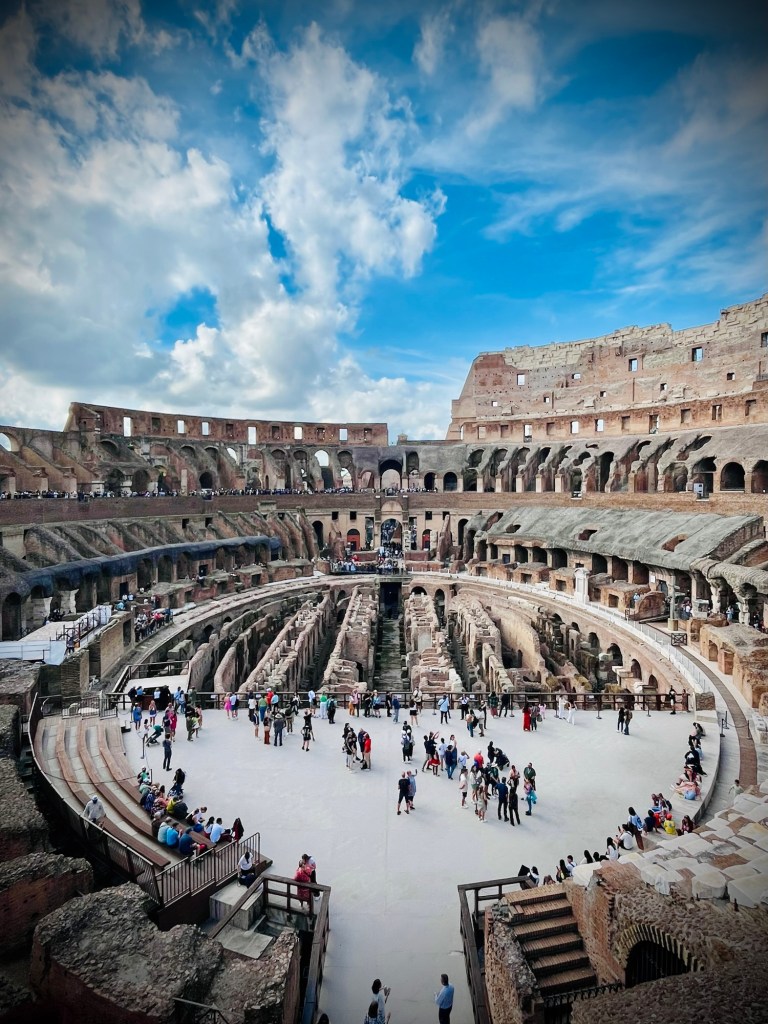
It’s big, though the name comes from the colossal statue of Nero that was nearby, & things got a bit muddled over centuries so that’s why we call it the Colosseum. It was built in 70-80AD on top of Nero’s former palace.
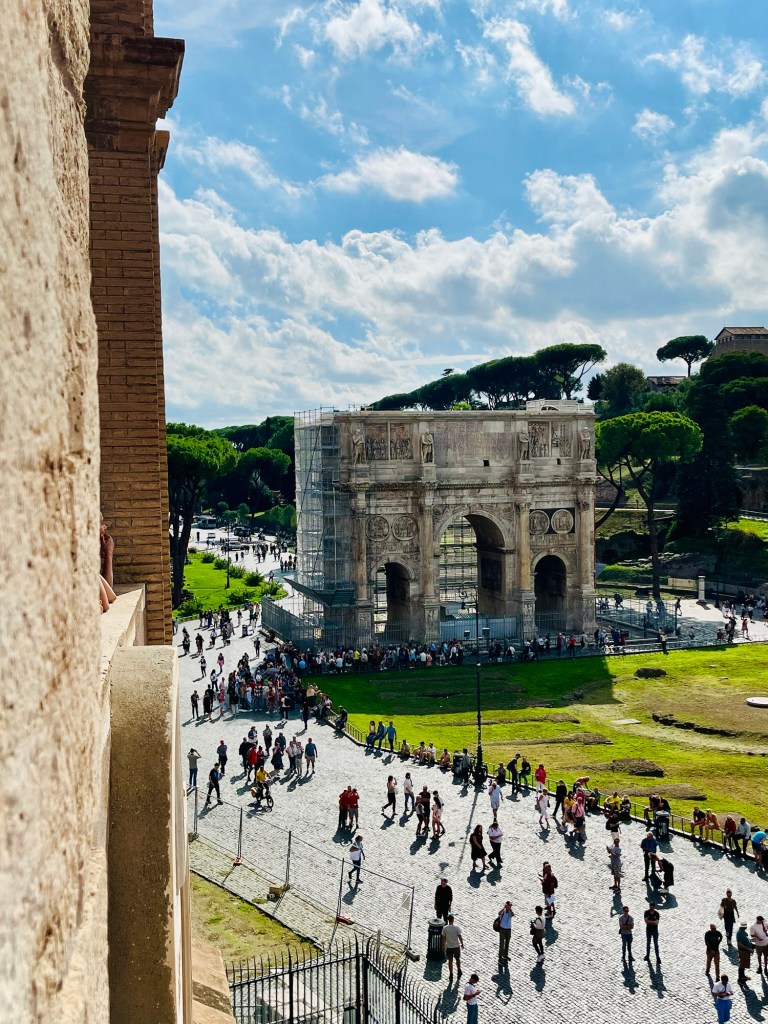
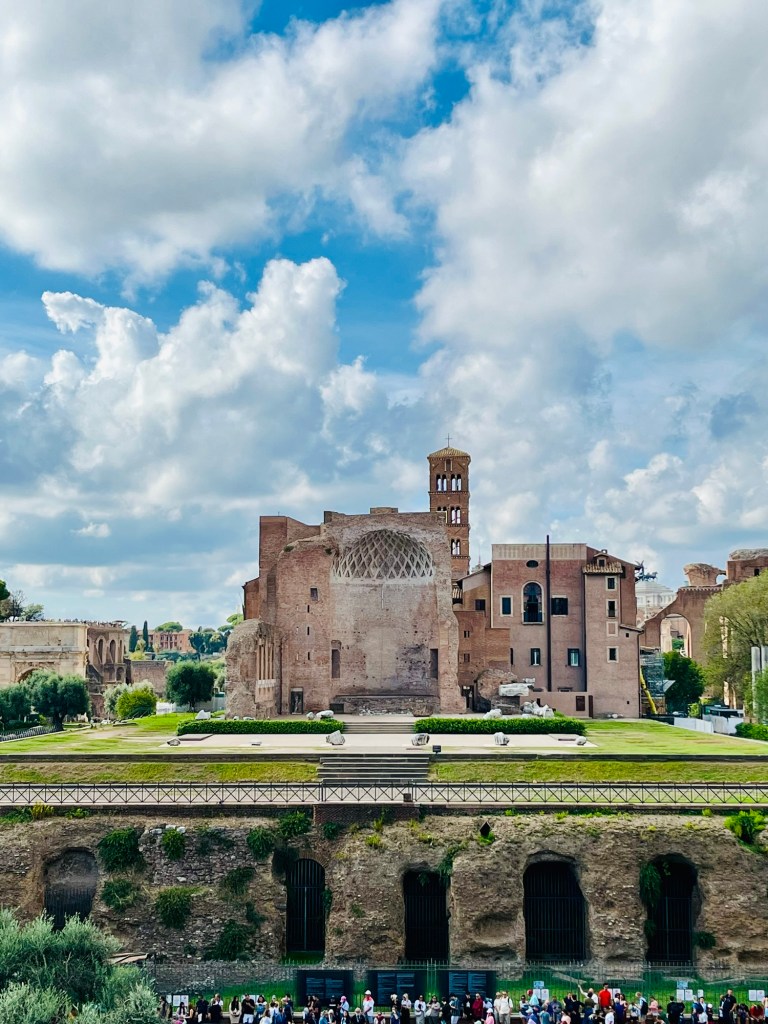
After being closed in the mid-6th century it became amongst others a church, a cemetery, workshops, housing, a fort, and quarry. This is part of the original facade – the style or order of the the columns change as they go up the building from Doric, Ionic & Corinthian.I had to fight my way past a scrum of selfie taking youths to get this photo. A view of the Arch of Constantine from the Colosseum.These are the ruins of the Temple of Venus & Roma, viewed from the Colosseum, it was the largest temple in Rome and was built in 135AD. Turns out Romans loved palindromes – the two temples were mirrored & were back-to-back, Venus was the god of love or amor in Latin, so we get AMOR=ROMA.
Basilica of St Clement
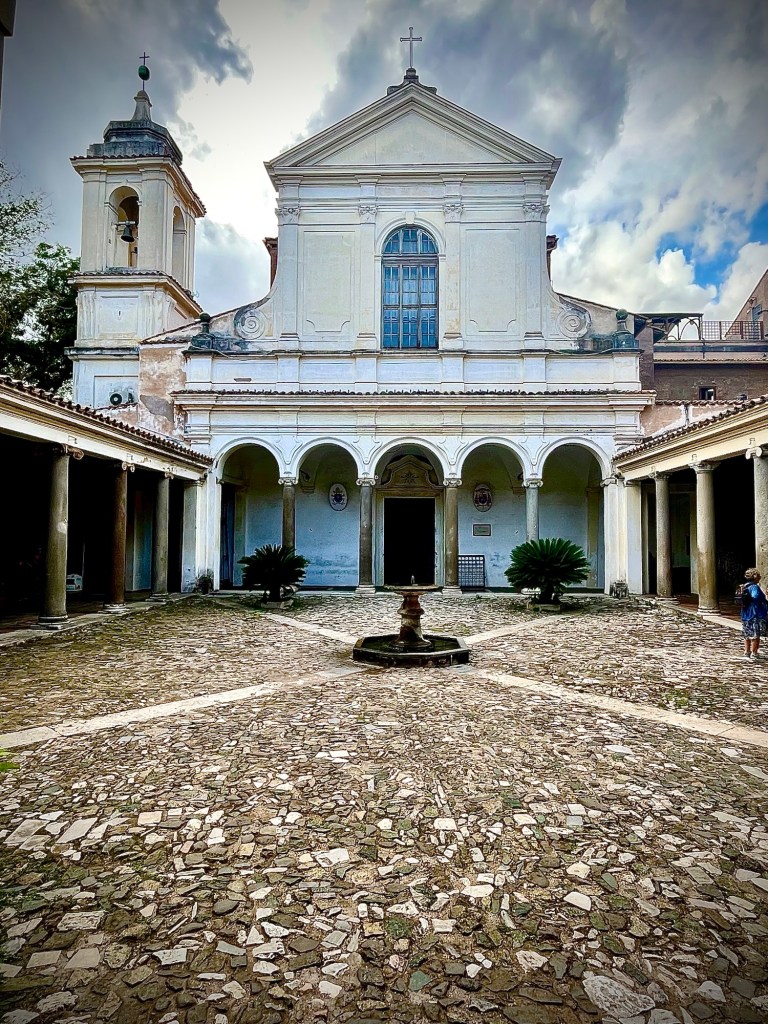
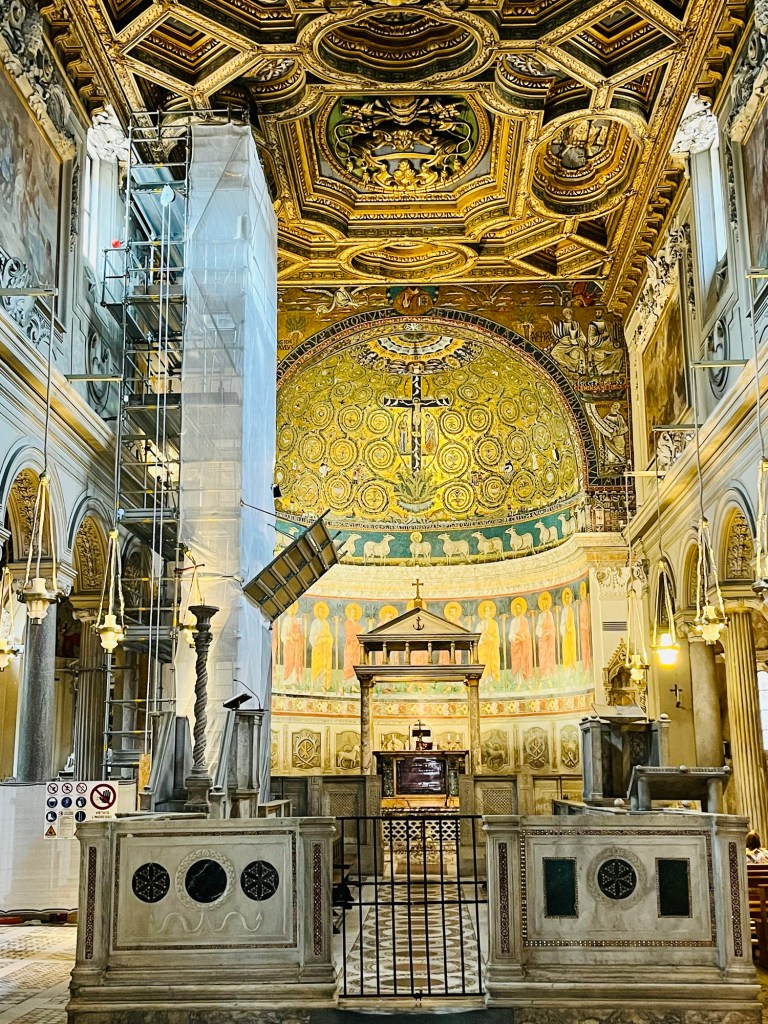
A block from the colosseum is the Basilica di San Clemente al Laterano, this is a veritable architectural lasagne.
You have to descend down steps before you even enter the church, as it is a storey lower than the surrounding street.
The current church dates from 1120 and is quite bling with its original golden Romanesque mosaics, and in 1719 they added more gold with some Baroque ceilings.
Bling
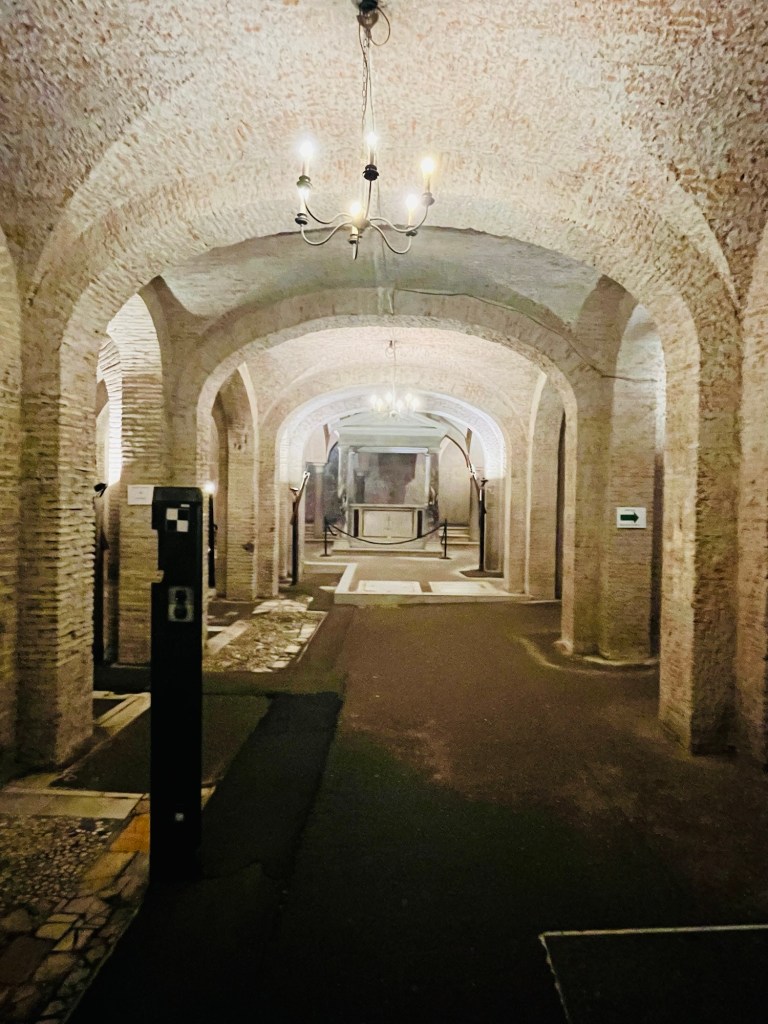
The current church is literally built directly on top of an earlier church. Rather than demolishing the old church they back-filled it & built on top of it.
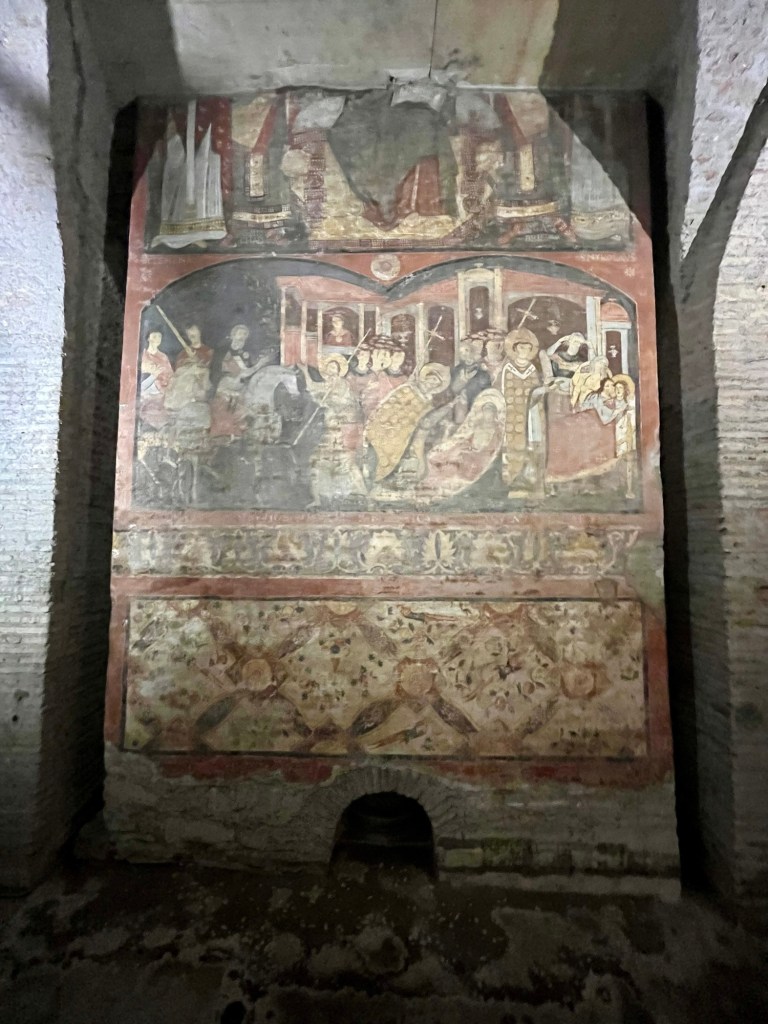
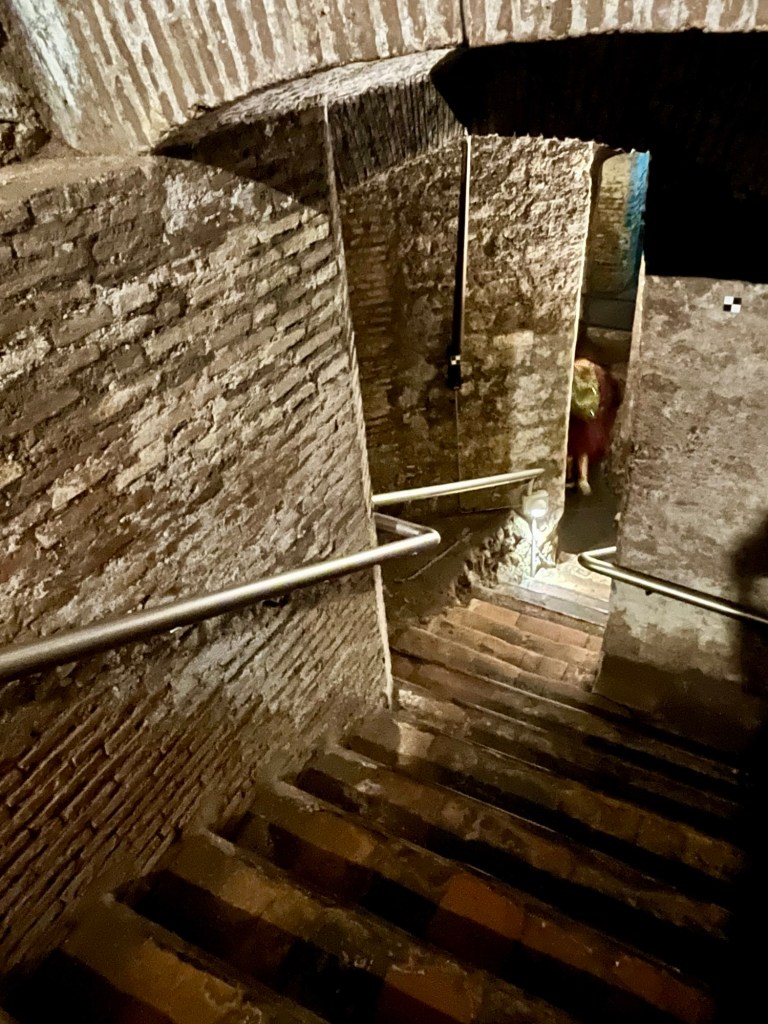
Descending down a flight of stairs you reach the original church, this dates to at least 392 The frescoes date to the 750s, the top of the wall forms the foundation for the current church.More stairs
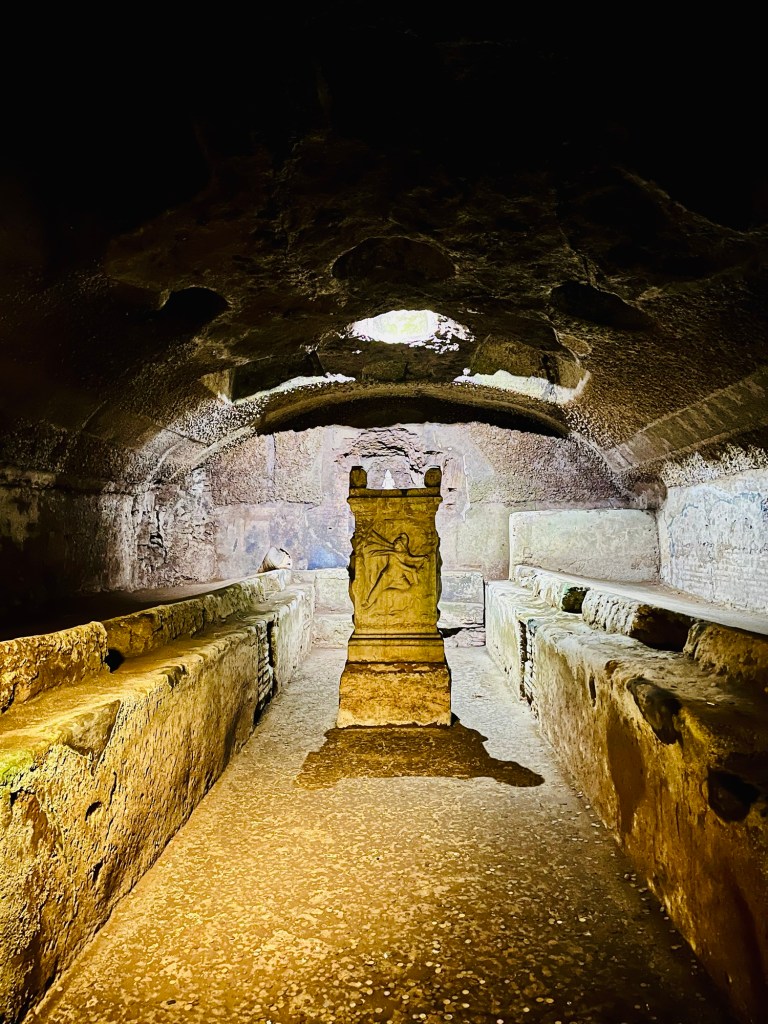
Descending down another flight of stairs you reach a Mithraeum that dates to 200AD, this was dedicated to the Cult of Mithras, which competed with early Christianity in popularity.
The Mithereum where religious communal meals were held. It is thought this was built in a domestic dwelling.
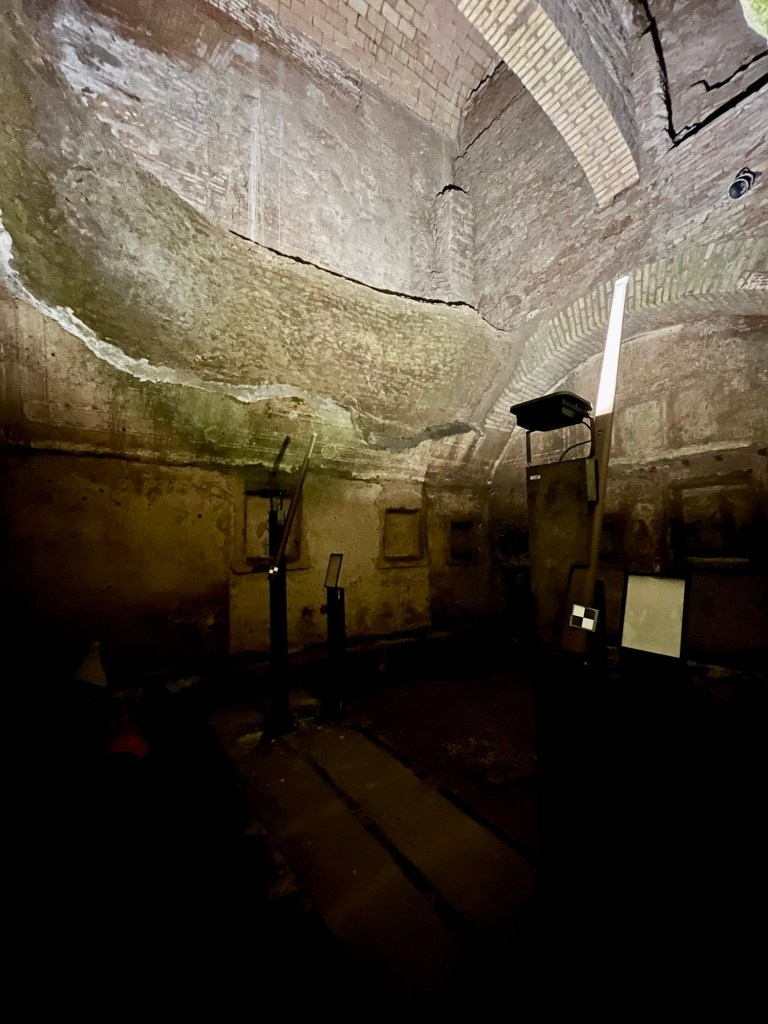
Down another flight from the Mithraeum is an earlier industrial building dating to 100AD, which is thought to be part of the Imperial Mint.
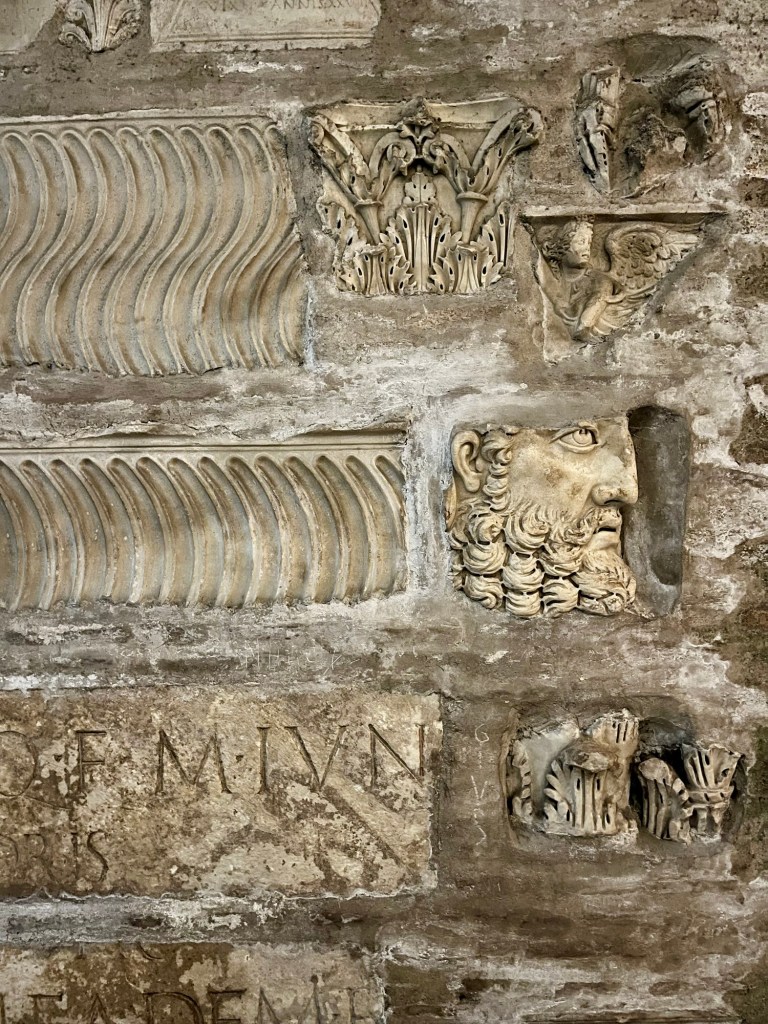
There’s also stream running through down there. In the 19th century the excavated ancient artefacts were set into some of the walls of the lower church.
 MM4.Travel
Leave a comment