With ourselves and the taxi driver speaking very little of each other’s respective language, he nevertheless kindly acted as an impromptu tour guide pointing out various landmarks mostly in Italian. We got dropped off about 5 minutes from where we needed to be, we think he did explain why. Roadworks perhaps. Nevertheless he did seem like a very decent human.
We needed to be at our tour guide’s office at 7.30am sharpish, with both yesterday’s previous walk to the Vatican, and Google Maps telling us fairly definitively that the walk there would be around an hour, we caught a taxi.
Having arrived at the tour guide’s office we were then divided into our respective groups, we were Team yellow umbrella, whom we must stick to in all circumstances on pain of not seeing the Sistine Chapel & St Peter’s. Such is the power of the yellow umbrella.
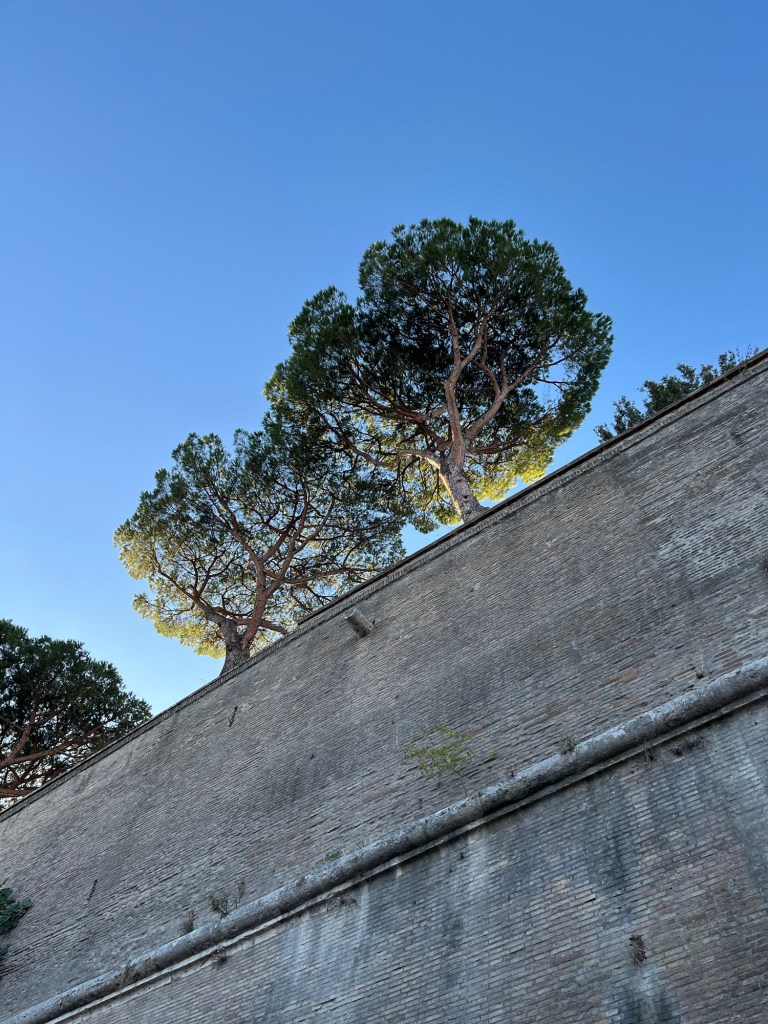
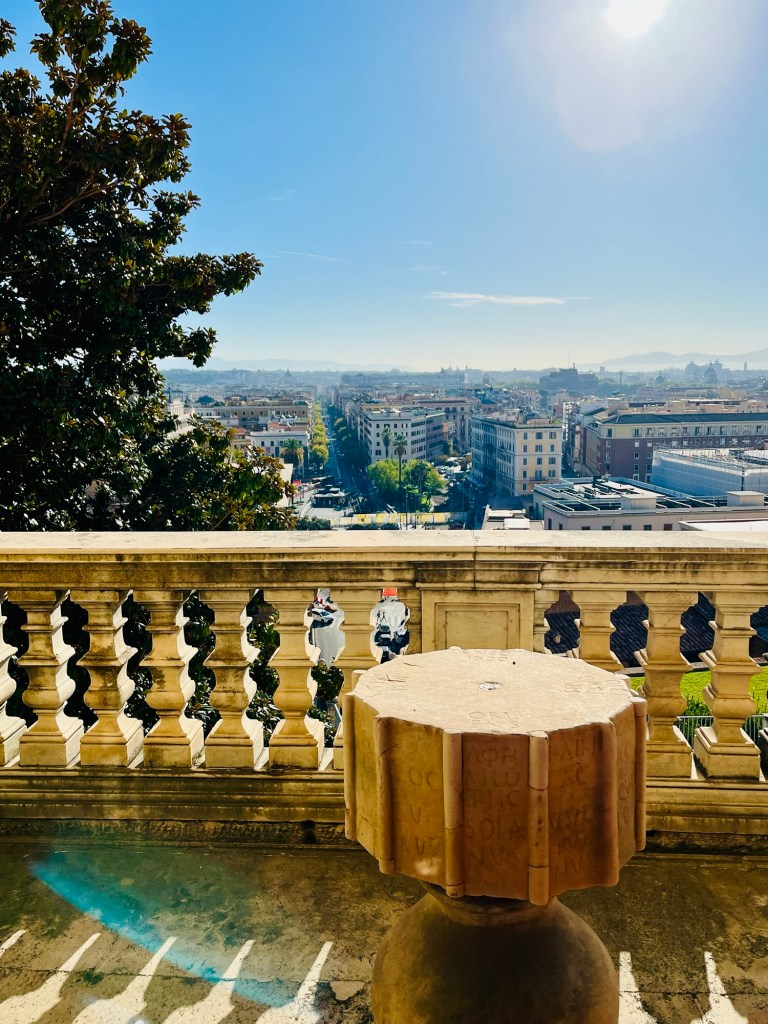
This seemingly bucolic vista of the Vatican gardens above, belies the sea of thousands waiting in line just off camera.
The Vatican is the world’s smallest country. This is due to King Victor Emmanuel II (the wedding cake memorial guy) unifying Italy in 1870, conquering the Papal States who controlled most of central Italy for a millennium or so. The Papacy not appreciating having their land taken from them, decided not to leave the Vatican to show that they didn’t recognise the new Kingdom of Italy, & promptly excommunicated the new King. This situation lasted 59 years and was only resolved with the 1829 Lateran Treaty when everyone decided to play nice. This created the Vatican City as a new country, with an incredibly low birth rate.
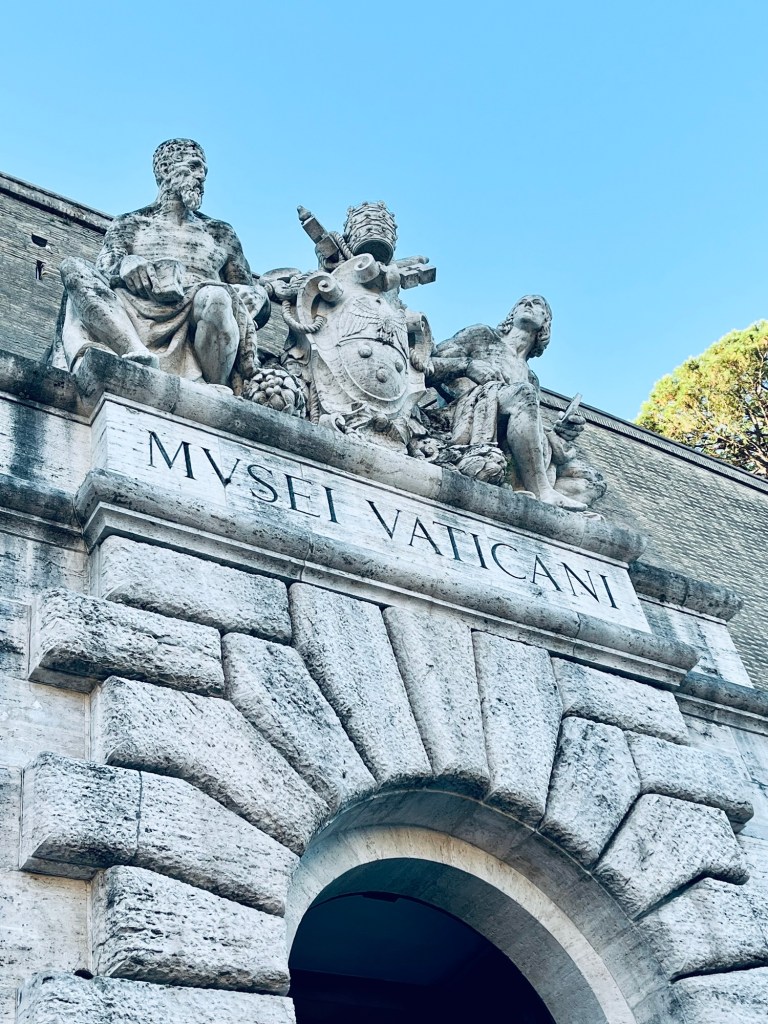
They’re still waiting too, this is where we were going but this is just an exit.
Having got through security and now armed with a headset we commenced our tour of the Vatican Museums.
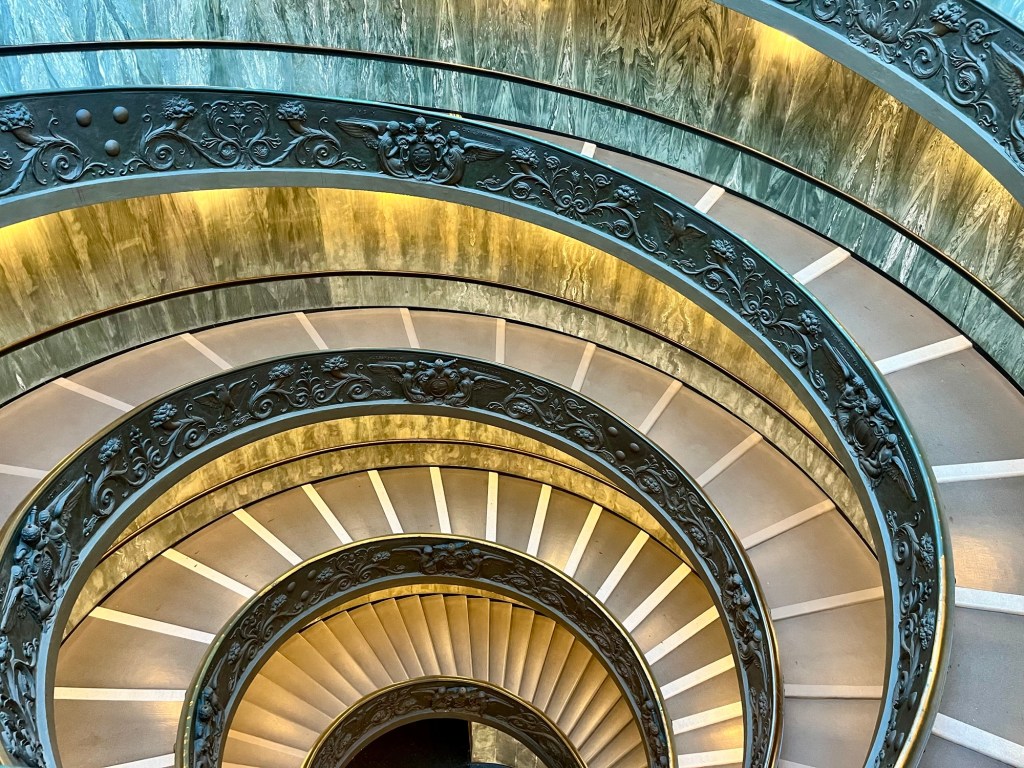
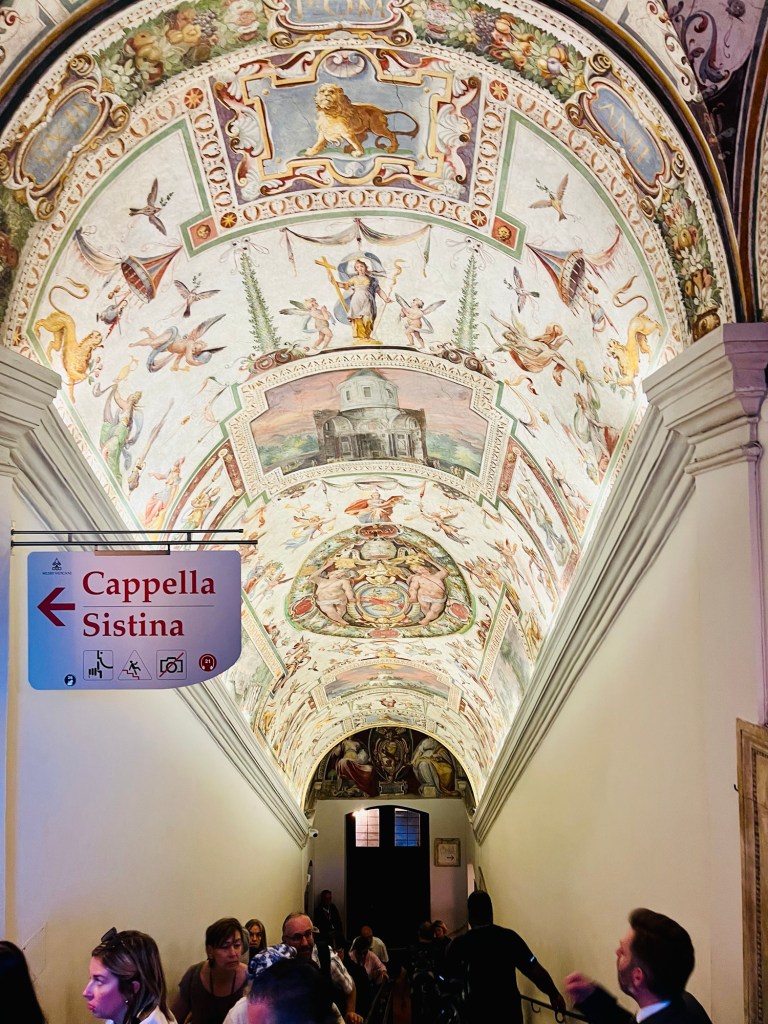
The Bramante Staircase. Well this is the “new” one dating to 1932, the original which isn’t on the tour dates to 1505. It’s a double helix so people walking up never meet those walking down. They also think this was the inspiration for the Guggenheim Museum in NYC by Frank Lloyd-Wright.
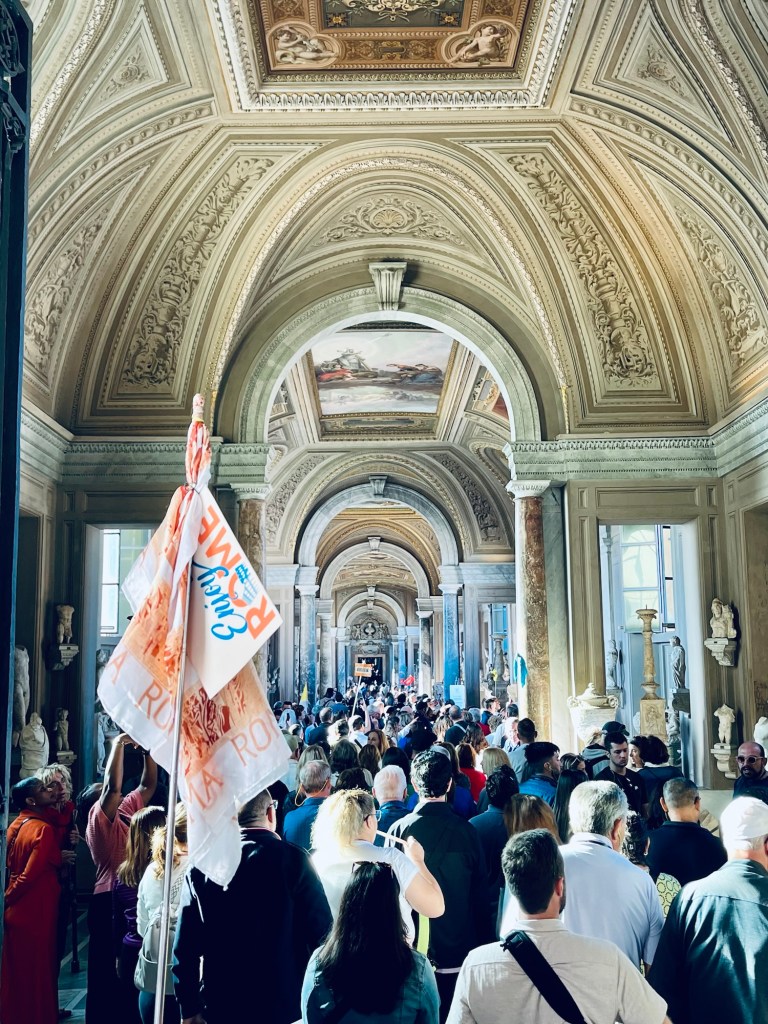
The tour moves at bewildering speed, briefly pausing from time to time so our guide can point something out. As repeatedly repeated, we must stay with yellow umbrella, if you want to see the Sistine Chapel.
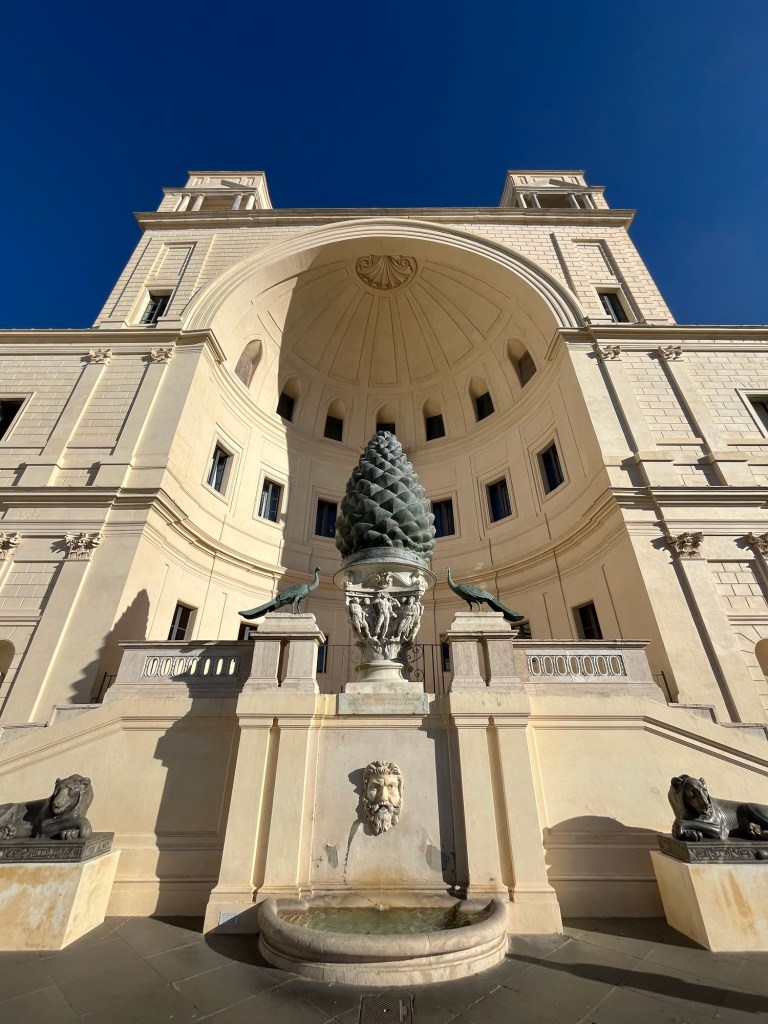
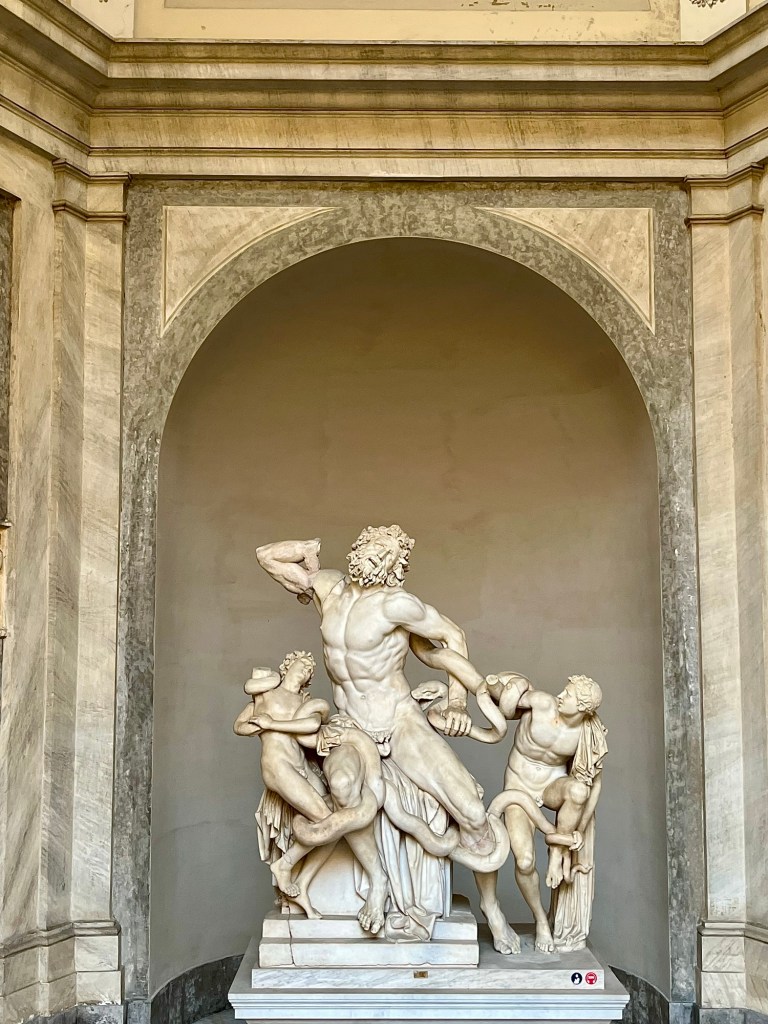
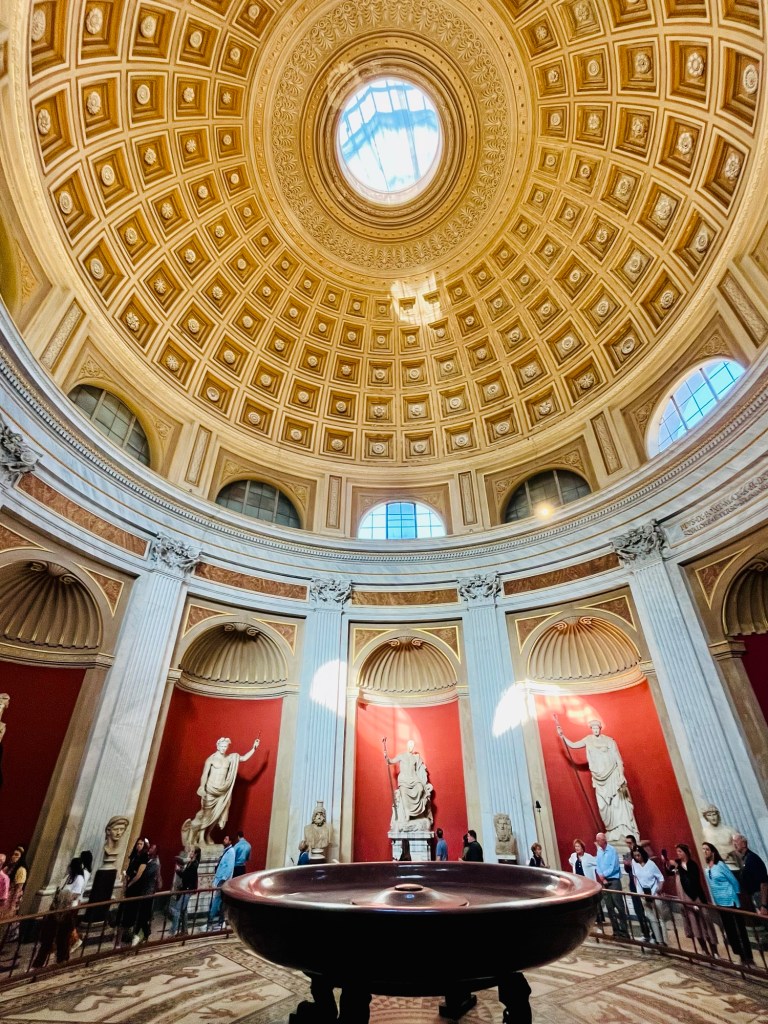
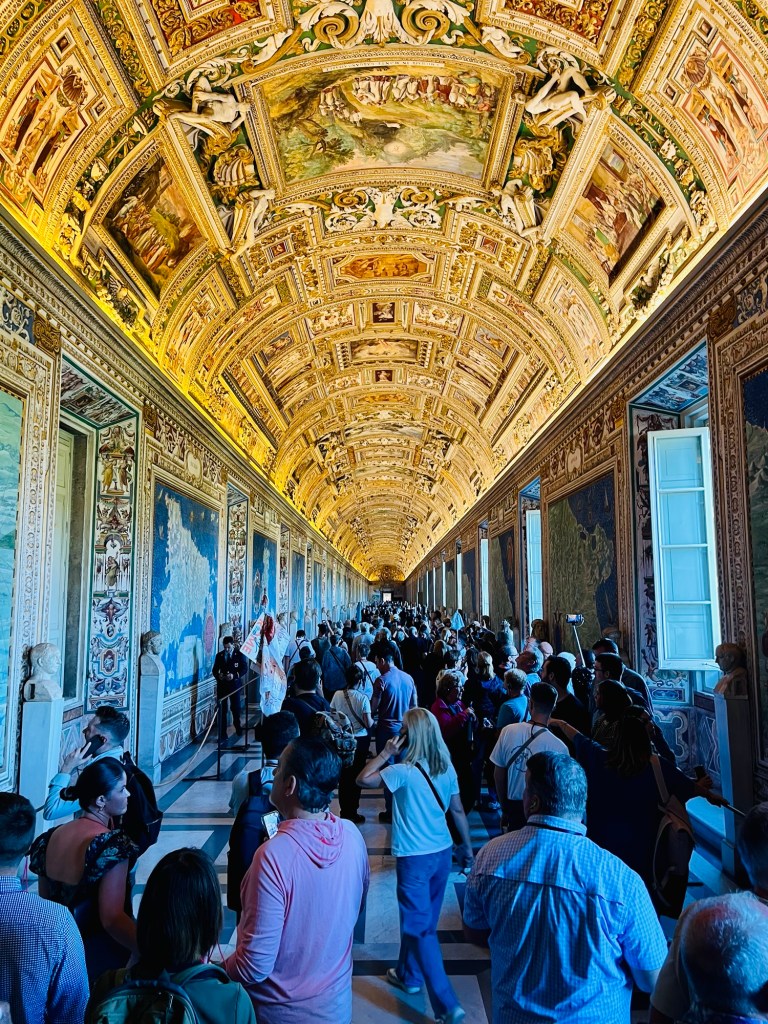
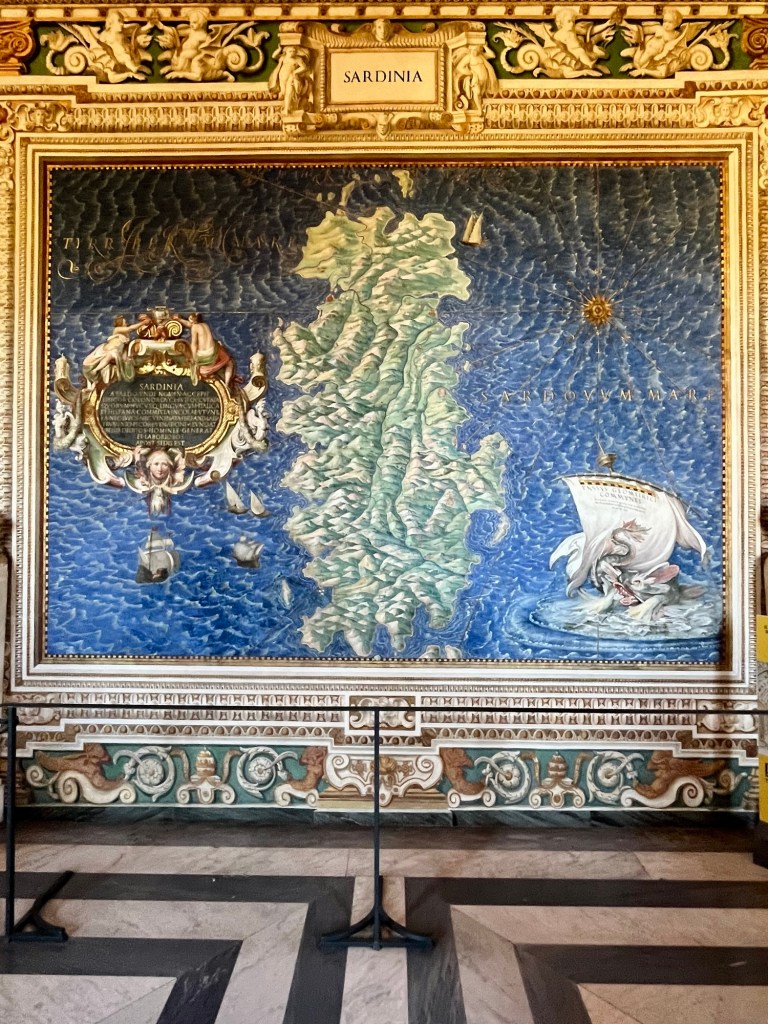
Fontana della Pigna – somewhat less glamorous in English, the Fountain of the Pinecorn, so named for the nearly 2000 year old & 3.0m high bronze pinecone. It originally was from a Roman Temple, it was then moved to the old St Peter’s Cathedral & then onto here in 1608 the Cortile del Belvedere. Fun fact Dante even name checked it in his book The Divine Comedy.Resplendent Rome The statue of Laocoön & his sons (28AD). It was famous in antiquity with Pliny the Elder even writing about it. It depicts, well, Laocoön & his sons, being attacked by serpents sent by the god Athena to punish him for warning the Trojans not to let in the Trojan Horse. No not quite sure of the moral there either. It was rediscovered in 1506, Michelangelo was involved with its excavation & it became the first item in the Vatican Museum.The Sala Rotunda, it’s a mini version of the Pantheon Must follow the yellow umbrella.The Corridor of Maps (1580) MapSistine Chapel exit stage left.
Sistine Chapel
After moving with forthright determination through the museum as a huddled mass, ceaselessly following the yellow umbrella, we make it to the Sistine Chapel. Here we find the famous frescoes by Michelangelo & Botticelli but you’ll have to take our word for it, because there’s a strict no photos policy.
St Peter’s
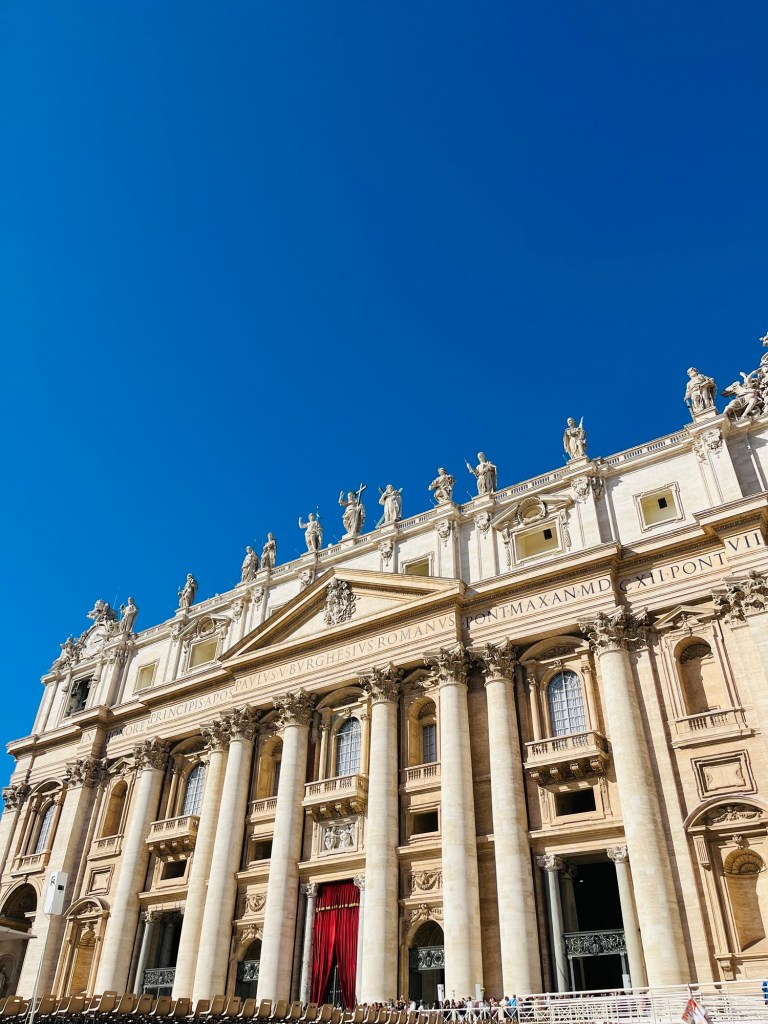
The Sistine Chapel was amazing, but after your allocated time is up you are quickly moved on. We were reunited with the yellow umbrella and headed through a series of corridors out to St Peter’s Square. As part of the tour we were able to skip the line to get into St Peter’s, which is fortunate as the queues looked formidable.
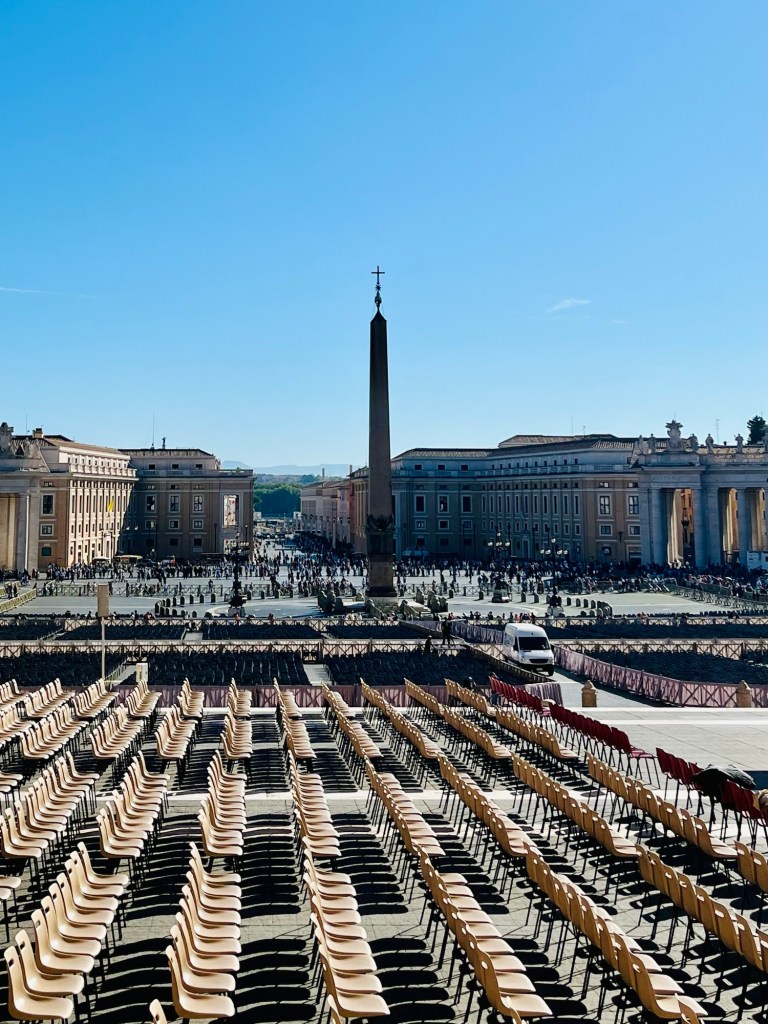
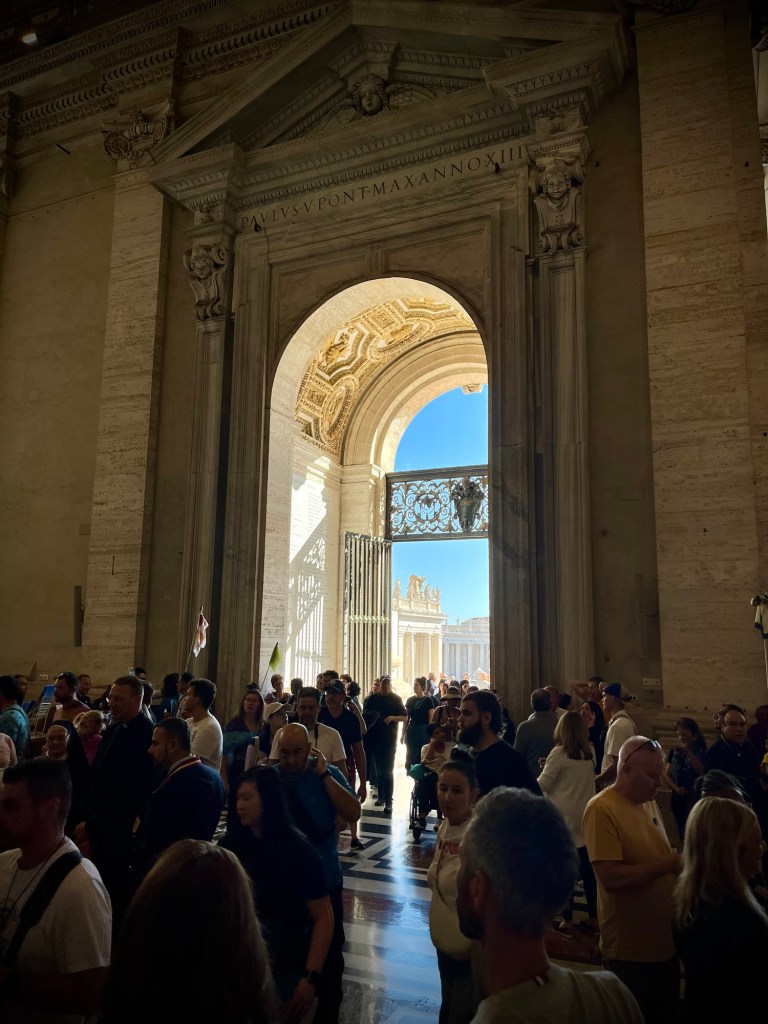
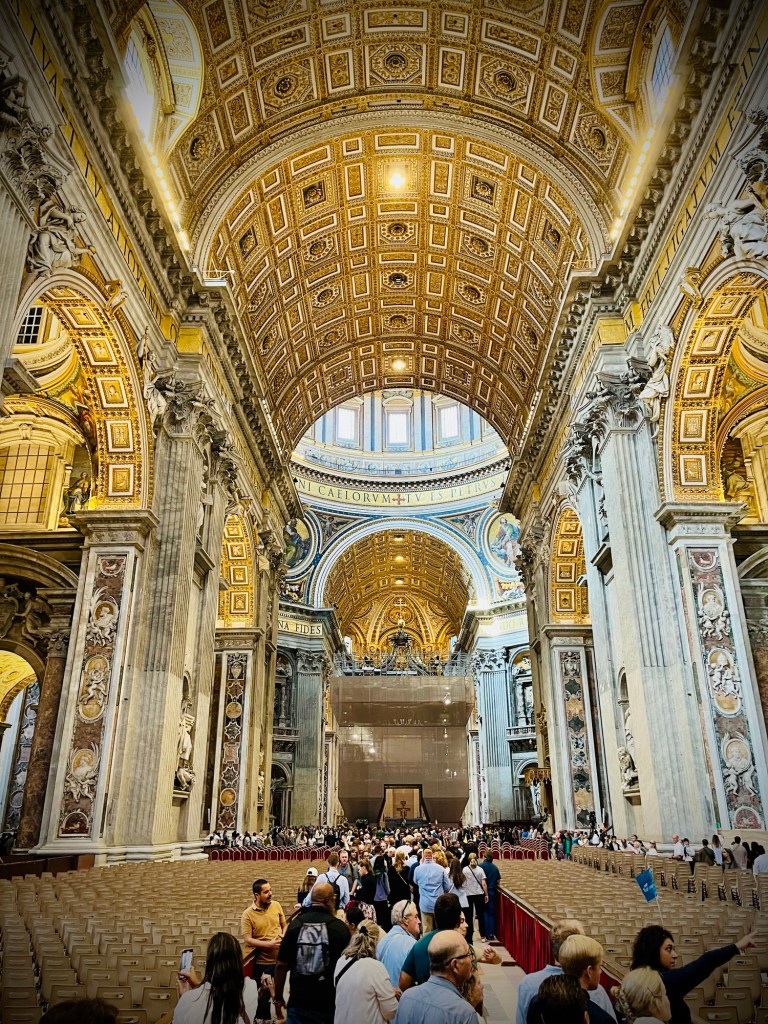
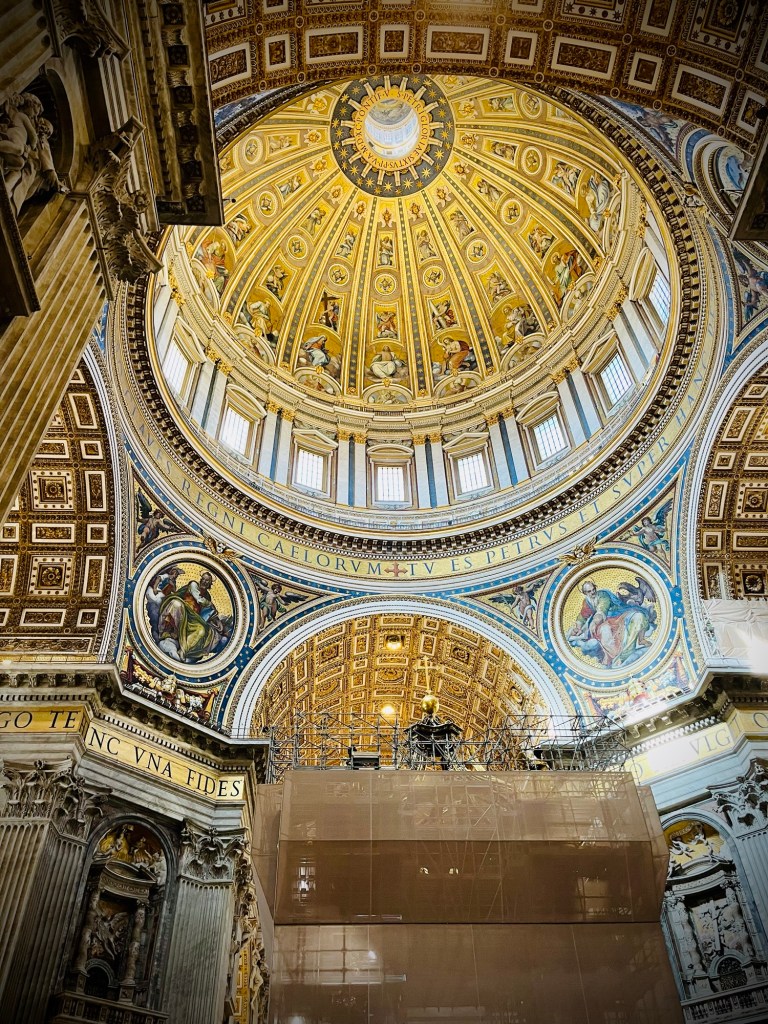
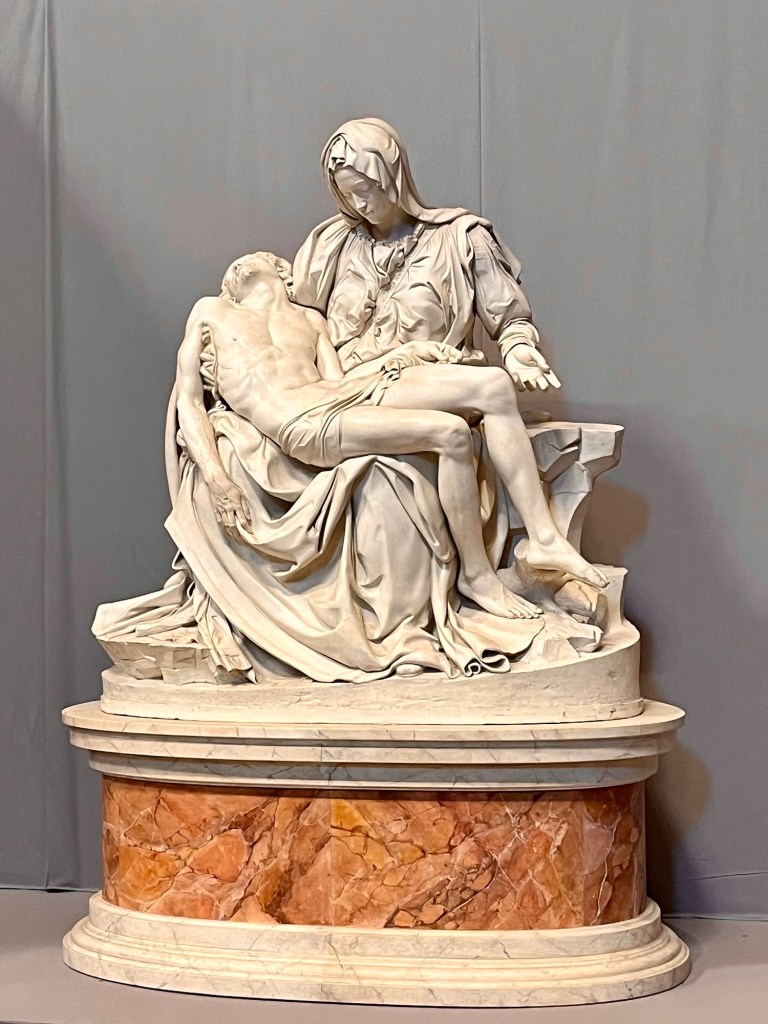
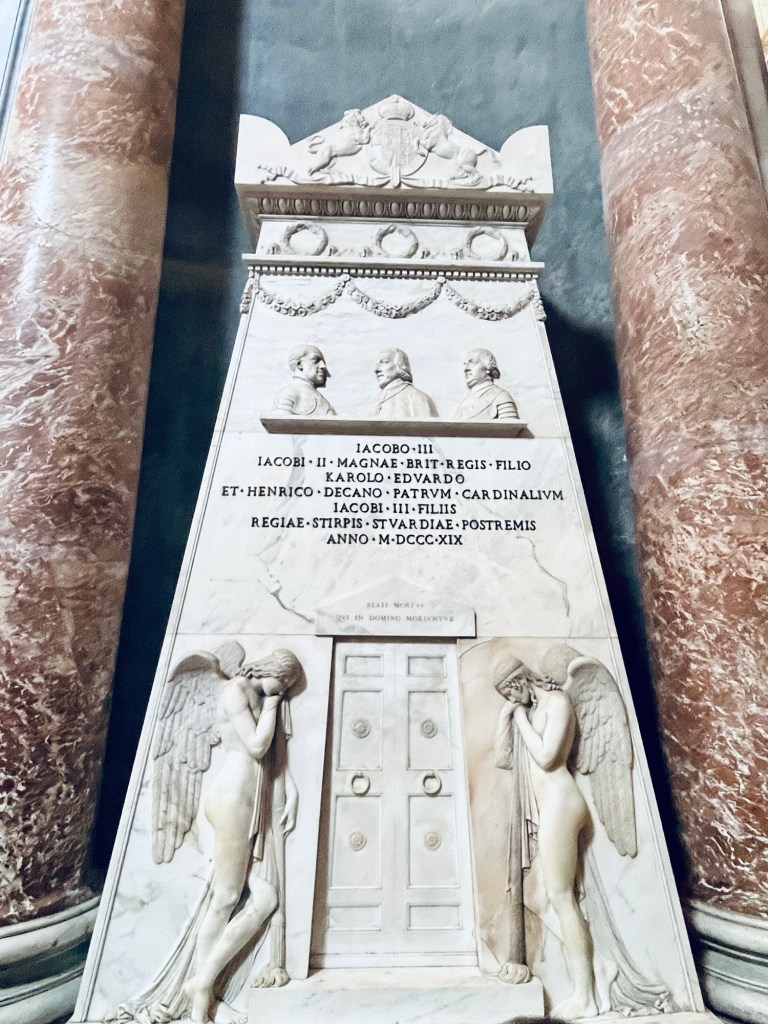
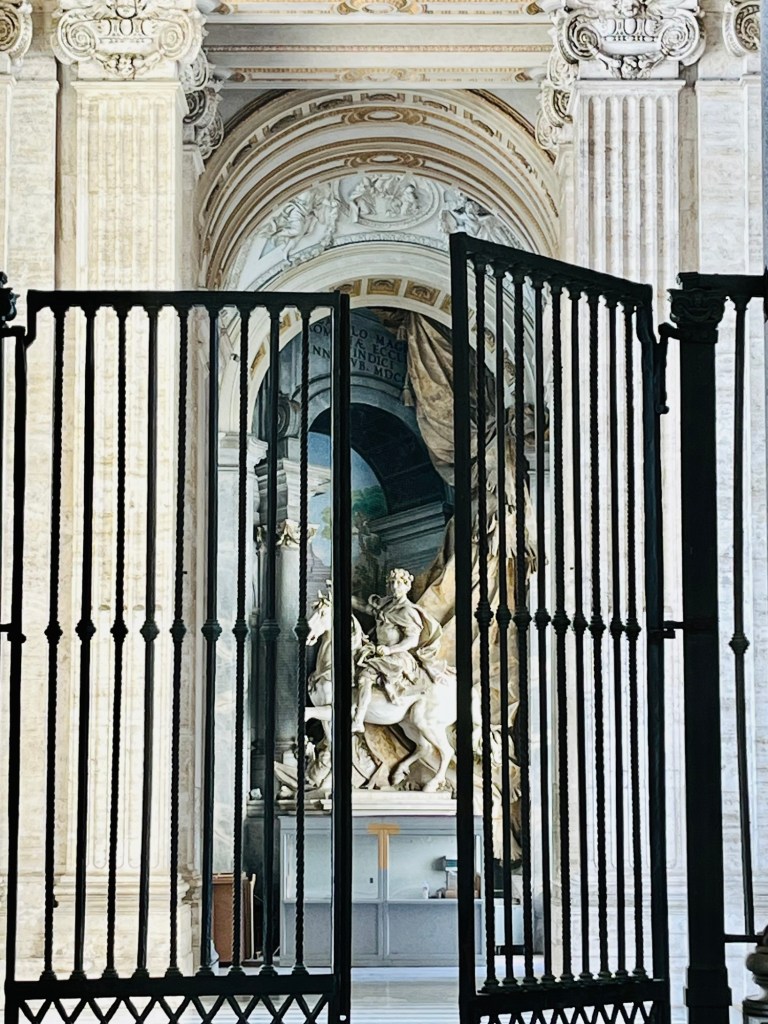
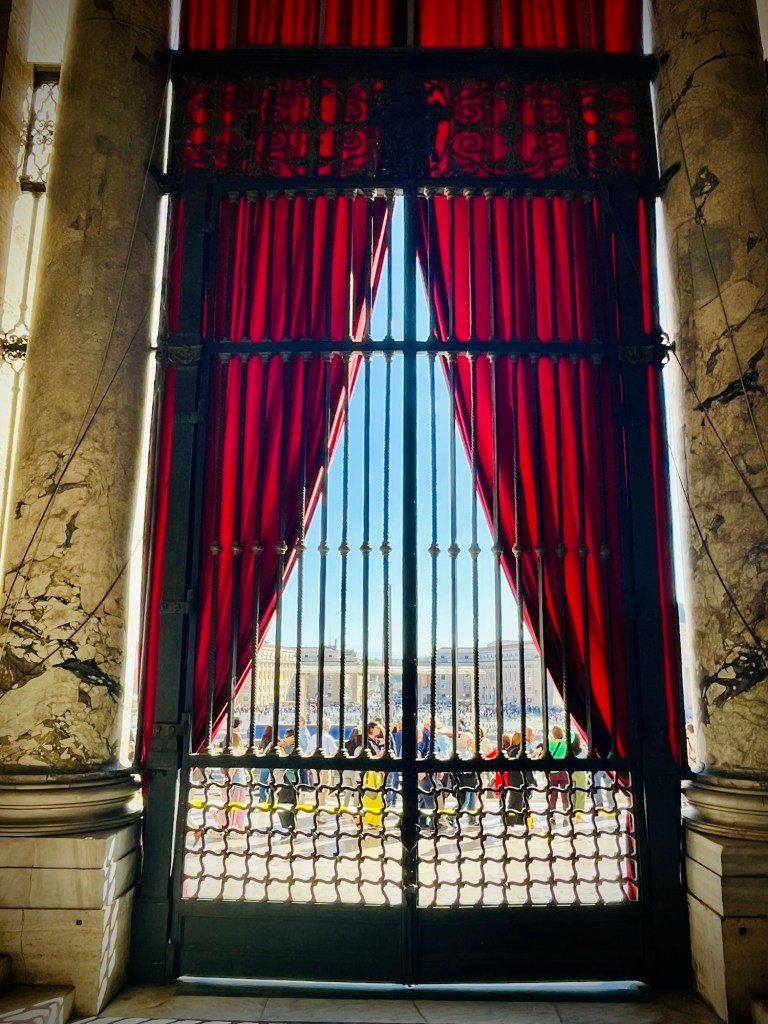
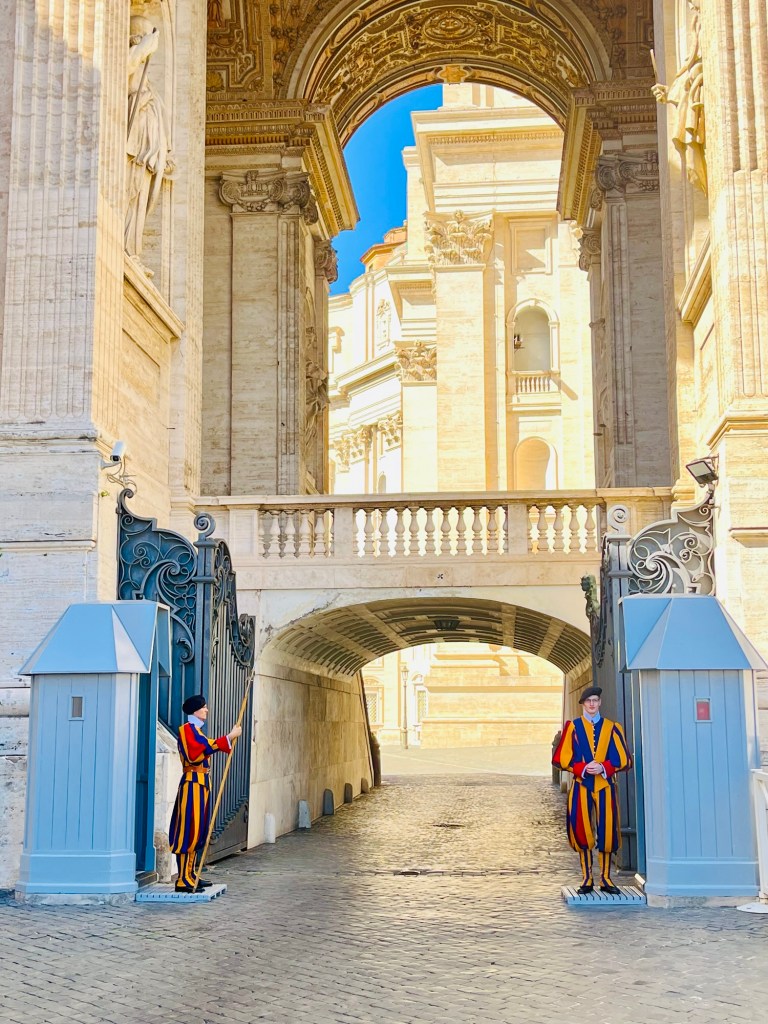
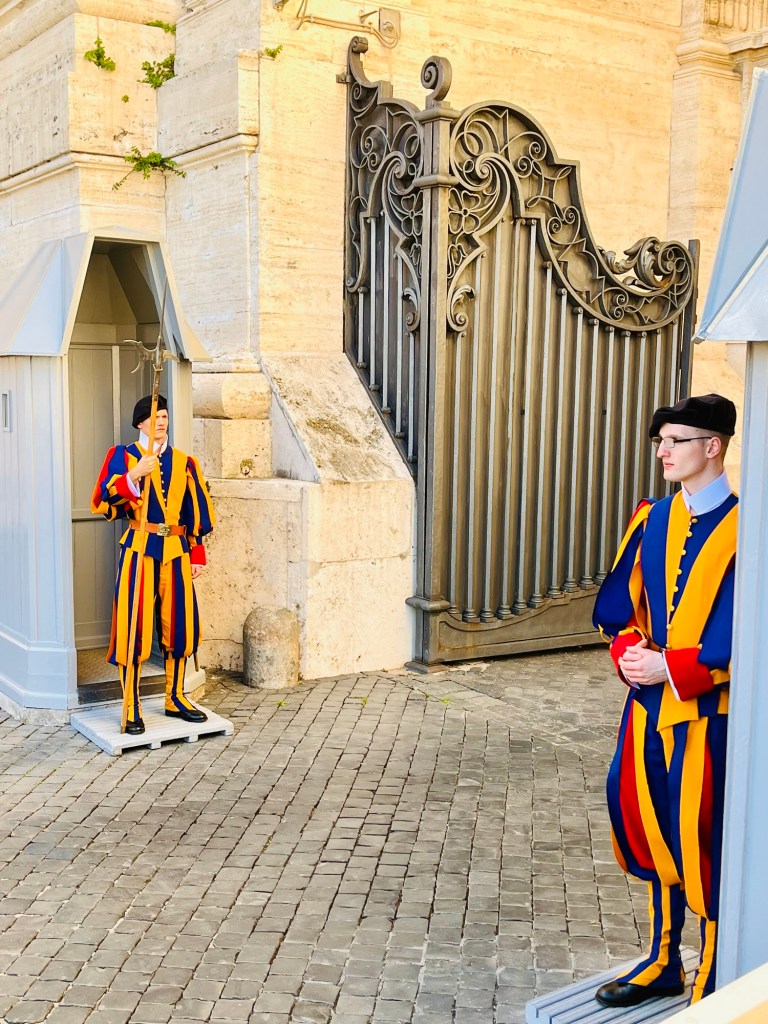
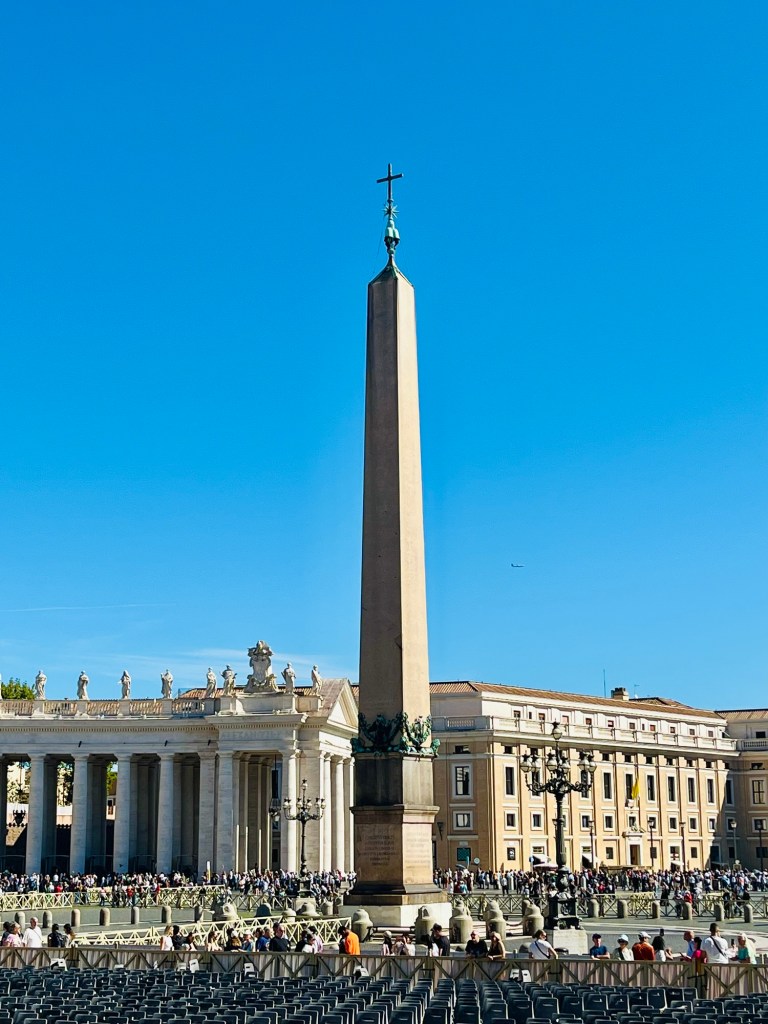
St Peter’sWho are these people?We were lucky to get into St Peter’s as there was a Papal event later in the day, as proven by the rows of seats.Impressive front door.St Peter’s, throughout Rome we had come across quite a lot of restoration work for Rome’s 2025 Jubilee. Above the altar is the Baldachin it is by Bernini and dates to 1634, not that you can see it here as it is being restored. It is also the site of St Peter’s tomb & reportedly mainly made from bronze nicked from the Pantheon’s roof.The dome of St Peter’sPietà (1498) by Michelangelo, originally in a Roman era chapel in old St Peter’s before the construction of the current Basilica in 1506. It’s the only sculpture he signed.The Monument to the Royal Stuart’s, by Antonio Canova (1819). Commemorates “King James III” the last of the Stuart & Catholic claim to the British Crown.The Equestrian Statue of Charlemagne (1725) in the portico. The red curtains are installed at the main door when the Pope has a public appearance.Swiss Guard in front of the Gate of the Arch of the Bells. Fun fact Michelangelo didn’t actually design the Swiss Guards uniform, though based on 16th Century versions, they only date to 1914.Guards GuardingThe Vatican Obelisk, it was shipped to Rome by Emperor Caligula in 40AD & was located in the Circus of Nero, where it remained until 1586, when it was moved 250m to its current location.
Ara Pacis
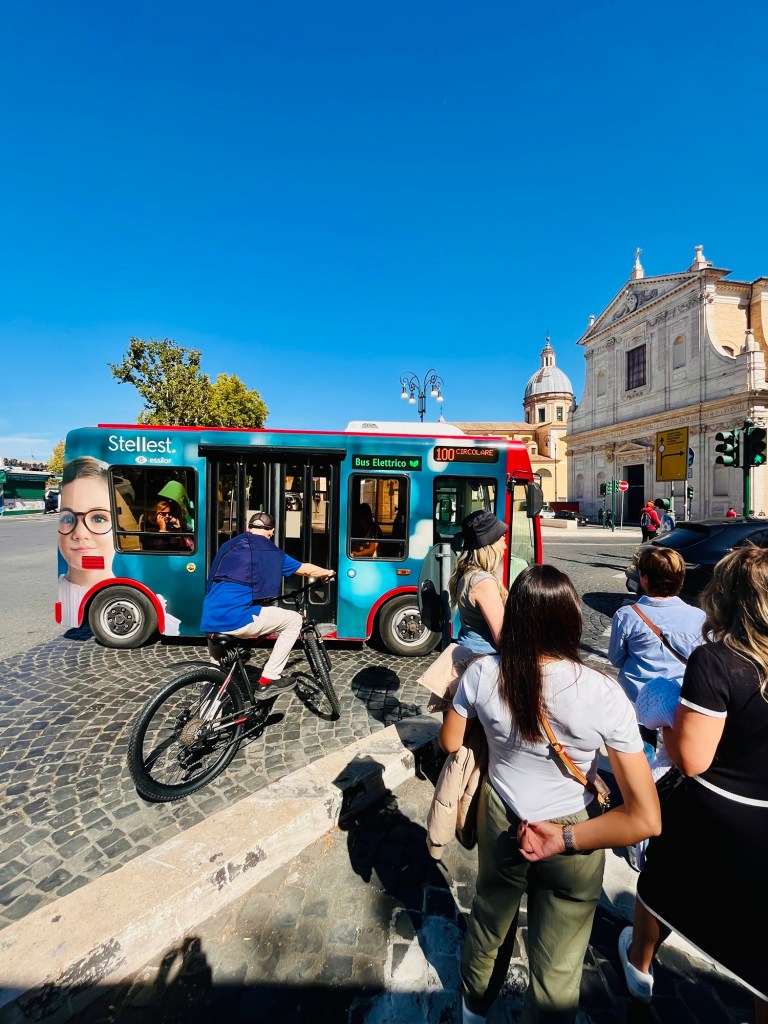
We saw a teeny weeny little bus on the way.
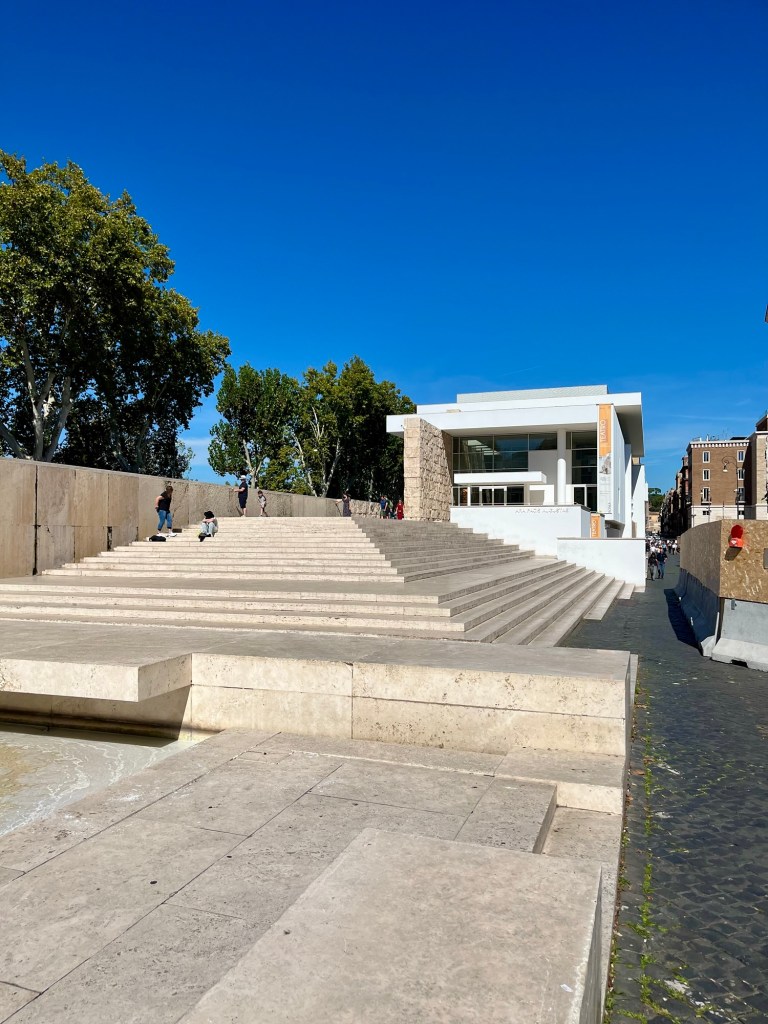
Having been released from the yellow umbrella, we decided to head to the Piazza del Popola, and on the way is the Ara Pacis. The Ara Pacis is small but super detailed Roman altar built by Emperor Augustus in 13BC and is dedicated to peace. The peace bit sounds great, but Roman peace meant conquering people, so not so great.
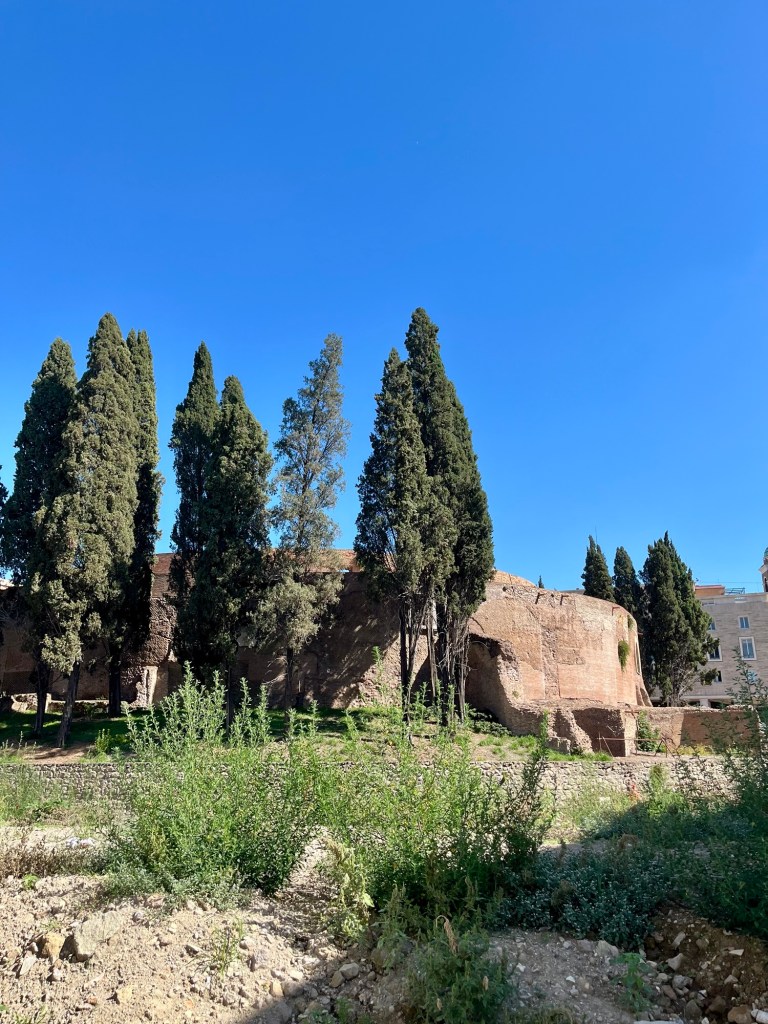
The Ara Pacis Museum is by the architect Richard Meier built in 2006, one Italian critic thought it looked like a Texan Gas Station, Ouch. We saw the Ara Pacis through the front door, but it turned out that it was super expensive to get in. Next time.The Mausoleum of Emperor Augustus (28BC) is next door and was under restoration. It doesn’t look like much to be honest.
Piazza del Popolo
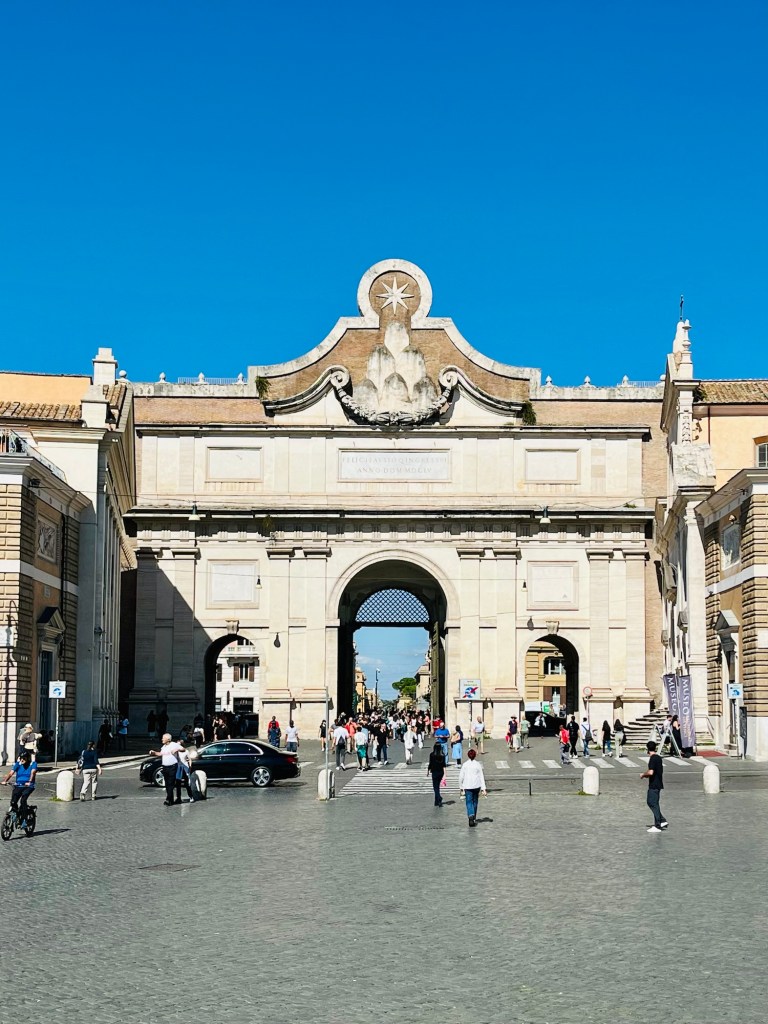
From the Ara Pacis we headed to the Piazza del Popolo, by this stage of the day it was very hot. The square is beside the Pinician Hill, which is nearby a public park.
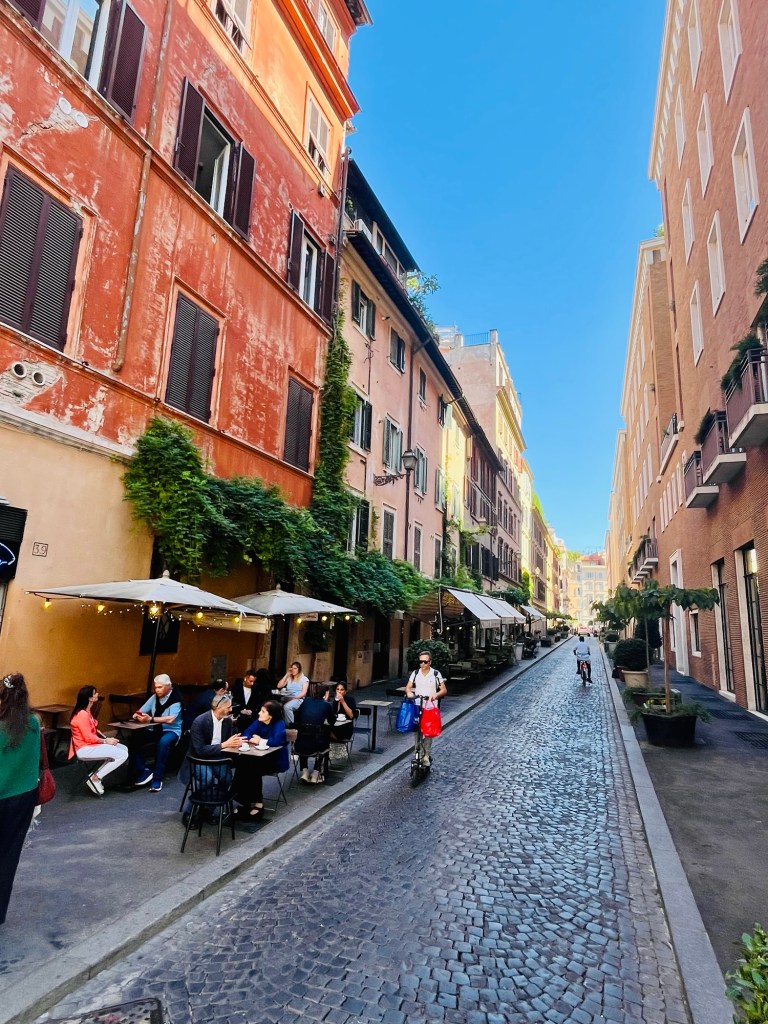
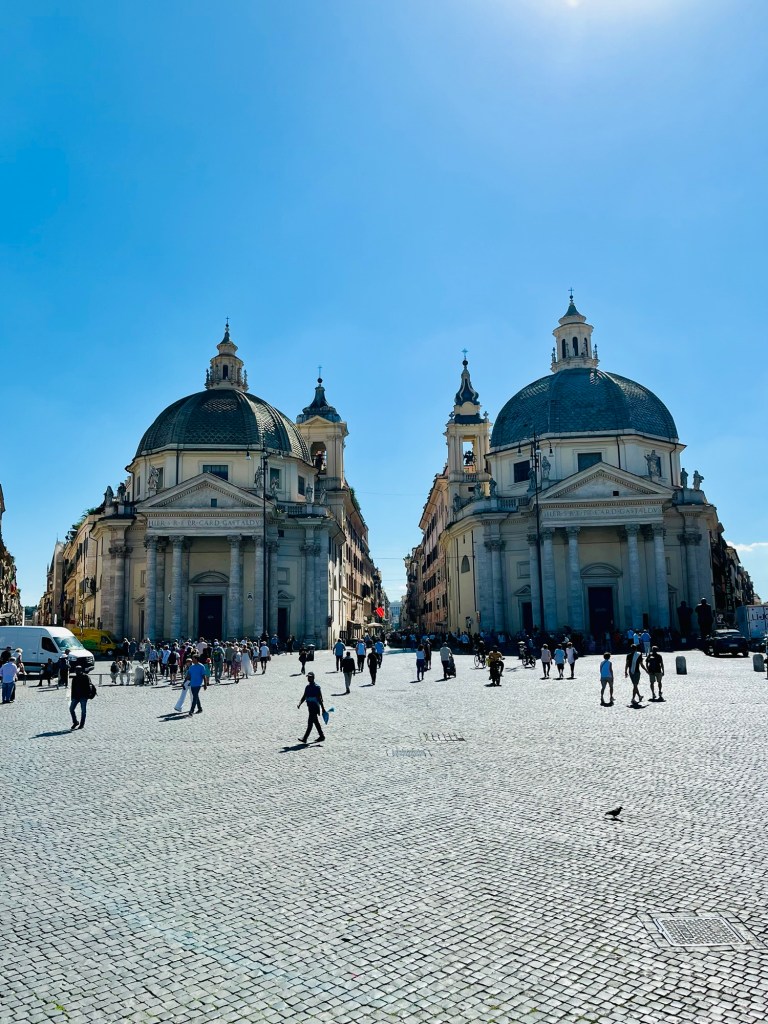
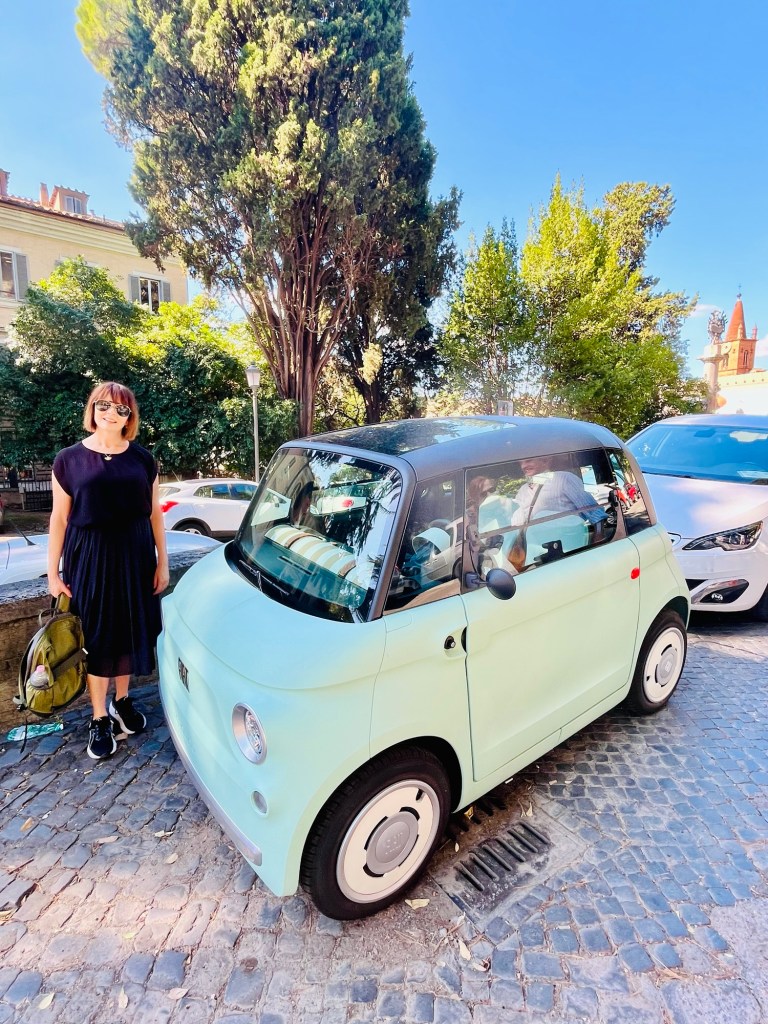
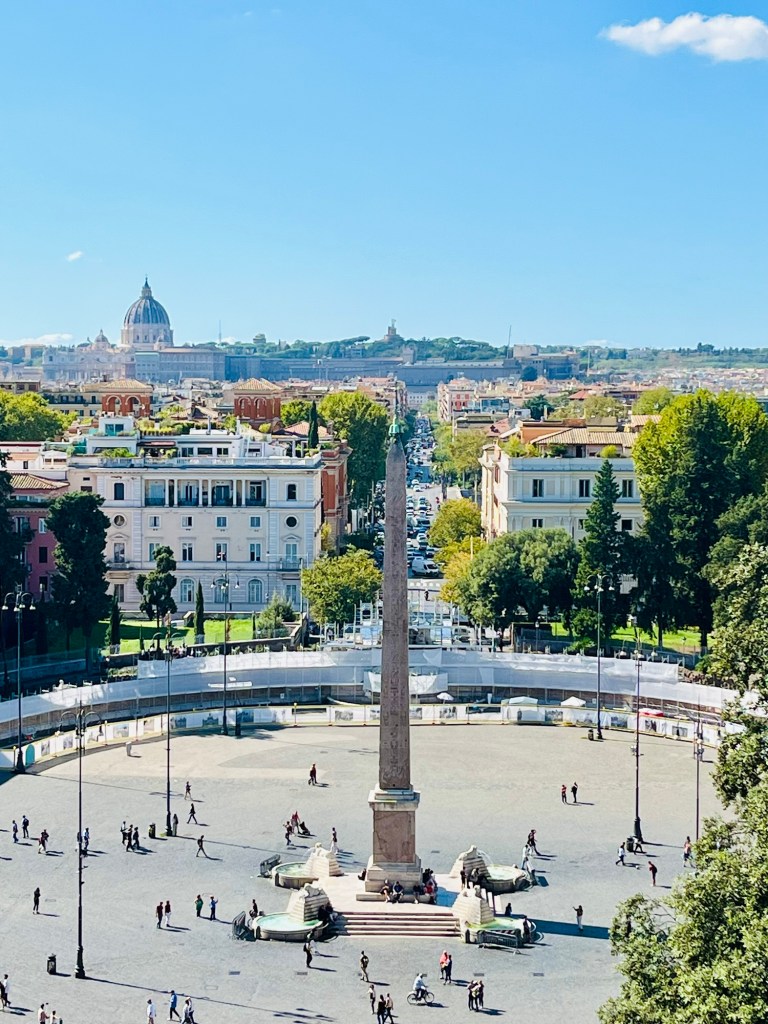
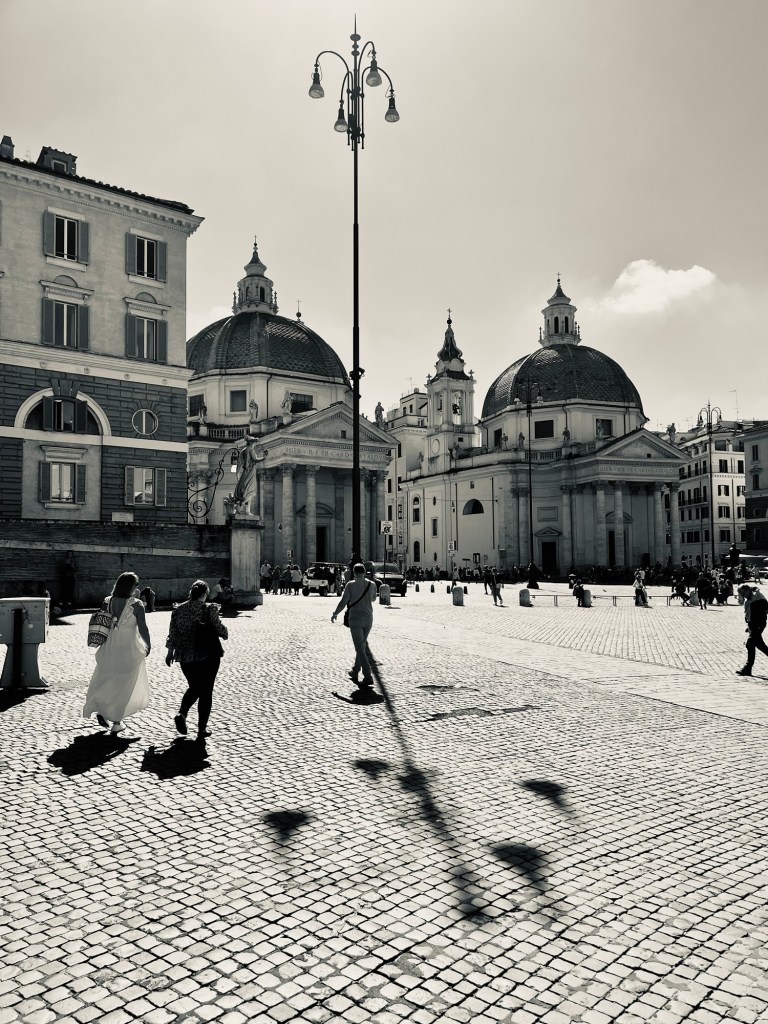
Super charming side streets on the way .Porta del Popolo (1475) built by Pope Sixtus IV, this facade was designed by Bernini in 1655 and is built on top of the ancient Roman gate. The ancient Via Flamina is beyond. The twin churches of Santa Maria di Montesanto (1679) and Santa Maria dei Miracoli (1681), both were designed in part by Bernini.Marnie with a teeny weeny little car – it’s a Fiat Topolino if you’re in the market. The view from Pinician Hill over the square towards St Peter’s, the Flamino Obelisk below, was originally for Pharaoh Ramesses II (1300BC), Emperor Augustus availed himself of it in 1BC, it was lost after the fall of Rome, and was rediscovered in 1587 and installed a couple years later in the square, so it’s a smidge old.Leaving the square
Spanish Steps
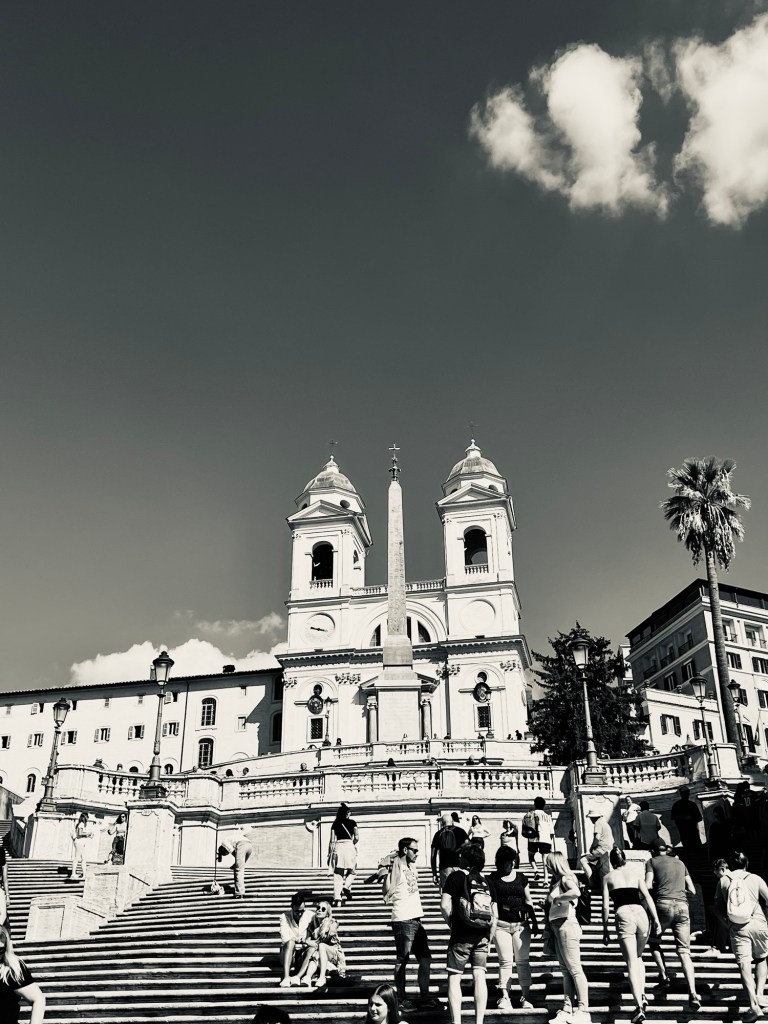
From the square we headed to the Spanish Steps, in the Piazza di Spagna, the Spanish theme is due to the Palazzo di Spagna, which is the Spanish Embassy and has been the there since 1647.
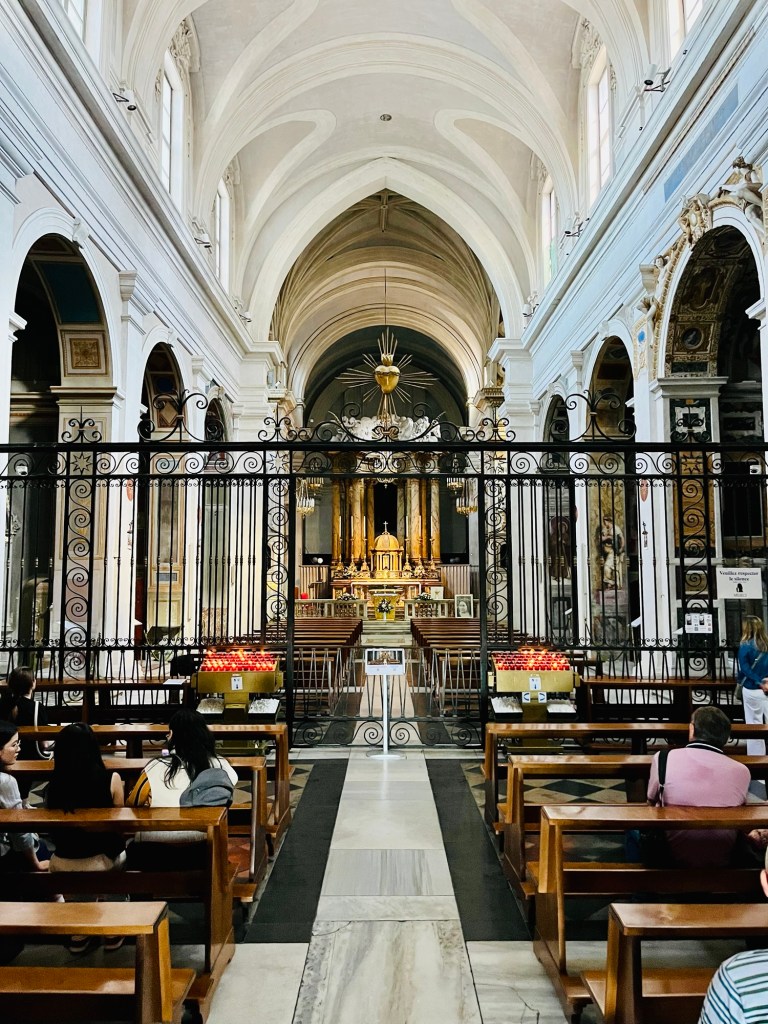
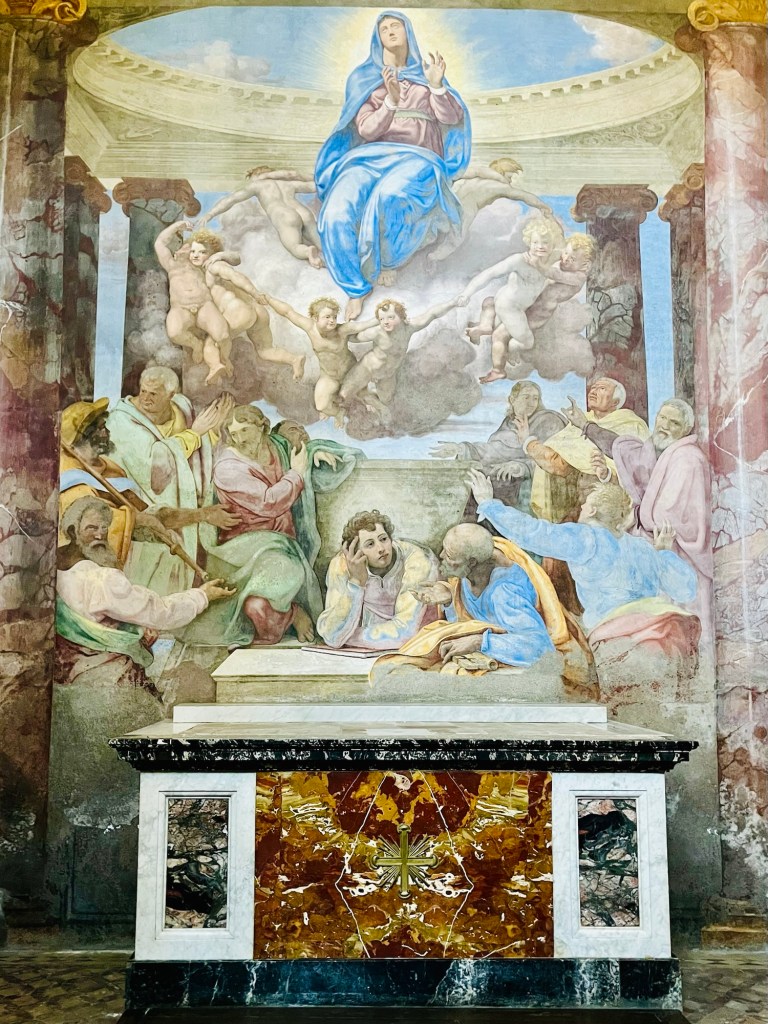
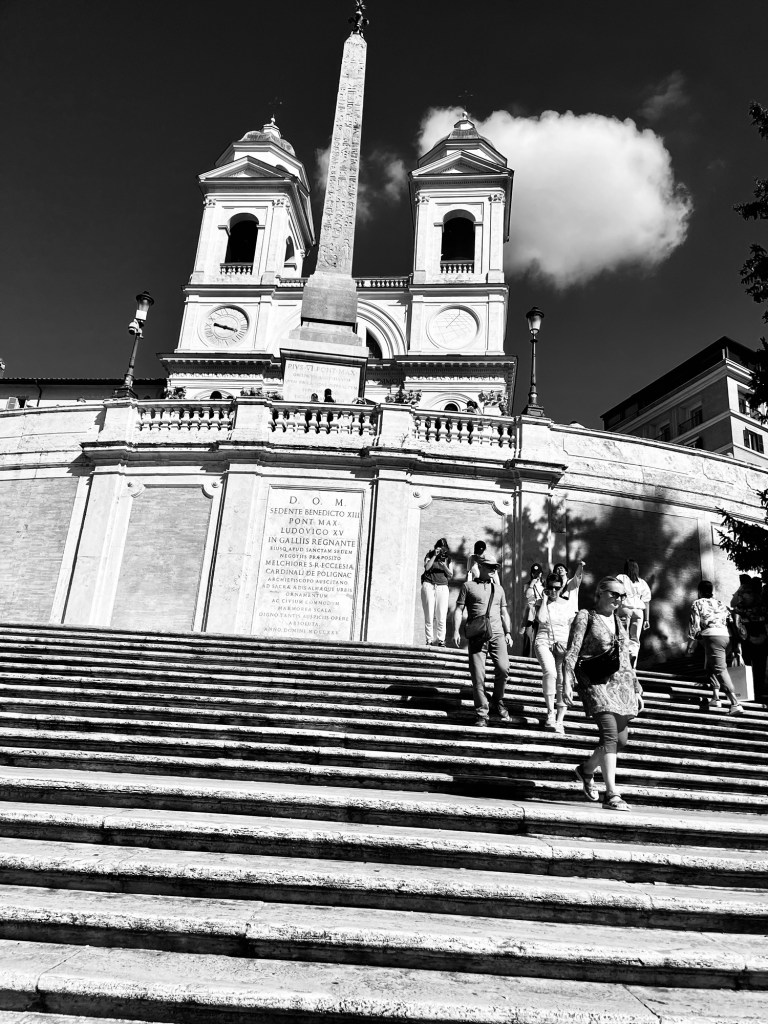
The Spanish Steps (1725) at the top is the church Trinità dei Monti (1585). It’s featured in numerous cultural touchstones from the romantic poets Keats and Shelley, the 1952 film the ‘Roman Holiday’ with Audrey Hepburn, and Mario Kart.It is the titular French church in RomeThe assumption of the virgin (1545) by Daniele da Voterra, he worked with Michelangelo, his nickname was “Il Braghettone – the breeches-maker” because he painted over the naked bodies in The Last Judgment in the Sistine Chapel.Artsy
Marnie skipped walking up the 135 steps to the church but to be fair, it was freakishly hot.
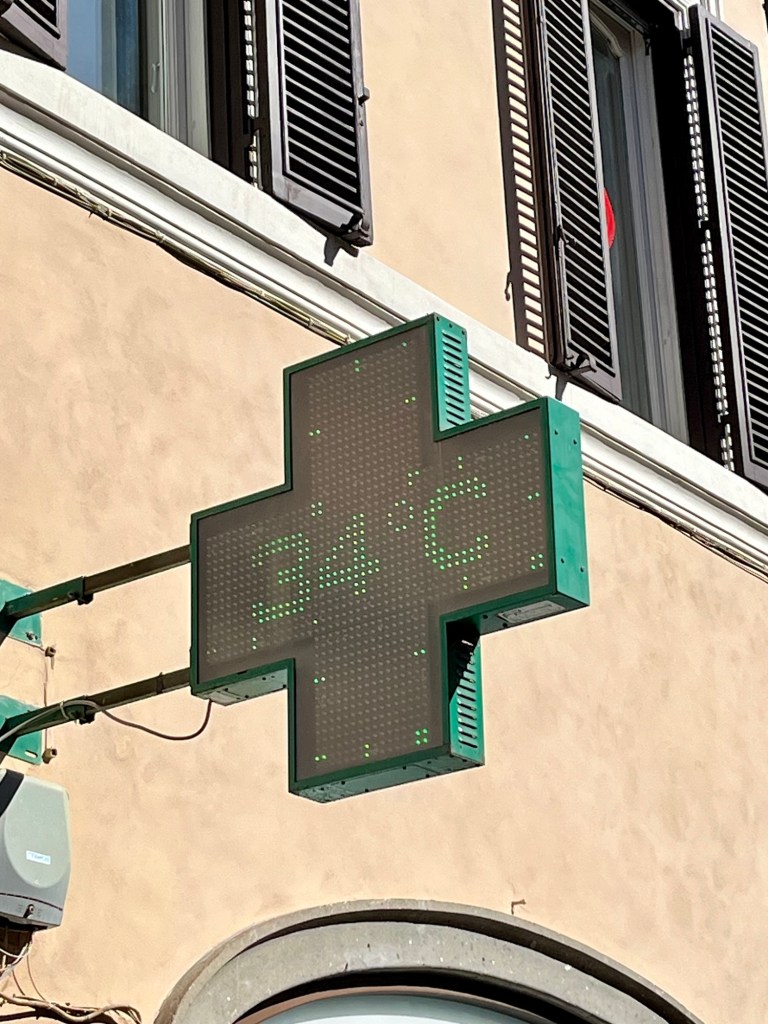
Properly warm
Trevi Fountain
From the Spanish Steps we walked to the Trevi Foundation, which is nearby.
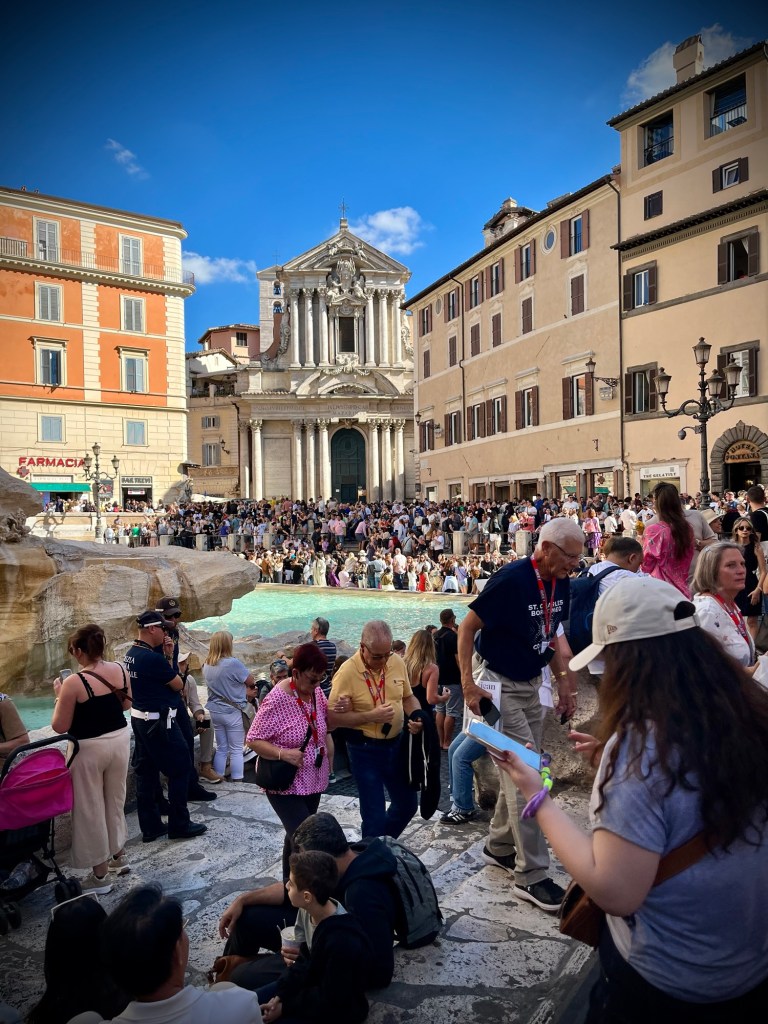
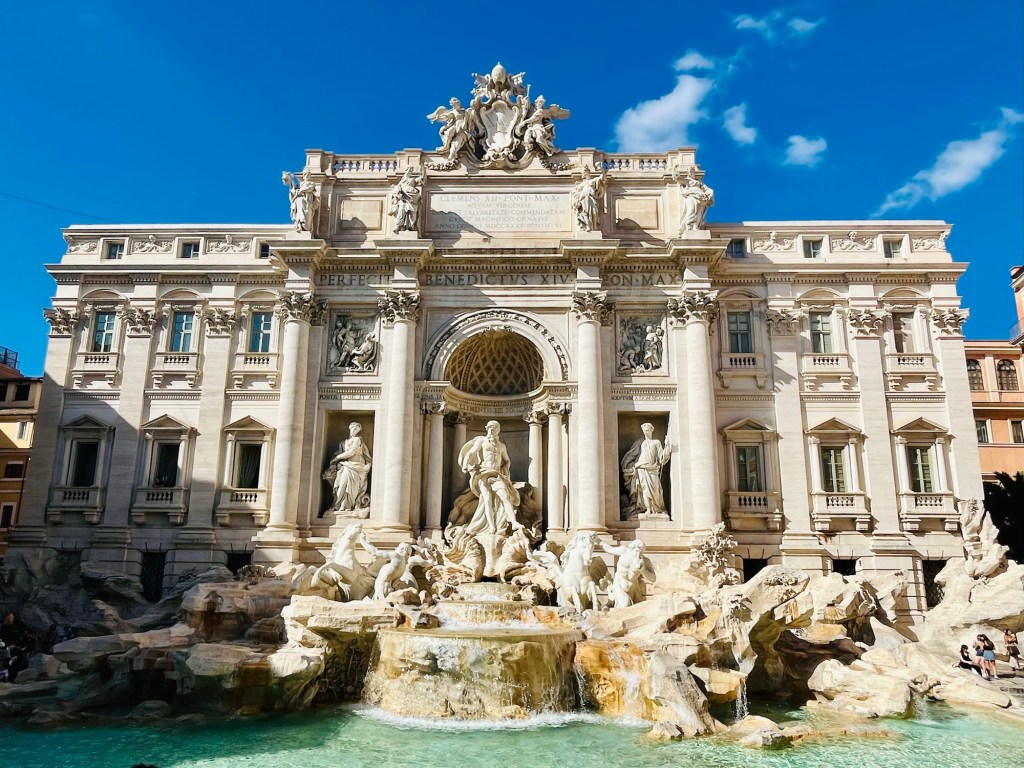
What over-tourism. The church of St Vincent & St Anastasius beyond, another fun-fact it has the embalmed hearts of 22 Popes.The Trevi Fountain (1762) by the architects Nicola Salvi & Giuseppe Pannini and it was built into the side of the Palazzo Poli. It is fed by the Roman Aqua Virgo Aqueduct built in 19BC.
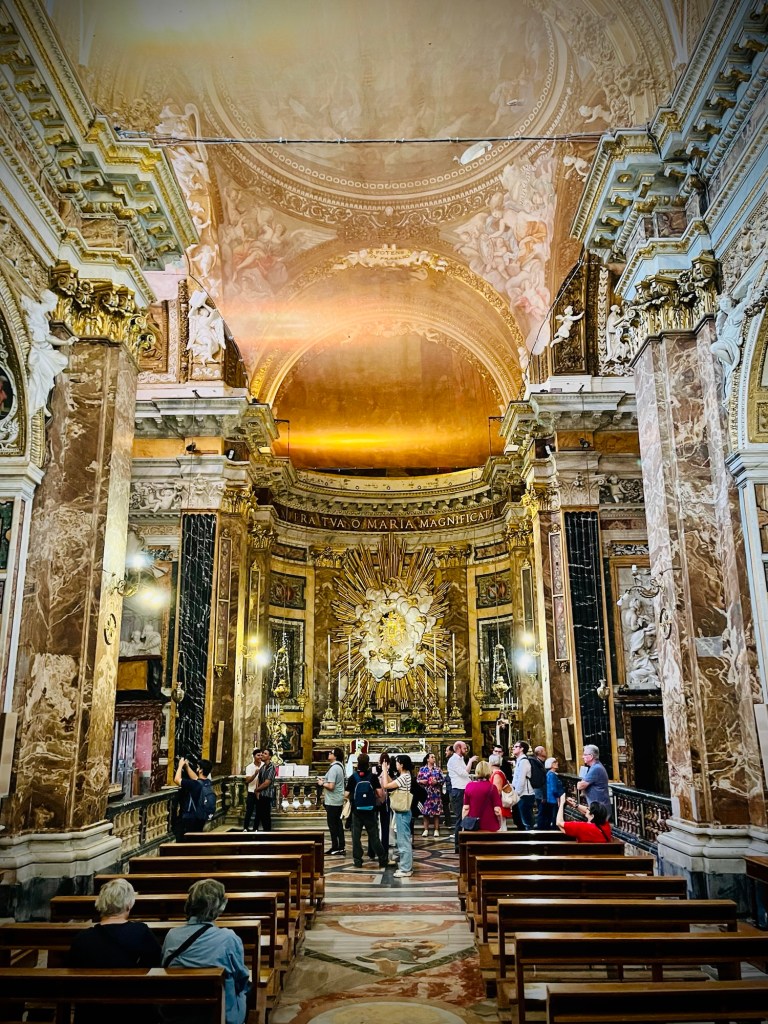
Santa Maria della Vittoria
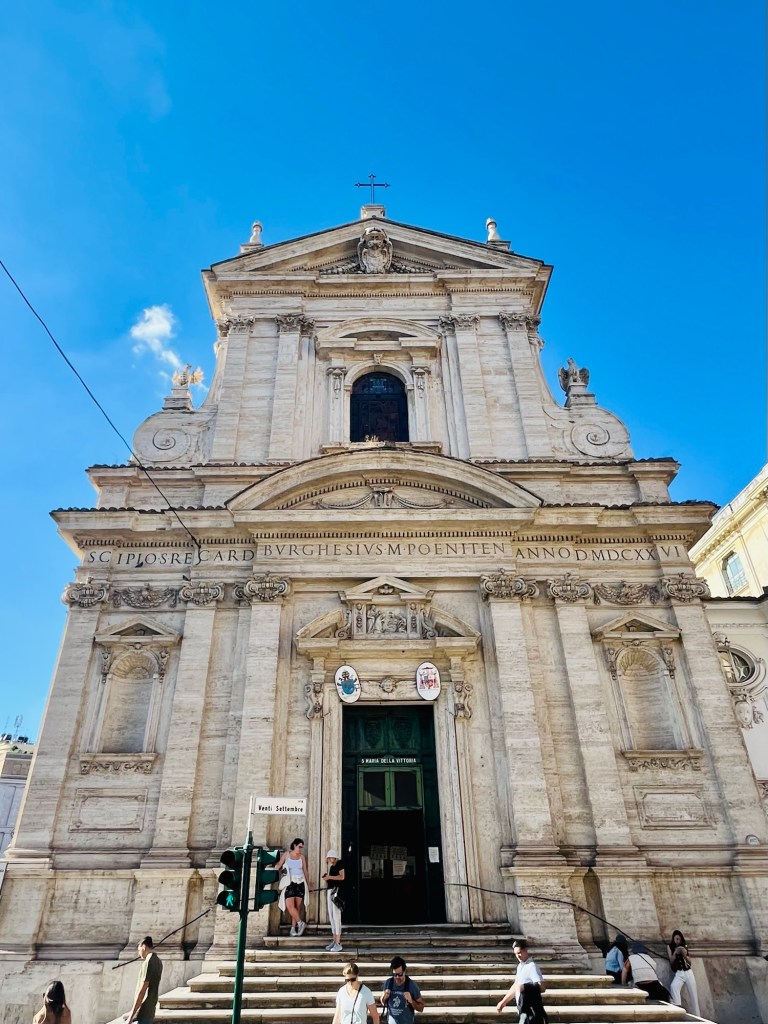
Leaving the Trevi Fountain, we had to squeeze into a doorway to avoid a slow moving rubbish truck that was only slightly smaller than the lane it was on. Having survived a slow moving crush we headed back to the Quirinal Hill where we were staying. The church is famous for its Bernini sculpture.
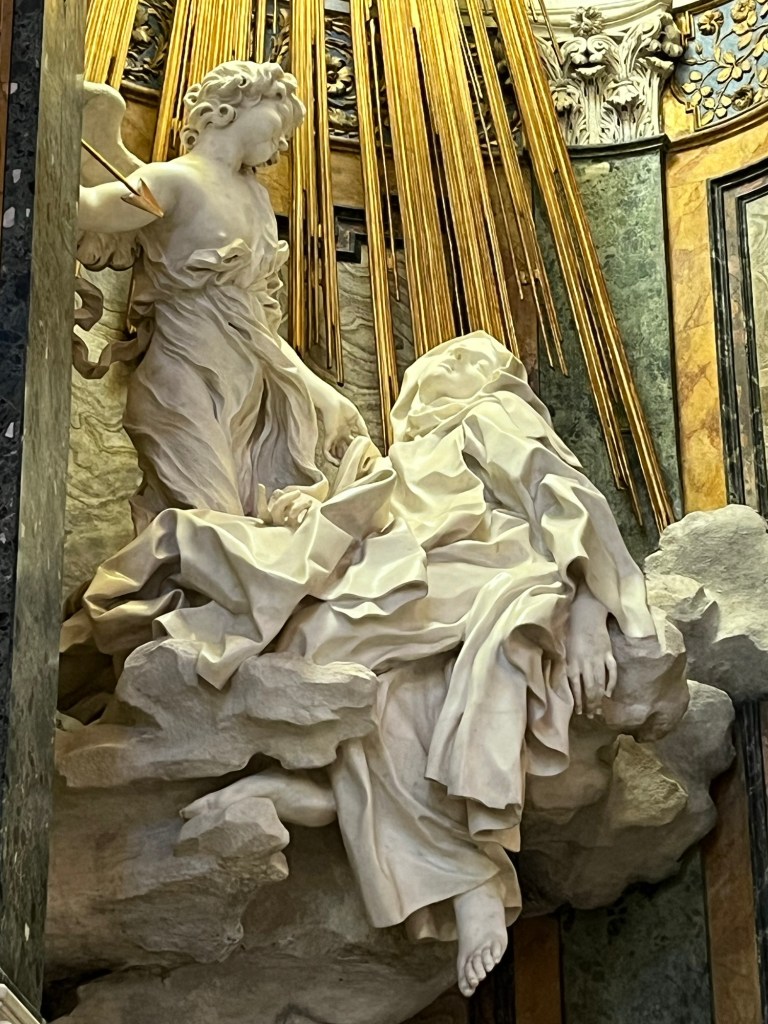
St Mary of VictoryThe church has baroque frescoes, there’s a net to collect the plaster and paint that’s flaking away. The famous sculpture The Ecstasy of St Teresa (1652) by Bernini. It has been slightly controversial over the years, as some thought that the Ecstasy was slightly um, too ecstatic.
Piazza della Republica
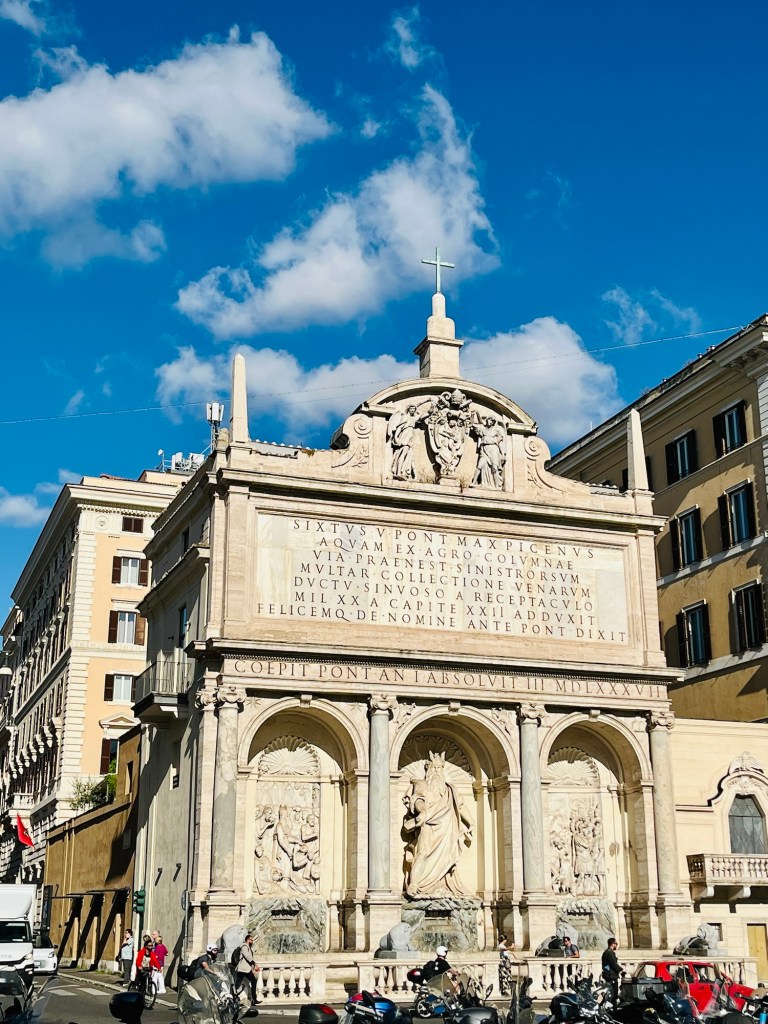
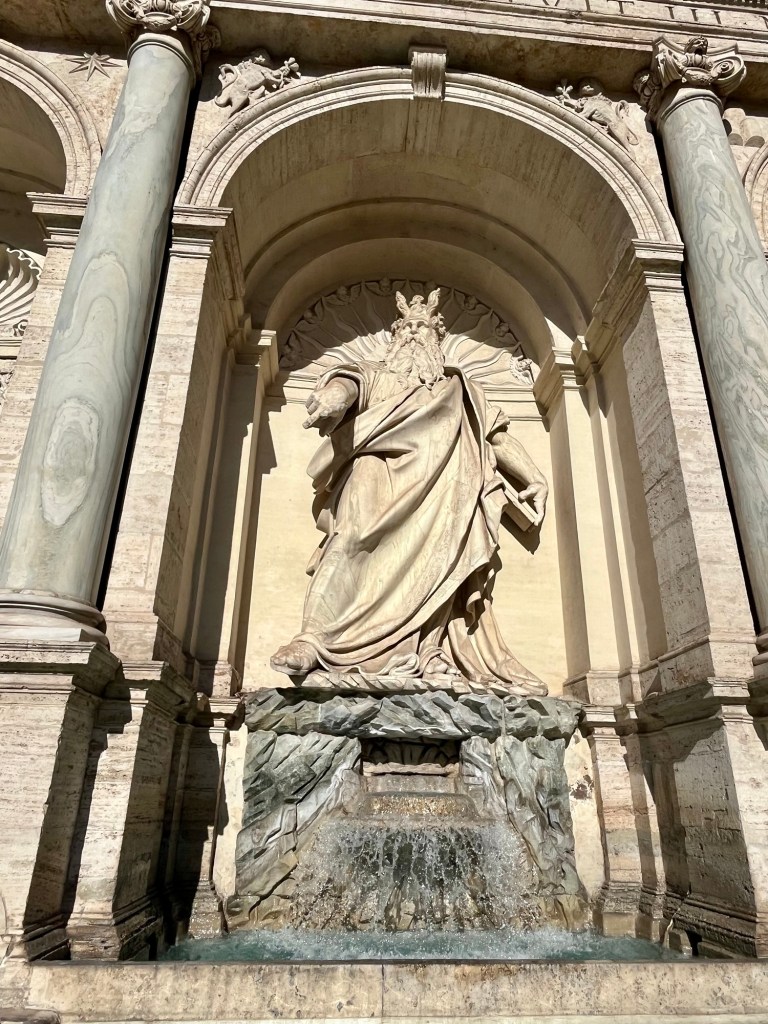
Across the road is the slightly mad Fountain of Moses.
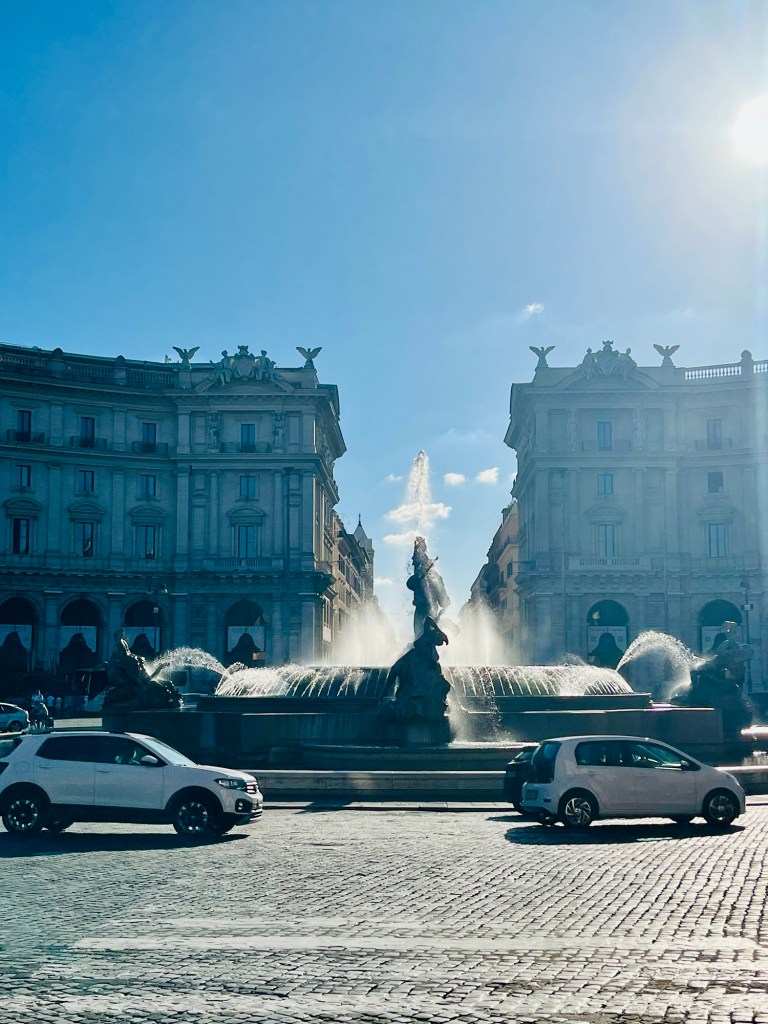
Slightly mad, Moses is the stumpy looking chap in the middle, dates to 1588 and it is the end point of the Acqua Felice the first non-Roman era aqueduct.Moses, stumpy & with horns? It became (weirdly) the convention in art to show Moses with horns; the Latin word for radiant also means horns you see.The Fountain of the Naiads in the Piazza della Republica.
Santa Maria degli Angeli e dei Martiri
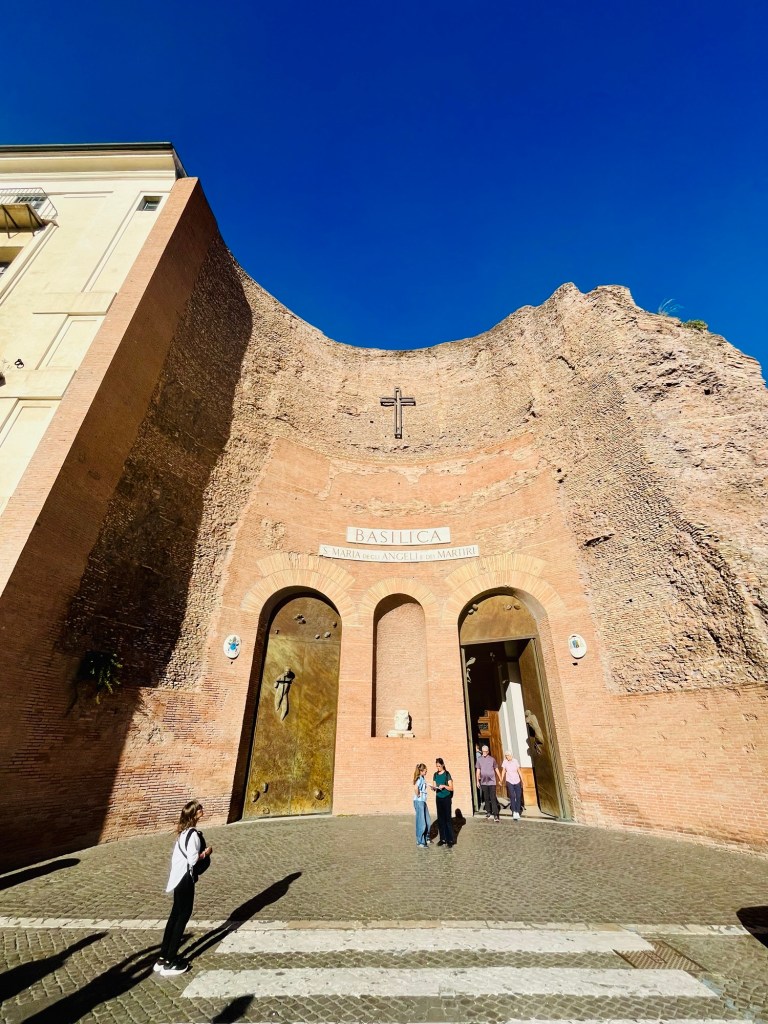
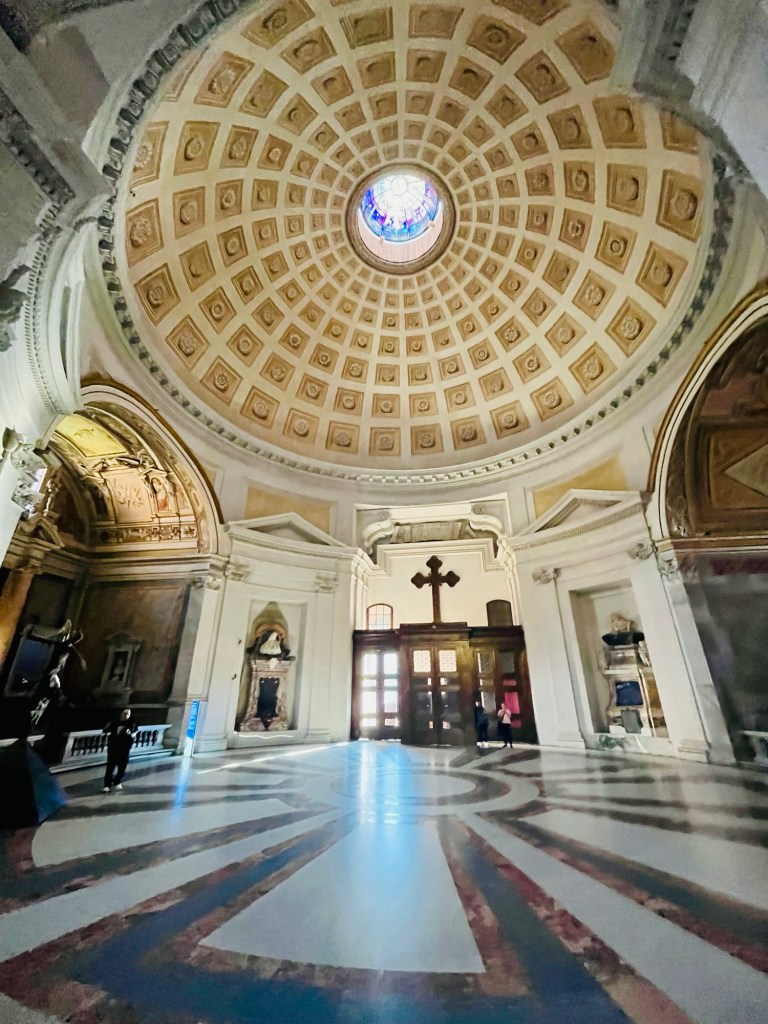
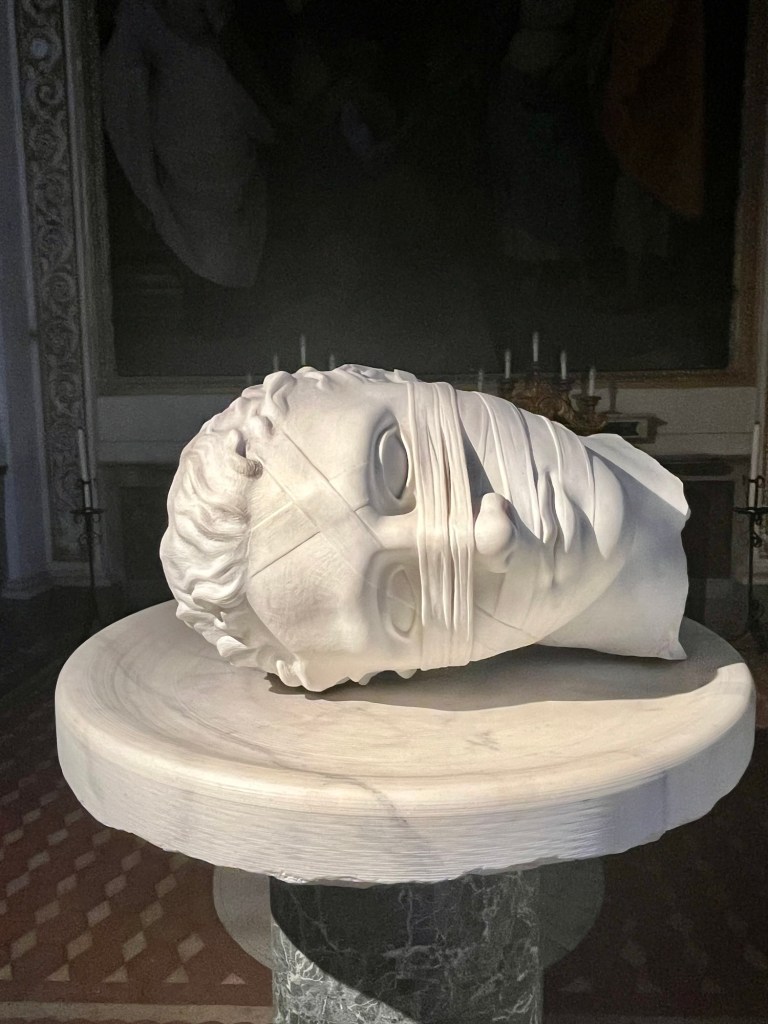
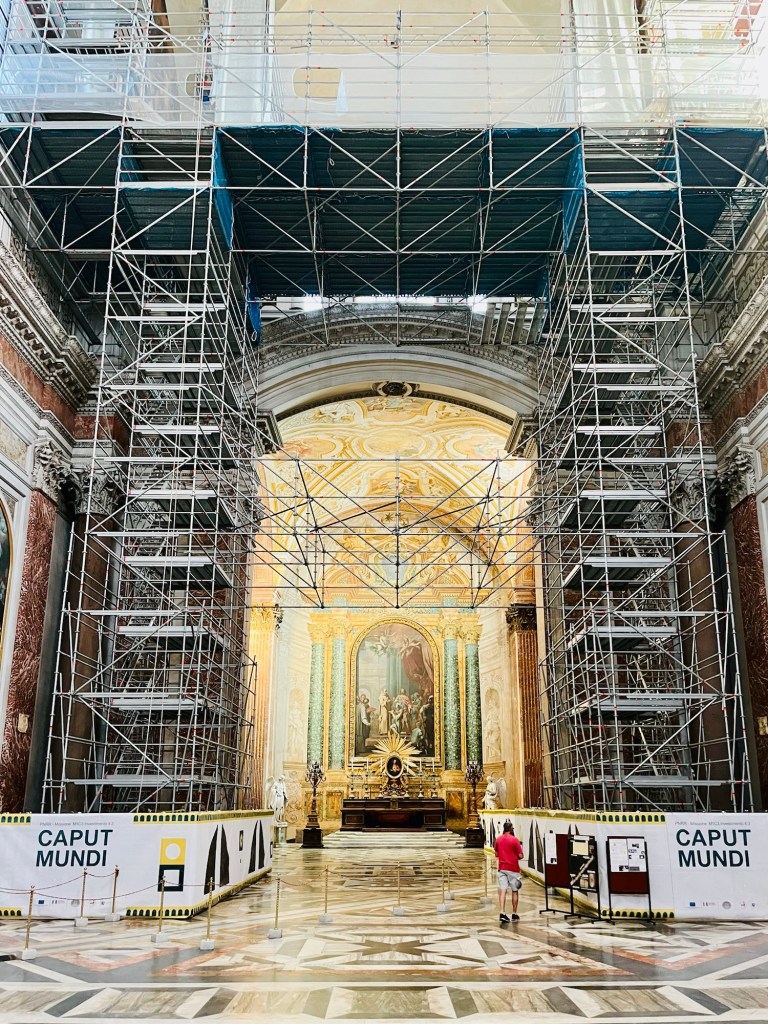
St Mary of the Angels and the Martyrs is in the Piazza della Republica, it’s built inside the ruins of the ancient Baths of Diocletian that built in 306AD, the ruins were turned into a Basilica in 1560 and was designed by Michelangelo. The photos don’t really capture the scale of the church, it’s huge, this was due to restoration work that was going on.
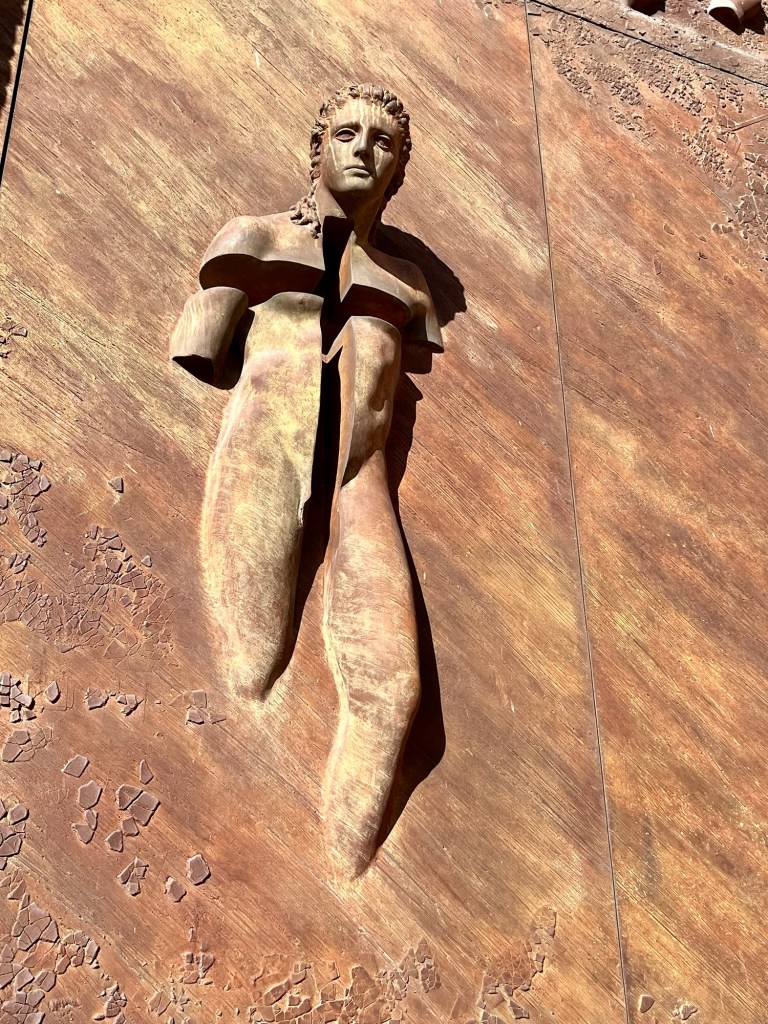
It really does look like a ruin on the outside. The bronze doors are by the contemporary polish artist Igor Mitoraj (2006). The is just the entrance vestibule.More Igor.The altar and more scaffolding for the 2025 jubilee

 MM4.Travel
Leave a comment